Was ihr bauen könntWhat you can build

MiteinanderLiving together

Werkzeugbibliothek, Barfußpfad, Naturspielplatz, Versammlungskreis, Gästezimmer. Die Dinge, die aus Nachbarn eine Gemeinschaft machen.

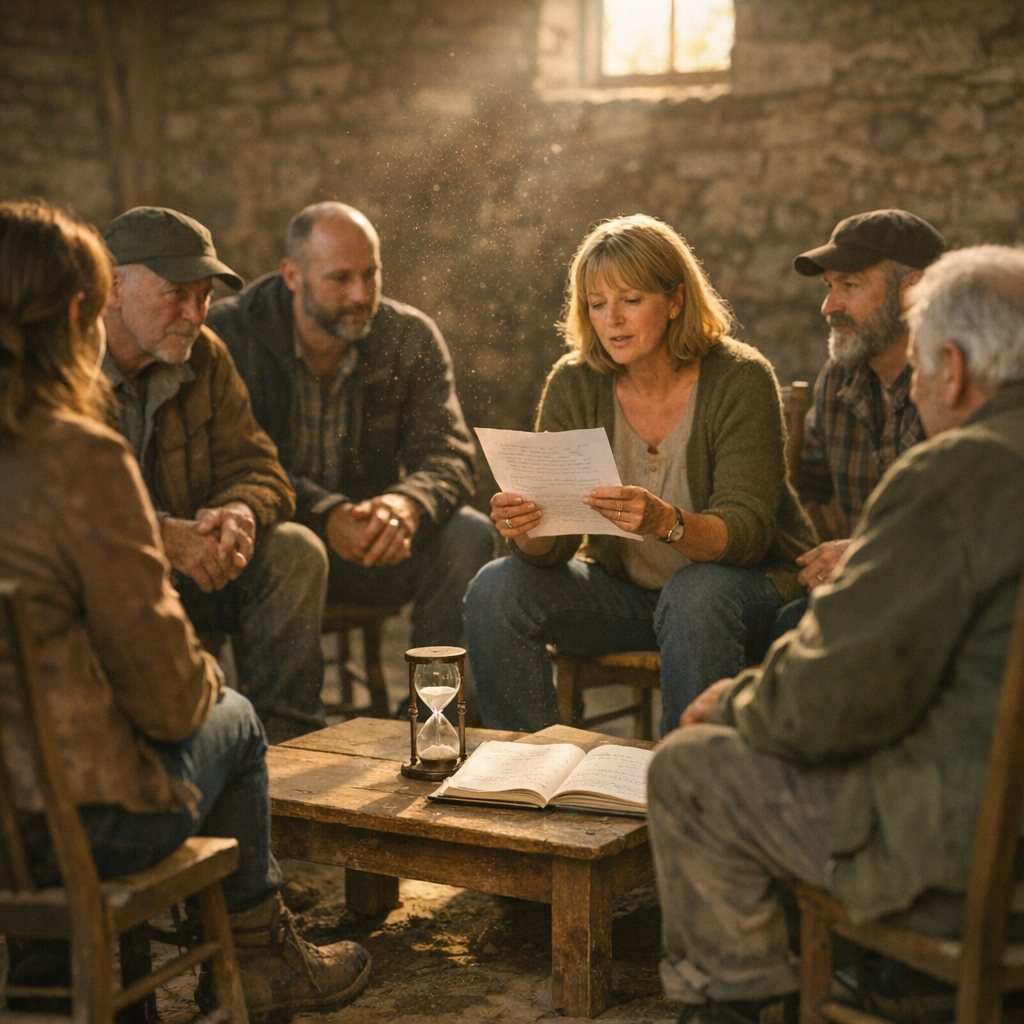
Menschen sitzen abends im Kreis auf einer Holzveranda, Laternen und Wolldecken, ruhiges Gespräch
Schon heute realAlready real today

Am 25. Juni 2026 hat der Bundestag das Recht auf Reparatur verabschiedet. Getragen wurde der Weg dorthin von einem Netzwerk aus ehrenamtlichen Repair-Cafés, offenen Werkstätten und Tüftelkellern, das die anstiftung seit über zehn Jahren bundesweit koordiniert. Aus geliehenem Werkzeug und geteiltem Können ist ein Gesetz geworden.

AufwandEffort
Aufnahme, Probezeit und Kinder, Joining, trial period and children
Zwei AbendeTwo eveningsOhne VorkenntnisseNo experience needed

Aufnahme, Probezeit und KinderJoining, trial period and children

Die ganze GruppeThe whole group

Ohne beschriebenen Weg vom Gast zum Mitglied nimmt eine Gruppe entweder niemanden auf oder den Falschen. Hier stehen Schnupperwochenende, Kennenlernphase und Probejahr mit klarem Ende, wer über die Aufnahme entscheidet und wie man freundlich Nein sagt. Dazu das Kinderblatt: Aufsicht, Ruhezeiten, Wege und die Absprachen zwischen Eltern und Nichteltern.Without a written path from guest to member, a group either takes nobody in or takes in the wrong people. Here you find the taster weekend, the getting to know each other phase and a trial year with a clear end, who decides on admission and how to say no kindly. Plus the children's sheet: supervision, quiet hours, routes and the agreements between parents and the adults without children.

So wird gebautHow it is built
Vier Stufen mit festen Daten vom Schnupperwochenende bis zur Aufnahme, dazu ein Kinderblatt an der Küchentür mit Aufsicht, Zeiten und Altersgrenzen.Four stages with fixed dates, from the taster weekend to admission, plus a children's sheet on the kitchen door with supervision, times and age limits.
KostenCost
0 bis 100 Euro0 to 100 euros
Erster SchrittFirst step
Legt das nächste Schnupperwochenende auf ein Datum und schreibt vorher auf, was ein Gast zahlt, was er mitarbeitet und wann er wieder fährt.Put a date on the next taster weekend, and write down beforehand what a guest pays, what work they do and when they leave again.
Schritt für SchrittStep by step
Aufnahme, Probezeit und Kinder, TrichterErster BesuchBlatt mit echten ZahlenSchnupperwochenendeFreitag bis Sonntag, 25 EuroKennenlernphasemindestens vier BesucheProbejahrzwölf MonateMitgliedschaftalle Erwachsenen sagen jaKinderblatt1234567891Erster Besuch, Blatt mit Zahlen2Schnupperwochenende, 25 Euro3Kennenlernphase, vier Besuche4Probejahr mit Anfang und Ende5Aufnahme, alle Erwachsenen ja6Ausstieg an jeder Stelle7Nein sagen binnen 14 Tagen8Kinder ab sechs werden gefragt9Kinderblatt an der KüchentürAblauf, keine Prüfung von Menschen
Ablaufskizze Aufnahme, Probezeit und Kinder, am Handy seitlich wischenProcess sketch of Joining, trial period and children, swipe sideways on a phone

Bevor du anfängst

Für jeden längeren Besuch braucht ihr eine schriftliche Vereinbarung mit Enddatum, sonst kann aus geduldetem Wohnen ein Mietverhältnis mit Kündigungsschutz werden. Anwärterbeiträge und ihre Rückzahlung gehören auf Papier, mit Frist. Die Aufsichtspflicht liegt bei den Sorgeberechtigten, sie lässt sich für benannte Zeitfenster übertragen, schriftlich mit Namen, Zeitraum und Erlaubtem. Prüft bei eurer Haftpflicht, ob Schäden durch fremde Kinder in eurer Obhut mitversichert sind, oft nicht. Körperliche Bestrafung ist verboten (Paragraf 1631 BGB). Ohne Sorgerecht entscheidet niemand über Schule oder Arzt. Es gilt Schulpflicht.

Das brauchst du

  • 1 Blatt Wer wir sind und was wir suchen mit echten Zahlen, auch den Abgängen
  • 1 Gastvereinbarung mit festem Enddatum für Besuche über drei Tage
  • 6 Schnupperwochenenden im Jahr je 4 bis 8 Gäste, 25 Euro täglich
  • 1 Begleitperson je Anwärter 1 Stunde im Monat, nicht der beste Freund
  • 1 Anwärterbeitrag, 80 bis 200 Euro im Monat rückzahlbar, schriftlich
  • 1 Kinderblatt A4 an der Küchentür Aufsicht, Ruhezeiten, Wege, Altersgrenzen
  • 1 Elternrunde alle 3 Monate mit den Erwachsenen ohne Kinder

Werkzeug

Ein Ordner mit Vorlagen, ein Jahreskalender, ein Kinderblatt an der Küchentür

Schritt für Schritt

  1. Ehrlich zeigen, wie ihr steht. Ein Blatt mit Zahlen: wie viele Erwachsene, wie viele Kinder, wer gegangen ist und warum. Offen gesagt wirkt das stärker.
  2. Schnupperwochenende anbieten. Freitag 17 Uhr bis Sonntag 14 Uhr, sechs Stunden Arbeit, feste Begleitperson, 25 Euro am Tag. Danach schreiben beide Seiten drei Sätze auf.
  3. Kennenlernphase über Monate. Sechs bis zwölf Monate, mindestens vier Besuche, davon einer im November und einer, an dem etwas schiefgeht.
  4. Probejahr mit Anfang und Ende. Zwölf Monate, beide Daten im Kalender. Schriftlich: redet überall mit, stimmt bei Geld, Land und Aufnahme nicht mit, zahlt Beitrag.
  5. Worauf ihr wirklich schaut. Nicht auf Sympathie, die haben im Sommer alle. Sagt jemand ab, statt zu verschwinden? Macht er unangenehme Arbeit, wenn keiner zuschaut?
  6. Die Aufnahme klar entscheiden. Alle Erwachsenen müssen zustimmen, die Kinder ab sechs werden vorher gefragt. Wer Nein sagt, nennt einen Grund vor allen.
  7. Nein sagen können. Innerhalb von 14 Tagen, mündlich, von zwei Personen, mit einem Satz Begründung. Beitrag binnen vier Wochen zurück.
  8. Familien und Paare aufnehmen. Kinder werden gefragt, ihre Bedenken kommen ins Protokoll. Bei Paaren klärt ihr vorher, was bei einer Trennung gilt.
  9. Das Kinderblatt schreiben. Jeden Tag eine Person mit Aufsicht in einem festen Zeitfenster, mit Namen an der Tür. Toben bis 13 Uhr und wieder ab 15 Uhr, Stille dazwischen. Dazu Altersgrenzen für Teich und Feuer, dazu der Schulweg.
  10. Eltern und Nichteltern verabreden sich. Jeder darf jedes Kind aus Gefahr holen und Nein sagen zu dem, was ihn selbst betrifft: Werkstatt, Werkzeug, Ruhe. Bildschirmzeit bleibt bei den Eltern.

Zeit und Kosten

Das Verfahren aufzuschreiben kostet zwei Abende. Ein Schnupperwochenende bindet zwei Leute und bringt 100 bis 200 Euro ein. Die Begleitung kostet eine Stunde im Monat, die drei Rückmeldegespräche je 90 Minuten. Vom ersten Besuch bis zur Aufnahme vergehen 18 bis 24 Monate.

Die drei häufigsten Fehler

  • Aufnahme nach einem schönen Sonntag. Wer im Juli nett ist, ist im Februar noch nicht verlässlich. Ohne Probejahr mit Enddatum nehmt ihr den Falschen.
  • Kinder als Zubehör. Sie ziehen mit um, verlieren Freunde und merken jeden Streit. Fragt sie vor einer Aufnahme, und Betreuung gehört auf die Aufgabentafel.
  • Lärm und Stille nie besprochen. Ohne vereinbarte Zeiten hasst nach einem halben Jahr jemand die Kinder und sagt es nicht. Zwei Zeitfenster an der Tür lösen das.

Before you start

For every longer visit you need a written agreement with an end date, otherwise tolerated living can turn into a Mietverhältnis (a tenancy) with protection against eviction. Candidate contributions and their repayment belong on paper, with a deadline. The Aufsichtspflicht (the legal duty to supervise a child) lies with those who hold parental responsibility, and it can be handed over for named time windows, in writing, with the name, the period and what is allowed. Ask your Haftpflichtversicherung (your liability insurer) whether damage caused by other people's children in your care is covered, often it is not. Physical punishment is forbidden (Section 1631 of the Bürgerliches Gesetzbuch, the German civil code). Without parental responsibility nobody decides about school or a doctor. School attendance is compulsory.

What you need

  • 1 sheet saying who we are and what we are looking for with real figures, including the people who left
  • 1 guest agreement with a fixed end date for visits of more than three days
  • 6 taster weekends a year with 4 to 8 guests each, 25 euros a day
  • 1 companion per candidate 1 hour a month, not their best friend
  • 1 candidate contribution, 80 to 200 euros a month refundable, in writing
  • 1 A4 children's sheet on the kitchen door supervision, quiet hours, routes, age limits
  • 1 parents' meeting every 3 months together with the adults who have no children

Tools

A folder of templates, a year planner, a children's sheet on the kitchen door

Step by step

  1. Show honestly where you stand. One sheet with figures: how many adults, how many children, who has left and why. Said openly, it carries more weight.
  2. Offer a taster weekend. Friday 5 pm to Sunday 2 pm, six hours of work, a fixed companion, 25 euros a day. Afterwards both sides write down three sentences.
  3. A getting to know each other phase over months. Six to twelve months, at least four visits, one of them in November and one where something goes wrong.
  4. A trial year with a beginning and an end. Twelve months, both dates in the calendar. In writing: they join every discussion, they do not vote on money, land or admission, they pay a contribution.
  5. What you really watch for. Not how likeable somebody is, in summer everyone manages that. Do they cancel instead of vanishing? Do they do the unpleasant work when nobody is watching?
  6. Decide the admission clearly. All the adults have to agree, and the children from six upwards are asked beforehand. Anyone who says no gives a reason in front of everyone.
  7. Being able to say no. Within 14 days, spoken, by two people, with one sentence of reasoning. Contribution back within four weeks.
  8. Taking in families and couples. Children are asked, and their doubts go into the minutes. With couples you settle beforehand what happens if they separate.
  9. Write the children's sheet. Every day one person on supervision in a fixed time window, with their name on the door. Romping until 1 pm and again from 3 pm, quiet in between. Plus age limits for the pond and the fire, plus the way to school.
  10. Parents and the adults without children come to an agreement. Anyone may pull any child out of danger and may say no to what affects them: workshop, tools, quiet. Screen time stays with the parents.

Time and cost

Writing the procedure down costs two evenings. One taster weekend ties up two people and brings in 100 to 200 euros. Accompanying a candidate costs an hour a month, the three feedback talks 90 minutes each. From the first visit to admission, 18 to 24 months pass.

The three most common mistakes

  • Admission after one lovely Sunday. Somebody who is nice in July is not yet reliable in February. Without a trial year with an end date you take in the wrong person.
  • Children as accessories. They move house with you, lose their friends and notice every quarrel. Ask them before an admission, and childcare belongs on the task board.
  • Noise and quiet never discussed. Without agreed times, six months later somebody hates the children and says nothing. Two time windows on the door solve it.

Worauf es ankommtWhat matters hereDrei Wochenenden im Sommer sagen nichts über einen Menschen, drei November sagen alles, deshalb braucht die Probezeit ein Enddatum und mindestens einen Besuch bei Regen. Und Kinder sind Mitglieder dieser Gemeinschaft und nicht ihr Zubehör: fragt sie vor der Aufnahme und redet mit ihnen, wenn jemand geht.Three weekends in summer say nothing about a person, three Novembers say everything, so the trial period needs an end date and at least one visit in the rain. And children are members of this community, not accessories: ask them before an admission and talk to them when somebody leaves.

Der erste Quadratmeter, The first square metre
Ein Wochenende und viele TelefonateOne weekend and many phone callsOhne VorkenntnisseNo experience needed

Der erste QuadratmeterThe first square metre

Die ganze GruppeThe whole group

Die meisten Gruppen stecken genau hier fest: viel geredet, kein Boden. Der Weg dahin führt über ein gepachtetes Stück Acker, ein Probejahr auf fremdem Land und ein Wochenende mit echter Arbeit. Dazu ein Suchprofil, eine Besichtigungsliste und die Prüfungen, die vor jedem Kaufvertrag stehen müssen, von Bebauungsplan bis Altlasten.Most groups get stuck at exactly this point: plenty of talk, no ground. The way there runs over a leased strip of field, a trial year on somebody else's land and a weekend of real work. Plus a search profile, a viewing list and the checks that have to come before any purchase contract, from the Bebauungsplan (the local development plan) to contaminated ground.

So wird gebautHow it is built
Erst ein Suchprofil mit Ausschlusskriterien, dann ein gepachteter Acker oder ein Probejahr auf fremdem Land, und erst danach Besichtigungen mit Bogen.First a search profile with hard exclusions, then a leased field or a trial year on somebody else's land, and only after that viewings with a checklist.
KostenCost
600 bis 3.000 Euro600 to 3,000 euros
Erster SchrittFirst step
Pachtet vor der nächsten Besichtigung 1.000 Quadratmeter für ein Jahr und arbeitet dort einen Sommer lang zusammen.Before the next viewing, lease 1,000 square metres for a year and work there together for one summer.
Schritt für SchrittStep by step
Der erste Quadratmeter, Leiter kleiner SchritteGemeinsamer ArbeitstagFreitag bis SonntagPachtstück500 bis 2.000 QuadratmeterProbejahrauf fremdem LandKauf beim Notarerst nach allen PrüfungenPrüfliste für die FlächeZufahrt und WegerechtWasser und AbwasserStrom und MobilfunkBebauungsplan, BauamtInnenbereich oder AußenAltlasten, alte NutzungNachbarn, Stall, StraßeSchulweg und BusNebenkosten 10 bis 15 Prozent123456781Gemeinsamer Arbeitstag2Pachtstück, erst einmal klein3Probejahr auf fremdem Land4Kauf erst nach den Prüfungen5Prüfliste für jede Besichtigung6Baurecht vor dem Kaufpreis7Altlasten und alte Nutzung8Nebenkosten 10 bis 15 ProzentReihenfolge der Schritte, kein Lageplan
Ablaufskizze Der erste Quadratmeter, am Handy seitlich wischenProcess sketch of The first square metre, swipe sideways on a phone

Bevor du anfängst

Ein Kaufvertrag über ein Grundstück ist nur beim Notar wirksam (Paragraf 311b BGB). Mündliche Zusagen binden niemanden, Reservierungszahlungen an Makler sind häufig unwirksam. Vor dem Termin muss klar sein, wer kauft: sieben Privatnamen im Grundbuch heißen, dass jede spätere Änderung alle sieben braucht, samt Erben. Also erst die Rechtsform, dann der Notar. Lest Abteilung II des Grundbuchs (Wegerecht, Leitungsrecht, Wohnrecht) und Abteilung III (Grundschulden). Landwirtschaftliche Flächen brauchen eine Genehmigung nach dem Grundstückverkehrsgesetz, das dauert bis zu drei Monate. Viele Gemeinden haben ein Vorkaufsrecht.

Das brauchst du

  • 1 Suchprofil auf einer Seite Region, Fläche, Preisdeckel, Ausschlusskriterien
  • 1 Pachtstück, 500 bis 2.000 Quadratmeter 50 bis 400 Euro im Jahr
  • 1 Besichtigungsbogen mit 20 Punkten 10 Ausdrucke im Auto
  • 1 Grundbuchauszug und Altlastenauskunft 25 bis 100 Euro je Grundstück
  • 1 Bauvoranfrage, 200 bis 800 Euro statt Vermutungen zum Baurecht
  • 1 Bodengutachten, 800 bis 1.800 Euro erst, wenn ihr wirklich wollt
  • 600 bis 1.500 Euro Suchkasse im Jahr für Fahrten und Auskünfte

Werkzeug

Ein Auto, Gummistiefel, Zollstock, ein Ordner je Grundstück, ein Handy mit geladenem Akku

Schritt für Schritt

  1. Suchprofil schreiben. Eine Seite: Region, Höchstentfernung zur Arbeit, Fläche, Preisdeckel und drei harte Ausschlusskriterien. Ohne sie besichtigt ihr alles und entscheidet nichts.
  2. Klein anfangen. Pachtet 1.000 Quadratmeter, bevor ihr drei Hektar kauft. Ein Acker für 200 Euro im Jahr zeigt, wer wirklich kommt, wenn es regnet.
  3. Ein Probejahr auf fremdem Land. Fragt einen Hof, ob ihr eine Wiese oder einen leeren Stall nutzen dürft. Zwölf Monate, schriftlich, mit festem Ende.
  4. Ein Wochenende mit echter Arbeit. Freitag 17 Uhr bis Sonntag 14 Uhr, zwölf Stunden Arbeit, alle Kinder dabei. Wer am zweiten Regentag noch Holz stapelt, gehört zu euch.
  5. Dort suchen, wo verkauft wird. Ruft Bürgermeister an, schreibt Kirchengemeinden, sprecht mit Landwirten über sechzig, lest Amtsblatt und Versteigerungstermine. Gute Höfe stehen selten im Netz.
  6. Mit Bogen besichtigen. Zufahrt und Wegerecht, Wasseranschluss oder Brunnen, Entfernung zum Hausanschluss, Abwasser, Mobilfunk, Nachbarschaft mit Stall oder Bundesstraße, dazu Schulweg und Bus.
  7. Baurecht vor dem Kaufpreis klären. Fragt beim Bauamt nach Bebauungsplan, Innenbereich (Paragraf 34 BauGB) oder Außenbereich (Paragraf 35). Im Außenbereich ist Wohnen fast nur für landwirtschaftliche Betriebe möglich.
  8. Altlasten prüfen. Fragt das Altlastenkataster ab und die frühere Nutzung: Tankstelle, Gärtnerei, Militär, Deponie. Eine Ölwanne unter dem Stall kostet bis 150.000 Euro.
  9. Nebenkosten dazurechnen. Auf den Kaufpreis kommen 10 bis 15 Prozent: Grunderwerbsteuer 3,5 bis 6,5 Prozent, Notar und Grundbuch 1,5 bis 2 Prozent, Makler bis 7,14 Prozent.
  10. Absagen einplanen, Erfolge feiern. Dreißig bis sechzig Nein sind normal. Setzt Marken: Suchprofil steht, fünf Grundstücke besichtigt, Rechtsform beschlossen. Müdigkeit beendet mehr Projekte als Geldmangel.

Zeit und Kosten

Das Suchprofil schreibt ihr an einem Abend. Eine Besichtigung kostet einen halben Tag und 40 Euro Sprit, über zwei Jahre 15 bis 40 Fahrten. Die Prüfungen vor einem Kauf summieren sich auf 1.000 bis 3.000 Euro, gut ausgegeben auch dann, wenn ihr Nein sagt.

Die drei häufigsten Fehler

  • Erst kaufen, dann fragen. Wer unterschreibt und danach zum Bauamt geht, hat womöglich eine Wiese gekauft, auf der nie jemand wohnen darf. Bauvoranfrage vor dem Notartermin.
  • Zu groß einsteigen. Ein Gutshof mit 4.000 Quadratmetern Dach und fünf Erwachsenen frisst zehn Jahre. Ein gepachteter Acker mit Bauwagen hat mehr Gruppen gerettet.
  • Nur im Juni schauen. Bei Sonnenschein ist jedes Grundstück schön. Geht im November hin, mit den Kindern, und fahrt den Schulweg einmal mit dem Bus.

Before you start

A contract to buy land is only valid before a Notar, a German notary whose involvement the law requires (Section 311b of the Bürgerliches Gesetzbuch, the German civil code). Spoken promises bind nobody, and reservation payments to estate agents are often void. Before the appointment it has to be clear who is buying: seven private names in the Grundbuch (the land register) means that every later change needs all seven, plus their heirs. So the legal form first, then the notary. Read part II of the Grundbuch (rights of way, pipe easements, rights of residence) and part III (mortgages). Farmland needs a permit under the Grundstückverkehrsgesetz (the law controlling sales of agricultural land), which takes up to three months. Many parishes hold a right of first refusal.

What you need

  • 1 search profile on one page region, area, price ceiling, hard exclusions
  • 1 leased plot, 500 to 2,000 square metres 50 to 400 euros a year
  • 1 viewing sheet with 20 points 10 printouts in the car
  • 1 Grundbuch extract and 1 enquiry about contaminated ground 25 to 100 euros per plot
  • 1 Bauvoranfrage, 200 to 800 euros instead of guessing at the building law
  • 1 soil survey, 800 to 1,800 euros only once you really want the place
  • 600 to 1,500 euros a year in the search fund for fuel, viewings and official enquiries

Tools

A car, rubber boots, a folding rule, one folder per plot, a phone with a charged battery

Step by step

  1. Write the search profile. One page: region, how far you will drive to work at most, area, price ceiling and three hard exclusions. Without them you view everything and decide nothing.
  2. Start small. Lease 1,000 square metres before you buy three hectares. A field for 200 euros a year shows who really turns up when it rains.
  3. A trial year on somebody else's land. Ask a farm whether you may use a meadow or an empty barn. Twelve months, in writing, with a fixed end.
  4. A weekend of real work. Friday 5 pm to Sunday 2 pm, twelve hours of work, all the children there. Anyone still stacking firewood on the second wet day belongs with you.
  5. Look where land is actually sold. Ring the mayors, write to the church parishes, talk to farmers over sixty, read the Amtsblatt (the official gazette of your district) and the auction dates. Good farms are rarely online.
  6. View with a checklist. Access and right of way, water connection or well, distance to the nearest mains connection, waste water, mobile signal, neighbours with a livestock barn or a main road, plus the way to school and the bus.
  7. Settle the building law before the price. Ask the Bauamt (the local building authority) about the Bebauungsplan, and whether the plot counts as Innenbereich (Section 34 of the Baugesetzbuch) or Außenbereich (Section 35). In the Außenbereich living is almost only possible for farm businesses.
  8. Check for contamination. Ask the Altlastenkataster (the register of contaminated sites) and ask about the earlier use: petrol station, market garden, military, landfill. An oil sump under the barn costs up to 150,000 euros.
  9. Add the extra costs. On top of the price come 10 to 15 per cent: Grunderwerbsteuer (land transfer tax) 3.5 to 6.5 per cent, notary and land register 1.5 to 2 per cent, estate agent up to 7.14 per cent.
  10. Expect refusals, mark the steps forward. Thirty to sixty noes are normal. Set markers: search profile written, five plots viewed, legal form decided. Tiredness ends more projects than a lack of money.

Time and cost

You write the search profile in one evening. A viewing costs half a day and 40 euros of fuel, over two years 15 to 40 trips. The checks before a purchase add up to 1,000 to 3,000 euros, money well spent even when you say no.

The three most common mistakes

  • Buy first, ask afterwards. Anyone who signs and then goes to the Bauamt may have bought a meadow on which nobody will ever be allowed to live. Bauvoranfrage before the appointment with the notary.
  • Starting too big. A manor farm with 4,000 square metres of roof and five adults eats ten years. A leased field with a site hut on it has saved more groups.
  • Only looking in June. In sunshine every plot is lovely. Go in November, with the children, and ride the way to school on the bus once.

Worauf es ankommtWhat matters hereKlärt das Baurecht mit einer Bauvoranfrage, bevor ihr zum Notar geht, denn im Außenbereich ist Wohnen fast nur für landwirtschaftliche Betriebe möglich. Und legt die Rechtsform vor dem Kauf fest, sonst stehen sieben Privatnamen im Grundbuch und jede spätere Änderung braucht sie alle.Settle the building law with a Bauvoranfrage (a preliminary planning enquiry) before you go to the notary, because in the Außenbereich (the open countryside outside the built up area) living is almost only possible for farm businesses. And decide on your legal form before you buy, otherwise seven private names stand in the Grundbuch (the land register) and every later change needs all of them.

Streit, Blockade und Abschied, Conflict, deadlock and leaving
Ein Abend und ein GesprächOne evening and one conversationOhne VorkenntnisseNo experience needed

Streit, Blockade und AbschiedConflict, deadlock and leaving

Die ganze GruppeThe whole group

Zwei Menschen gehen, und niemand weiß, wie man darüber redet. Hier stehen die drei Stufen vom Gespräch unter vier Augen bis zur Runde, wann eine Begleitung von außen nötig wird und was sie kostet, was bei Dauerblockade hilft und wie ein Abschied so gelingt, dass die Gruppe danach weiterleben kann.Two people leave, and nobody knows how to talk about it. Here you find the three stages, from the conversation between two people up to the full round, when help from outside becomes necessary and what it costs, what helps against a lasting deadlock, and how a parting can go well enough for the group to carry on afterwards.

So wird gebautHow it is built
Eine Seite Streitvereinbarung mit Stufen und Fristen, drei bereits angefragte Namen für Mediation und ein festes Blatt für das Abschiedsgespräch.One page of conflict agreement with stages and deadlines, three names for mediation already asked, and a fixed sheet for the leaving conversation.
KostenCost
0 bis 2.500 Euro0 to 2,500 euros
Erster SchrittFirst step
Schreibt an einem Abend auf, was ihr bei Streit tut, in welcher Reihenfolge und innerhalb welcher Frist.In one evening, write down what you do in a conflict, in what order and within what deadline.
Schritt für SchrittStep by step
Streit, Blockade und Abschied, drei Stufen45 Minutenvorher benannt90 MinutenMediationvon außen,zwei TageAbschiedfestes Blatt: Geld,Schlüssel, Sachennach sechs Wochen12345671Stufe eins, unter vier Augen2Stufe zwei, mit dritter Person3Stufe drei, in der Runde4Wer bremst, bringt Vorschlag mit5Mediation von außen, zwei Tage6Abschied mit festem Blatt7Nachschau nach sechs WochenAblauf, kein Urteil über Menschen
Ablaufskizze Streit, Blockade und Abschied, am Handy seitlich wischenProcess sketch of Conflict, deadlock and leaving, swipe sideways on a phone

Bevor du anfängst

Austritt und Ausschluss müssen im Gesellschaftsvertrag oder in der Satzung stehen, mit Frist, Verfahren und Anhörung. Ein Vereinsausschluss ohne Satzungsgrundlage und ohne Anhörung hält vor Gericht nicht. In der GbR bedeutet eine Kündigung ohne abweichende Regelung Abfindung zum Verkehrswert (Paragraf 738 BGB). Wer im Grundbuch steht oder einen Mietvertrag hat, kann durch keinen Beschluss hinausgesetzt werden. Mediation ist freiwillig und vertraulich, die Mediatorin urteilt nicht (Mediationsgesetz). Was ihr vereinbart, schreibt ihr auf und unterschreibt es. Bei gemeinsamen Krediten haftet eine ausgeschiedene Person weiter, bis die Bank sie entlässt.

Das brauchst du

  • 1 Blatt Streitvereinbarung unterschrieben, solange ihr euch mögt
  • 3 benannte Namen für die dritte Person gefragt und einverstanden
  • 3 Mediatorinnen aus der Region mit Honorar und Wartezeit, heute angefragt
  • 800 bis 2.500 Euro Rückstellung für zwei Tage Begleitung von außen
  • 4 Termine im Jahr über je 2 Stunden nur für Unausgesprochenes
  • 1 Abschiedsprotokoll A4 Austrittsdatum, Geld, Schlüssel, Sachen
  • 1 Nachschautermin 6 Wochen nach jedem Abschied im Kalender, bevor ihr ihn braucht

Werkzeug

Ein Blatt Papier, zwei Stühle, eine Uhr, drei Telefonnummern von außerhalb der Gruppe

Schritt für Schritt

  1. Vor dem Streit schreiben. Eine Seite: was tun wir bei Streit, in welcher Reihenfolge, in welcher Frist. Im Konflikt schreibt niemand mehr Regeln.
  2. Stufe eins, unter vier Augen. Innerhalb von sieben Tagen, 45 Minuten, an einem neutralen Ort. Keine Mails, keine Sprachnachrichten.
  3. Stufe zwei, mit einer dritten Person. Vorher benannt, sie entscheidet nichts. Nach zwei Jahren ist in einer Siebenergruppe niemand unbeteiligt, dann kommt jemand von außen.
  4. Stufe drei, in der Runde. 90 Minuten, moderiert. Am Ende keine Schuldfrage, sondern eine Absprache mit Datum und ein Termin in sechs Wochen.
  5. Hilfe von außen holen. Wenn drei Monate nichts vorangeht oder Wohnen und Geld am Streit hängen. Zwei Tage kosten 800 bis 2.500 Euro, gesucht über den Bundesverband Mediation.
  6. Dreimal zugesagt, nichts geliefert. Erst nachfragen, dann die Aufgabe kleiner machen. Beim dritten Mal fragt ihr nach dem Menschen: Willst du das hier überhaupt noch?
  7. Dauerblockade auflösen. Wer bremst, bringt Grund, Schaden und einen eigenen Vorschlag mit Datum. Fehlt eines davon, beschließt ihr trotzdem, notfalls auf Probe.
  8. Das Abschiedsgespräch führen. Zwei laden ein, zwei Stunden, ein festes Blatt: Austrittsdatum, Geld, Schlüssel, Sachen. Dazu zwei Fragen: Was hat dir gefehlt? Was nimmst du mit?
  9. Das Geld sauber abwickeln. Nach der schriftlichen Regel, mit Ratenplan, auch bei denen, die längst weg sind. Sonst sitzt die Frage nach ihrem Geld bei jedem Treffen am Tisch.
  10. Der Tag danach. Wer erzählt es den anderen, wer den Kindern. Sie ist nicht wegen dir gegangen, und du darfst traurig sein. Nach sechs Wochen klärt ihr, ob ihr zu fünft weitermacht.

Zeit und Kosten

Die Vereinbarung kostet einen Abend, etwa drei Stunden. Ein Gespräch unter vier Augen dauert 45 Minuten, eine Klärung in der Runde 90. Ein Beratungstag von außen liegt bei 400 bis 900 Euro, zwei Tage Mediation bei 800 bis 2.500 Euro.

Die drei häufigsten Fehler

  • Schweigen aus Höflichkeit. Der Ärger ist zu klein zum Ansprechen, findet ihr, und ein Jahr später ist er zu groß. Darum die vier festen Termine.
  • Streit über Mail und Chat. Geschriebene Sätze werden weitergeleitet und nach Monaten wieder ausgegraben. Was weh tut, wird gesprochen, an einem Tisch.
  • Verschwinden lassen. Wer nach dem 29. Treffen nicht mehr kommt, hinterlässt eine Lücke, über die keiner redet. Ruft an, ladet ein, schreibt es auf.

Before you start

Leaving and expulsion have to be in the Gesellschaftsvertrag (the partnership agreement) or in the Satzung (the statutes of a registered association), with a deadline, a procedure and a hearing. Expelling a member of a Verein without a basis in the statutes and without a hearing does not hold up in court. In a GbR, the Gesellschaft bürgerlichen Rechts and the simplest German partnership, notice to quit means a payout at market value unless you have agreed otherwise (Section 738 of the Bürgerliches Gesetzbuch, the German civil code). Anyone entered in the Grundbuch (the land register) or holding a tenancy agreement cannot be put out by any resolution. Mediation is voluntary and confidential, and the mediator does not judge (Mediationsgesetz, the German mediation act). Whatever you agree, you write down and sign. With joint loans a person who has left stays liable until the bank releases them.

What you need

  • 1 sheet of conflict agreement signed while you still like each other
  • 3 named people for the third chair asked and willing
  • 3 mediators from your region with their fees and waiting times, asked today
  • 800 to 2,500 euros set aside for two days of help from outside
  • 4 dates a year of 2 hours each only for the things left unsaid
  • 1 A4 leaving record date of leaving, money, keys, belongings
  • 1 follow up date 6 weeks after every parting in the calendar before you need it

Tools

A sheet of paper, two chairs, a clock, three phone numbers from outside the group

Step by step

  1. Write it down before the conflict. One page: what do we do in a conflict, in what order, within what deadline. In a conflict nobody writes rules any more.
  2. Stage one, between the two of you. Within seven days, 45 minutes, in a neutral place. No emails, no voice messages.
  3. Stage two, with a third person. Named in advance, and they decide nothing. After two years nobody in a group of seven is uninvolved, and then somebody comes from outside.
  4. Stage three, in the full round. 90 minutes, with a facilitator. At the end no question of blame, but an agreement with a date and another meeting in six weeks.
  5. Get help from outside. When nothing moves for three months, or when housing and money hang on the conflict. Two days cost 800 to 2,500 euros, found through the Bundesverband Mediation (the German mediation association).
  6. Promised three times, nothing delivered. First ask, then make the task smaller. The third time you ask about the person: do you actually still want to be here?
  7. Break a lasting deadlock. Anyone who puts the brakes on brings a reason, the harm they see and their own proposal with a date. If one of those is missing, you decide anyway, on trial if need be.
  8. Hold the leaving conversation. Two people invite, two hours, a fixed sheet: date of leaving, money, keys, belongings. Plus two questions: what were you missing? What are you taking with you?
  9. Settle the money cleanly. By the written rule, with a payment plan, including for those who left long ago. Otherwise the question of their money sits at the table at every meeting.
  10. The day after. Who tells the others, who tells the children. She did not leave because of you, and you are allowed to be sad. After six weeks you settle whether you carry on as five.

Time and cost

The agreement costs one evening, about three hours. A conversation between two people takes 45 minutes, a clarification in the full round 90. A day of advice from outside runs at 400 to 900 euros, two days of mediation at 800 to 2,500 euros.

The three most common mistakes

  • Silence out of politeness. The annoyance is too small to mention, you think, and a year later it is too big. That is what the four fixed dates are for.
  • Arguing by email and chat. Written sentences get forwarded and dug up again months later. What hurts is spoken, at a table.
  • Letting somebody vanish. Anyone who stops coming after the 29th meeting leaves a gap that nobody talks about. Ring them, invite them, write it down.

Worauf es ankommtWhat matters hereWer bremst, bringt Grund, Schaden und einen eigenen Vorschlag mit Datum mit, sonst zählt der Einwand nicht und ihr beschließt auf drei Monate Probe. Und Abgänge gehören dazu, sie beweisen nicht, dass eure Gruppe zu Ende ist.Anyone who puts the brakes on brings a reason, the harm they see and their own proposal with a date, otherwise the objection does not count and you decide on a three month trial. And people leaving is part of it, it does not prove that your group is finished.

Geld untereinander regeln, Sorting out money between you
Zwei Abende und ein AnwaltsterminTwo evenings and one appointment with a solicitorOhne VorkenntnisseNo experience needed

Geld untereinander regelnSorting out money between you

Die ganze GruppeThe whole group

Über Geld untereinander schweigen Gruppen am längsten, und genau daran zerbrechen sie. Was zahlt jeder ein, was ist eine Arbeitsstunde wert, wie werden laufende Kosten geteilt und was bekommt jemand zurück, der geht? Hier stehen die Zahlen und Regeln, die vor dem ersten gemeinsamen Euro auf Papier gehören.Groups stay silent about money between themselves for longest, and that is exactly what breaks them. What does each person pay in, what is an hour of work worth, how are the running costs shared and what does somebody get back who leaves? Here are the figures and rules that belong on paper before the first shared euro.

So wird gebautHow it is built
Einlage, Kostenschlüssel, Stundenkonto und Austrittsregel auf Papier, dazu ein Konto mit zwei Unterschriften und zweimal im Jahr eine Kassenprüfung.Stake, cost formula, hours account and leaving rule on paper, plus a bank account with two signatures and an audit twice a year.
KostenCost
800 bis 3.000 Euro800 to 3,000 euros
Erster SchrittFirst step
Schreibt heute auf, wer bisher was für die Gruppe bezahlt hat und was davon jemand zurückbekommt, der aussteigt.Write down today who has paid what for the group so far, and how much of it somebody gets back if they leave.
Schritt für SchrittStep by step
Geld untereinander regeln, ZeitachseGemeinsame Kassezwei UnterschriftenRücklageGrundeinlagegleich für alle,Rest ist DarlehenMonatsbeitragnach festemKostenschlüsselStundenkontohöchstens 20Stunden im MonatLaufende KostenStrom, Dach,Steuer, Versicherungzweimal im JahrAuszahlung beim Austritteingezahlter Betrag, in RatenEintrittJahr für JahrAustritt123456781Gleiche Einlage, Rest Darlehen2Monatsbeitrag nach Schlüssel3Gemeinsame Kasse, zwei Namen4Rücklage auf eigenem Konto5Stundenkonto, gedeckelt6Laufende Kosten gehen heraus7Auszahlung, was eingezahlt war8Kassenprüfung zweimal im JahrAblauf über die Zeit, kein Kontoauszug
Ablaufskizze Geld untereinander regeln, am Handy seitlich wischenProcess sketch of Sorting out money between you, swipe sideways on a phone

Bevor du anfängst

Die Rechtsform bestimmt, wer haftet und was beim Austritt geschieht. In der GbR haftet jeder mit seinem Privatvermögen für die Schulden aller, und ohne abweichenden Vertrag wird zum Verkehrswert abgefunden (Paragraf 738 BGB). Das hat schon Höfe in den Verkauf getrieben. Ein Verein taugt für Gemeinnütziges, nicht zum Verteilen von Vermögen. Eine GmbH braucht 25.000 Euro Stammkapital. Die Genossenschaft gibt jedem eine Stimme unabhängig von der Einlage, verlangt aber Pflichtmitgliedschaft in einem Prüfungsverband, etwa 1.500 bis 3.000 Euro im Jahr. Ohne Notar geht kein Grundstückskauf (Paragraf 311b BGB). Ungleiche Einlagen ohne Vertrag können Schenkungssteuer auslösen.

Das brauchst du

  • 1 Geldordner mit 6 Registern Einlagen, Darlehen, Kosten, Stunden, Rücklage, Austritt
  • 1 Einlagentabelle Name, Betrag, Datum, Rückzahlungsregel
  • 1 Stundenkonto je Person ein Blatt im Monat
  • 1 Konto mit zwei Zeichnungsberechtigten und Lesezugang für alle
  • 2 Kassenprüfungen im Jahr, je 3 Stunden durch zwei, die nicht die Kasse führen
  • 1 Prozent des Gebäudewerts im Jahr als Rücklage für Dach und Heizung
  • 1 Vertragsentwurf vom Anwalt, 800 bis 2.500 Euro für Einlage, Haftung, Austritt

Werkzeug

Ein Ordner, eine Tabelle, ein Taschenrechner, zwei Unterschriften unter jedem Blatt

Schritt für Schritt

  1. Aufschreiben vor dem ersten Euro. Wer zahlt was, wofür, und was bekommt er zurück, wenn er geht. 900 Euro Notar sind schon gemeinsames Geld.
  2. Einlage und Darlehen trennen. Eine gleiche Grundeinlage für alle, meist 3.000 bis 8.000 Euro. Alles darüber ist ein Darlehen mit Vertrag und Laufzeit.
  3. Ungleichheit laut benennen. Bringt einer 90.000 Euro aus einem Erbe mit und eine andere 300 im Monat, entsteht ohne Regel ein stiller Chef. Einlage bringt Rückzahlung, kein Stimmgewicht.
  4. Kostenschlüssel wählen. Gleich je Erwachsener, nach Quadratmeter, nach Einkommen mit Deckel oder gemischt. Rechnet ihn für drei Haushalte durch und legt einen Solidartopf für Krankheitsjahre daneben.
  5. Die Arbeitsstunde bewerten. Üblich sind 12 bis 15 Euro. Buchhaltung, Kinderhüten und Dachdecken zählen gleich viel, sonst zahlt ihr jahrelang eure eigene Rangordnung aus.
  6. Das Stundenkonto deckeln. Höchstens 20 Stunden im Monat, Verfall nach zwei Jahren, beim Austritt höchstens die Hälfte in Geld. Sonst wächst eine unbezahlbare Forderung.
  7. Rücklage bilden, zweites Augenpaar einsetzen. Feste Summe im Monat auf ein getrenntes Konto. Zwei zeichnen, zwei andere prüfen im Frühjahr und Herbst. Geld verschwindet, weil keiner hinschaut.
  8. Den Austritt durchrechnen. Kündigung 6 bis 12 Monate zum Jahresende, Auszahlung zum eingezahlten Betrag in 5 bis 10 Raten, höchstens 10 Prozent des Eigenkapitals im Jahr.
  9. Tod, Trennung und Erbe regeln. Darf ein Erbe einziehen oder bekommt er nur Geld? Was gilt, wenn ein Paar sich trennt?
  10. Vierteljährlich offenlegen. Kontostand, Rücklage, Schulden und Stundenkonten auf einem Blatt für alle. Wer die Zahlen kennt, streitet über Sachen. Wer sie nicht kennt, über Menschen.

Zeit und Kosten

Die Grundregeln schreibt ihr an zwei Abenden. Ein Anwalt für Gesellschaftsrecht formuliert sie für 800 bis 2.500 Euro, ein erstes Gespräch kostet 250 bis 400 Euro. Der Notar rechnet nach Gebührenordnung, beim Kauf 1,5 bis 2 Prozent. Laufend bleiben zwei Stunden im Quartal.

Die drei häufigsten Fehler

  • Mündliche Absprachen. Sie halten so lange, wie sich alle mögen, meist zwei Jahre. Danach erinnert sich jeder anders, und keiner lügt dabei.
  • Auszahlung zum heutigen Wert. Ist der Hof in zwölf Jahren doppelt so viel wert, sprengt eine einzige Abfindung nach Verkehrswert die Gruppe. Nennwert vereinbaren, in Raten.
  • Ein Name für Finanzen. Eine Person führt Kasse, unterschreibt und prüft sich selbst. Das ist keine Frage von Vertrauen, sondern von Zeit.

Before you start

The legal form decides who is liable and what happens when somebody leaves. In a GbR, the Gesellschaft bürgerlichen Rechts and the simplest German partnership, every member is liable with their private assets for the debts of all, and without a contract saying otherwise a leaver is paid out at market value (Section 738 of the Bürgerliches Gesetzbuch, the German civil code). That has already driven farms into a sale. A Verein (a registered association) suits work for the public good, not the sharing out of assets. A GmbH (a limited company) needs 25,000 euros of share capital. A Genossenschaft (a cooperative) gives everybody one vote regardless of their stake, but requires compulsory membership of an auditing federation, roughly 1,500 to 3,000 euros a year. No land purchase works without a Notar, a German notary (Section 311b of the Bürgerliches Gesetzbuch). Unequal stakes without a contract can trigger Schenkungssteuer (gift tax).

What you need

  • 1 money folder with 6 dividers stakes, loans, costs, hours, reserve, leaving
  • 1 table of stakes name, amount, date, repayment rule
  • 1 hours account per person one sheet a month
  • 1 bank account with two signatories and read access for everyone
  • 2 audits a year, 3 hours each by two people who do not keep the accounts
  • 1 per cent of the building value a year as a reserve for the roof and the heating
  • 1 draft contract from a solicitor, 800 to 2,500 euros for stakes, liability and leaving

Tools

A folder, a spreadsheet, a calculator, two signatures under every sheet

Step by step

  1. Write it down before the first euro. Who pays what, for what, and what they get back when they leave. 900 euros of notary fees are already shared money.
  2. Keep stakes and loans apart. One equal basic stake for everybody, usually 3,000 to 8,000 euros. Everything above that is a loan with a contract and a term.
  3. Name the inequality out loud. If one person brings 90,000 euros from an inheritance and another 300 a month, a quiet boss appears where there is no rule. A stake earns repayment, not voting weight.
  4. Choose the cost formula. Equal per adult, by square metre, by income with a ceiling, or a mixture. Work it through for three households and put a solidarity pot beside it for the years when somebody is ill.
  5. Put a value on an hour of work. 12 to 15 euros is usual. Bookkeeping, minding children and roofing all count the same, otherwise you spend years paying out your own pecking order.
  6. Cap the hours account. At most 20 hours a month, expiry after two years, and on leaving at most half of it in money. Otherwise an unpayable claim grows.
  7. Build a reserve, use a second pair of eyes. A fixed sum each month into a separate account. Two people sign, two others check in spring and autumn. Money disappears because nobody looks.
  8. Work the leaving rule through. Notice of 6 to 12 months to the year end, payout at the amount paid in, in 5 to 10 instalments, at most 10 per cent of the equity in a year.
  9. Settle death, separation and inheritance. May an heir move in, or do they only get money? What applies when a couple separates?
  10. Show the figures every quarter. Balance, reserve, debts and hours accounts on one sheet for everyone. People who know the figures argue about things. People who do not argue about each other.

Time and cost

You write the basic rules in two evenings. A solicitor for company law puts them into words for 800 to 2,500 euros, and a first conversation costs 250 to 400 euros. The notary charges by the statutory fee schedule, on a purchase 1.5 to 2 per cent. After that, two hours a quarter remain.

The three most common mistakes

  • Spoken agreements. They hold as long as everybody likes each other, usually two years. After that everyone remembers it differently, and nobody is lying.
  • Payout at today's value. If the farm is worth twice as much in twelve years, one single settlement at market value blows the group apart. Agree on the nominal amount, in instalments.
  • One name for the finances. One person keeps the cash, signs and checks herself. That is not a question of trust but of time.

Worauf es ankommtWhat matters hereEine Auszahlung zum heutigen Wert des Hofes hat schon Gemeinschaften zum Verkauf gezwungen, deshalb gehört der eingezahlte Betrag in die Regel, in Raten und mit Deckel pro Jahr. Und die Kasse führt niemals dieselbe Person, die sie prüft.A payout at today's value of the farm has already forced communities to sell, so the rule belongs on the amount that was paid in, in instalments and with a ceiling per year. And the person who keeps the cash is never the person who checks it.

Wie ihr Entscheidungen trefft, How you make decisions
Zwei AbendeTwo eveningsOhne VorkenntnisseNo experience needed

Wie ihr Entscheidungen trefftHow you make decisions

Die ganze GruppeThe whole group

Zwei Jahre reden und kein Beschluss, an dem sich später jemand festhalten kann: daran gehen Gruppen zuerst kaputt. Hier steht, wer was allein entscheiden darf, ab welchem Betrag alle gefragt werden, wie ein Einwand aussehen muss und wie ein Punkt endlich zu Ende kommt. Mit Beschlussbuch, Sanduhr und einem Ja auf Probe.Two years of talking and not one decision that anybody can hold on to later: that is what breaks groups first. Here you find who may decide what alone, from what amount everybody is asked, what an objection has to look like and how a point finally comes to an end. With a decisions book, an egg timer and a yes on trial.

So wird gebautHow it is built
Verfahren und Betragsgrenzen auf ein Blatt, Vorschläge schriftlich, und jeder Beschluss geht mit Wer, Was, Bis wann und Wer prüft ins Beschlussbuch.Procedure and money limits on one sheet, proposals in writing, and every decision goes into the decisions book with who, what, by when and who checks.
KostenCost
20 bis 60 Euro20 to 60 euros
Erster SchrittFirst step
Schreibt an einem Abend auf, welche vier Fragen wirklich alle brauchen und was eine einzelne Person allein entscheiden darf.In one evening, write down which four questions really need everybody, and what a single person may decide alone.
Schritt für SchrittStep by step
Wie ihr Entscheidungen trefft, AblaufWas steht aneine Sache je ZettelVorschlag schriftlichsieben Tage vorherRunde in fünf Zügenvorlesen, fragen, reihum, ändernEinwand?KonsensLand, Kredit, AufnahmeKonsentder ganze AlltagMehrheitzwei DrittelBeschluss ins BuchWer, Was, Bis wann, Wer prüftNachschauwer prüft, und wann neunach drei Monaten1234567891Frage kommt auf den Tisch2Vorschlagszettel, sieben Tage3Runde in fünf Zügen, mit Uhr4Einwand mit Grund und Vorschlag5Konsens für Land und Kredit6Konsent trägt den Alltag7Mehrheit heißt zwei Drittel8Beschluss mit vier Feldern9Nachschau, und wann neuAblauf, kein Bauplan
Ablaufskizze Wie ihr Entscheidungen trefft, am Handy seitlich wischenProcess sketch of How you make decisions, swipe sideways on a phone

Bevor du anfängst

Solange ihr nur redet, gilt euer Verfahren unter euch. Sobald Geld oder Land dazukommt, zählt die Rechtsform und schlägt jeden Eintrag in eurem Buch. Ein eingetragener Verein entscheidet nach Satzung, ohne Regelung mit einfacher Mehrheit der Erschienenen (Paragraf 32 BGB), eine Satzungsänderung braucht drei Viertel. In der GbR gilt ohne Gesellschaftsvertrag Einstimmigkeit, eine einzige Person kann alles anhalten. In der Genossenschaft hat jedes Mitglied eine Stimme, unabhängig von der Einlage. Schreibt euer Verfahren später wörtlich in die Satzung, sonst gilt vor Gericht das Gesetz. Grundstücksgeschäfte laufen nur über den Notar (Paragraf 311b BGB).

Das brauchst du

  • 1 Beschlussbuch A4 ein Beschluss pro Seite
  • 40 Vorschlagszettel A5 Wer, Was, Bis wann, Wer prüft, Kosten
  • 1 Blatt Zuständigkeiten Sachgebiet, Name, Betragsgrenze
  • 1 Sanduhr 3 Minuten, 1 Küchenuhr für Redezeit und Streitzeit
  • 20 rote Einwandkarten A6 Grund, Schaden, Gegenvorschlag
  • 1 Wandliste mit höchstens 7 Zeilen für offene Vorschläge
  • 1 Moderationsplan über 12 Monate wechselnd, im Voraus eingetragen
  • 2 Stunden im Monat als fester Termin gleicher Tag, gleiche Uhrzeit

Werkzeug

Sanduhr, Küchenuhr, roter Stift, Beschlussbuch, eine Person am Protokoll und eine an der Zeit

Schritt für Schritt

  1. Die drei Formen festlegen. Konsens heißt, alle sagen ja, und gilt nur für Land, Kredit, Aufnahme und Trennung. Konsent heißt, niemand hat einen schwerwiegenden Einwand, und trägt den Alltag. Mehrheit heißt zwei Drittel.
  2. Betragsgrenzen aufhängen. Bis 200 Euro entscheidet die zuständige Person allein, bis 2.000 Euro zwei aus dem Sachgebiet, darüber die Runde.
  3. Vorschläge schriftlich einbringen. Ein Zettel mit fünf Feldern, sieben Tage vorher. Ohne Zettel kein Beschluss. Das allein halbiert eure Sitzungen.
  4. Moderation vorher bestimmen. Wer moderiert, bringt an dem Abend keinen eigenen Vorschlag ein, sagt die Zeit an und stellt die Einwandfrage. Wechselt monatlich.
  5. Die Runde in fünf Zügen. Vorlesen 3 Minuten, Verständnisfragen 5, reihum je 2 Minuten Meinung, überarbeiten, dann die Einwandfrage.
  6. Einwand von Missfallen trennen. Ein Einwand benennt einen Schaden für das Ganze und bringt einen eigenen Vorschlag mit. Ein Bauchgefühl wird gehört und hält nichts auf.
  7. Auf Probe beschließen. Drei Monate, Ablaufdatum im Kalender. Ein Ja auf Zeit fällt leichter, und alte Blockaden lösen sich an einem Abend.
  8. Den Beschluss laut vorlesen. Vier Felder: Wer, Was, Bis wann, Wer prüft. Wortlaut, Datum und Nummer ins Buch. Wer jetzt schweigt, stimmt zu.
  9. Aus der Endlosschleife heraus. Uhr auf 7 Minuten. Danach drei Wege: entscheiden, mit Datum vertagen, oder zwei Leute schreiben bis zum nächsten Mal einen fertigen Vorschlag.
  10. Beschlüsse wieder aufmachen. Frühestens nach drei Monaten, auf schriftlichen Antrag, im selben Verfahren. Alte Seite durchstreichen, nicht herausreißen, mit Verweis auf die neue Nummer.

Zeit und Kosten

Zwei Abende zu je drei Stunden, dann steht das Verfahren, für 5 bis 12 Leute. Danach dauert eine Sitzung zwei Stunden statt vier. Material 20 bis 60 Euro. Eine Moderation von außen für einen festgefahrenen Punkt kostet 400 bis 900 Euro am Tag.

Die drei häufigsten Fehler

  • Redeform statt Entscheidungsform. Ein Redestab macht eine Runde gerecht, er beendet sie nicht. Sieben Leute mal drei Minuten sind 21 geordnete Minuten und kein Beschluss.
  • Veto ohne Vorschlag. Wenn ein Nein nichts kosten muss, bremst am Ende einer alles aus, ohne etwas Falsches zu tun. Einwand nur mit Grund, Gegenvorschlag und Termin.
  • Beschluss ohne Prüfer. Fehlt der Name in der Spalte Wer prüft, merkt in sechs Wochen niemand, dass nichts geschehen ist. Einer macht, einer schaut nach.

Before you start

As long as you are only talking, your procedure applies among yourselves. As soon as money or land comes into it, the legal form counts and beats every entry in your book. An eingetragener Verein (a registered association) decides by its Satzung (statutes), and without a rule of its own by a simple majority of those present (Section 32 of the Bürgerliches Gesetzbuch, the German civil code), while a change to the statutes needs three quarters. In a GbR, the Gesellschaft bürgerlichen Rechts and the simplest German partnership, unanimity applies unless the partnership agreement says otherwise, so a single person can stop everything. In a Genossenschaft (a cooperative) every member has one vote, regardless of their stake. Write your procedure word for word into the statutes later, otherwise the law applies in court. Land transactions only run through a Notar, a German notary (Section 311b of the Bürgerliches Gesetzbuch).

What you need

  • 1 A4 decisions book one decision per page
  • 40 A5 proposal slips who, what, by when, who checks, cost
  • 1 sheet of responsibilities subject area, name, money limit
  • 1 three minute egg timer, 1 kitchen timer for speaking time and arguing time
  • 20 red A6 objection cards reason, harm, counter proposal
  • 1 wall list with no more than 7 lines for open proposals
  • 1 facilitation plan over 12 months rotating, entered in advance
  • 2 hours a month as a fixed date same day, same time

Tools

Egg timer, kitchen timer, red pen, decisions book, one person on the minutes and one on the clock

Step by step

  1. Set the three forms. Consensus means everybody says yes, and it applies only to land, loans, admission and parting. Consent means nobody has a serious objection, and it carries the everyday. Majority means two thirds.
  2. Put the money limits up on the wall. Up to 200 euros the responsible person decides alone, up to 2,000 euros two people from that subject area, above that the full round.
  3. Bring proposals in writing. One slip with five fields, seven days beforehand. No slip, no decision. That alone halves the length of your meetings.
  4. Settle the facilitator in advance. Whoever facilitates brings no proposal of their own that evening, calls the time and puts the objection question. Rotate monthly.
  5. The round in five moves. Reading out 3 minutes, questions of understanding 5, then 2 minutes of opinion each around the circle, revision, then the objection question.
  6. Separate an objection from dislike. An objection names a harm to the whole and comes with a proposal of its own. A gut feeling is heard and stops nothing.
  7. Decide on trial. Three months, expiry date in the calendar. A yes for a while comes more easily, and old blockages dissolve in one evening.
  8. Read the decision out loud. Four fields: who, what, by when, who checks. Wording, date and number into the book. Anyone silent now is agreeing.
  9. Get out of the endless loop. Clock on 7 minutes. After that three ways: decide, adjourn with a date, or two people write a finished proposal by the next meeting.
  10. Reopening decisions. At the earliest after three months, on a written request, by the same procedure. Cross the old page out, do not tear it out, with a reference to the new number.

Time and cost

Two evenings of three hours each, and the procedure stands, for 5 to 12 people. After that a meeting takes two hours instead of four. Materials 20 to 60 euros. A facilitator from outside for one stuck point costs 400 to 900 euros a day.

The three most common mistakes

  • A form for talking instead of a form for deciding. A talking stick makes a round fair, it does not end it. Seven people times three minutes are 21 orderly minutes and no decision.
  • A veto without a proposal. If a no is allowed to cost nothing, one person ends up holding everything up without doing anything wrong. An objection only with a reason, a counter proposal and a date.
  • A decision without a checker. If the name in the column who checks is missing, in six weeks nobody notices that nothing has happened. One does it, one looks.

Worauf es ankommtWhat matters hereEin Einwand ohne eigenen Vorschlag hält nichts auf, sonst blockiert am Ende einer alles, ohne je etwas falsch zu machen. Und jeder Beschluss braucht zwei Namen: einen, der macht, und einen, der nachschaut.An objection without a proposal of its own stops nothing, otherwise one person ends up blocking everything without ever doing anything wrong. And every decision needs two names: one who does it and one who checks.

Aufgaben verteilen und ins Tun kommen, Sharing out the work and getting things done
Ein NachmittagOne afternoonOhne VorkenntnisseNo experience needed

Aufgaben verteilen und ins Tun kommenSharing out the work and getting things done

2 Personen2 people

Die meisten Gruppen scheitern nicht am Geld. Sie scheitern daran, dass nach zwei Stunden Reden niemand weiß, wer den Zaun repariert. Sieben Bereiche, sieben Namen, eine Tafel im Flur und ein fester Termin pro Woche. Das reicht, um eine Gemeinschaft vom Reden ins Tun zu bringen, ohne dass jemand ausbrennt.Most groups do not fail over money. They fail because after two hours of talking nobody knows who is mending the fence. Seven areas, seven names, one board in the hallway and one fixed date a week. That is enough to move a community from talking to doing, without anybody burning out.

So wird gebautHow it is built
Bereiche benennen, Aufgaben auf Karten schreiben, Tafel an den meistbegangenen Ort hängen und jede Woche 45 Minuten lang verteilen.Name the areas, write the tasks on cards, hang the board where people walk past most, and share the work out for 45 minutes every week.
KostenCost
30 bis 120 Euro30 to 120 euros
Erster SchrittFirst step
Setzt euch einen Nachmittag zusammen und schreibt auf, welche sieben Bereiche es bei euch wirklich gibt.Sit down for one afternoon and write down which seven areas really exist in your place.
Schritt für SchrittStep by step
Aufgaben verteilen, Wochentafel Bereich Aufgabe Wer Bis wann Läuft Fertig Garten Beete jäten Ada Mi 12. Tiere Stall misten Ben Di 11. Technik Solar prüfen Cem Sa 15. Küche Einkauf Dora Do 13. Gäste Betten neu Eli Fr 14. Werkstatt Säge feilen Finn Sa 15. Finanzen Kasse zählen Gia So 16. 45 Minuten Tafel 100 breit 70 hoch Karte 10 x 7 Kladde 21 x 30 1 2 3 4 5 6 7 8 9 1 Wetterfeste Tafel 100 x 70 cm 2 Sieben Bereiche, je ein Name 3 Aufgabenkarte mit Datum 4 Spalte Läuft, Magnet wandert 5 Spalte Fertig 6 Rot angestrichen, blieb liegen 7 Wochenrunde, 45 Minuten 8 Kladde als Beschlussheft 9 Rotation: Abwasch, Müll, Klo Nicht maßstäblich, Maße in cm
Bauskizze Aufgaben verteilen und ins Tun kommen, am Handy seitlich wischenMeasured sketch of Sharing out the work and getting things done, swipe sideways on a phone

Bevor du anfängst

Hier ist keine Behörde zuständig, hier entscheidet ihr selbst. Genau deshalb gehört das Ergebnis ins Beschlussheft, mit Datum und Namen. Klärt erstens, wer bis zu welchem Betrag allein entscheiden darf und ab wann die Runde gefragt wird. Klärt zweitens, was passiert, wenn jemand zusagt und nicht liefert: erst ein Gespräch unter vier Augen, dann die Runde. Wenn ihr als Verein arbeitet oder Geld bewegt, fragt einmal bei eurer Vereinshaftpflicht nach, wer im Ernstfall haftet, und lasst euch die Antwort schriftlich geben. Das größte Risiko ist hier kein Unfall, sondern die stille Überlastung einzelner Leute. Fragt aktiv nach, wer gerade zu viel trägt.

Das brauchst du

  • 1 wetterfeste Tafel 100 x 70 cm an einem Ort, an dem täglich jeder vorbeikommt
  • 7 Schilder 12 x 5 cm für Garten, Tiere, Technik, Küche, Gäste, Werkstatt, Finanzen
  • 60 Aufgabenkarten 10 x 7 cm aus fester Pappe, eine Woche braucht 25
  • 30 Magnete 20 mm, damit Karten wandern
  • 4 Kreidestifte weiß, 2 rote, rot nur für Liegengebliebenes
  • 1 Kladde A4 als Beschlussheft, ein Beschluss pro Seite
  • 1 Küchenuhr mit Wecker, hörbar für 12 Leute
  • 1 fester Wochentermin über 45 Minuten, gleicher Tag, gleiche Uhrzeit
  • 1 Rolle Kreppband 50 mm für das Raster
  • 15 Euro im Monat für Kuchen, wenn etwas fertig wird

Werkzeug

Eine Küchenuhr, das Beschlussheft, ein Filzstift, eine Person, die die Zeit ansagt

Schritt für Schritt

  1. Bereiche aufschreiben. Sieben Felder: Garten, Tiere, Technik, Küche, Gäste, Werkstatt, Finanzen. Bei 4 Leuten nimmt jemand zwei.
  2. Namen dazuschreiben. Jeder Bereich bekommt genau einen Namen. Zwei Namen heißen in der Praxis, es macht keiner.
  3. Aufgaben sammeln. Jede Person schreibt 20 Minuten auf, was bei ihr anfällt. Sieben Bereiche ergeben schnell 120 Karten.
  4. Tafel bauen. Sieben Zeilen, fünf Spalten: Aufgabe, Wer, Bis wann, Läuft, Fertig. Erst mit Kreppband, das Raster ändert sich noch.
  5. Erste Wochenrunde. 45 Minuten im Stehen. Reihum je 3 Minuten: was ist fertig, was bleibt liegen. Danach Karten verteilen.
  6. Zeit begrenzen. Pro strittigem Punkt 7 Minuten. Dann entscheidet die Runde oder vertagt einmal, mit Datum. Beim zweiten Mal entscheidet die zuständige Person.
  7. Arbeitstage festlegen. Zwei Samstage im Monat, 9 bis 15 Uhr, immer zwei Leute an einer Sache. Zu zweit wird sie fertig.
  8. Rotation eintragen. Abwasch, Müll, Kompost und Klo wandern wöchentlich weiter. Die Bereiche wechseln jährlich, mit vier Wochen Übergabe.
  9. Liegengebliebenes rot markieren. Freitags geht eine Person die Tafel durch. Zweimal rot heißt: geteilt, verkleinert oder gestrichen.
  10. Loben und feiern. Am Ende jeder Runde sagen drei Leute, was ihnen an der Arbeit anderer aufgefallen ist. Bereich fertig, Kuchen am Abend.

Zeit und Kosten

Der Aufbau kostet einen Nachmittag, etwa 4 Stunden für 5 bis 12 Leute. Die Wochenrunde dauert 45 Minuten, nach drei Monaten oft nur noch 25. Dazu zwei Arbeitstage im Monat mit je 6 Stunden. Material 30 bis 120 Euro, dazu 15 Euro Kuchenkasse im Monat.

Die drei häufigsten Fehler

  • Zerreden. Ein Punkt ohne Zeitgrenze frisst die ganze Runde. Nach 90 Minuten stimmt niemand mehr klar ab. Uhr auf 7 Minuten, danach entscheiden oder mit Datum vertagen.
  • Unsichtbare Arbeit. Klopapier nachfüllen, Küche wischen, Mails beantworten. Das macht fast überall dieselbe Person, und nach zwei Jahren geht sie. Solche Arbeit gehört auf Karten und rotiert wie alles andere.
  • Karten ohne Datum. „Mache ich bald“ landet nie in der Spalte Fertig. Jede Karte braucht einen Tag, sonst könnt ihr die Tafel sparen.

Before you start

No authority is responsible here, you decide this yourselves. That is exactly why the result belongs in the decisions book, with a date and names. Settle first who may decide alone up to which amount, and from when the full round is asked. Settle second what happens when somebody promises and does not deliver: first a conversation between the two of you, then the round. If you work as a Verein (a registered association) or move money about, ask your Vereinshaftpflicht (the liability insurance of your association) once who is liable if something goes wrong, and have the answer in writing. The biggest risk here is not an accident but the quiet overloading of single people. Ask actively who is carrying too much.

What you need

  • 1 weatherproof board 100 x 70 cm in a place everybody walks past every day
  • 7 signs 12 x 5 cm for garden, animals, technical, kitchen, guests, workshop, finances
  • 60 task cards 10 x 7 cm of stiff card, one week needs 25
  • 30 magnets 20 mm, so cards can travel
  • 4 white chalk pens, 2 red ones, red only for what has been left undone
  • 1 A4 notebook as the decisions book, one decision per page
  • 1 kitchen timer with an alarm, loud enough for 12 people
  • 1 fixed weekly date of 45 minutes, same day, same time
  • 1 roll of masking tape 50 mm for the grid
  • 15 euros a month for cake when something gets finished

Tools

A kitchen timer, the decisions book, a felt pen, one person who calls the time

Step by step

  1. Write the areas down. Seven fields: garden, animals, technical, kitchen, guests, workshop, finances. With 4 people somebody takes two.
  2. Add the names. Each area gets exactly one name. Two names means, in practice, that nobody does it.
  3. Collect the tasks. Everybody writes for 20 minutes what comes up in their area. Seven areas quickly make 120 cards.
  4. Build the board. Seven rows, five columns: task, who, by when, running, done. With masking tape at first, the grid will still change.
  5. The first weekly round. 45 minutes standing up. Around the circle, 3 minutes each: what is done, what is left. Then hand the cards out.
  6. Limit the time. Seven minutes per disputed point. Then the round decides or adjourns once, with a date. The second time the responsible person decides.
  7. Fix the work days. Two Saturdays a month, 9 am to 3 pm, always two people on one thing. In pairs it gets finished.
  8. Enter the rotation. Washing up, bins, compost and the loo move on weekly. The areas change yearly, with four weeks of handover.
  9. Mark what has been left undone in red. On Fridays one person goes through the board. Twice in red means: split it, make it smaller or drop it.
  10. Praise and celebrate. At the end of every round three people say what they noticed in somebody else's work. An area finished means cake in the evening.

Time and cost

Setting it up costs one afternoon, about 4 hours for 5 to 12 people. The weekly round takes 45 minutes, after three months often only 25. Plus two work days a month of 6 hours each. Materials 30 to 120 euros, plus 15 euros a month for the cake fund.

The three most common mistakes

  • Talking a point to death. A point without a time limit eats the whole round. After 90 minutes nobody votes clearly any more. Clock on 7 minutes, then decide or adjourn with a date.
  • Invisible work. Refilling the loo roll, wiping the kitchen, answering emails. Almost everywhere the same person does it, and after two years she leaves. Work like that belongs on cards and rotates like everything else.
  • Cards without a date. 'I will do it soon' never lands in the done column. Every card needs a day, otherwise you can save yourself the board.

Worauf es ankommtWhat matters hereEin Bereich gehört einer Person, sonst fühlt sich niemand zuständig. Und die Arbeit, die keiner sieht, muss als Erstes auf die Tafel, sonst trägt sie weiter dieselbe Person allein.An area belongs to one person, otherwise nobody feels responsible. And the work that nobody sees has to go on the board first, otherwise the same person carries it alone.

Werkzeugbibliothek, Tool library
Ein WochenendeOne weekendEtwas ÜbungSome practice helps

WerkzeugbibliothekTool library

2 bis 3 Personen2 to 3 people

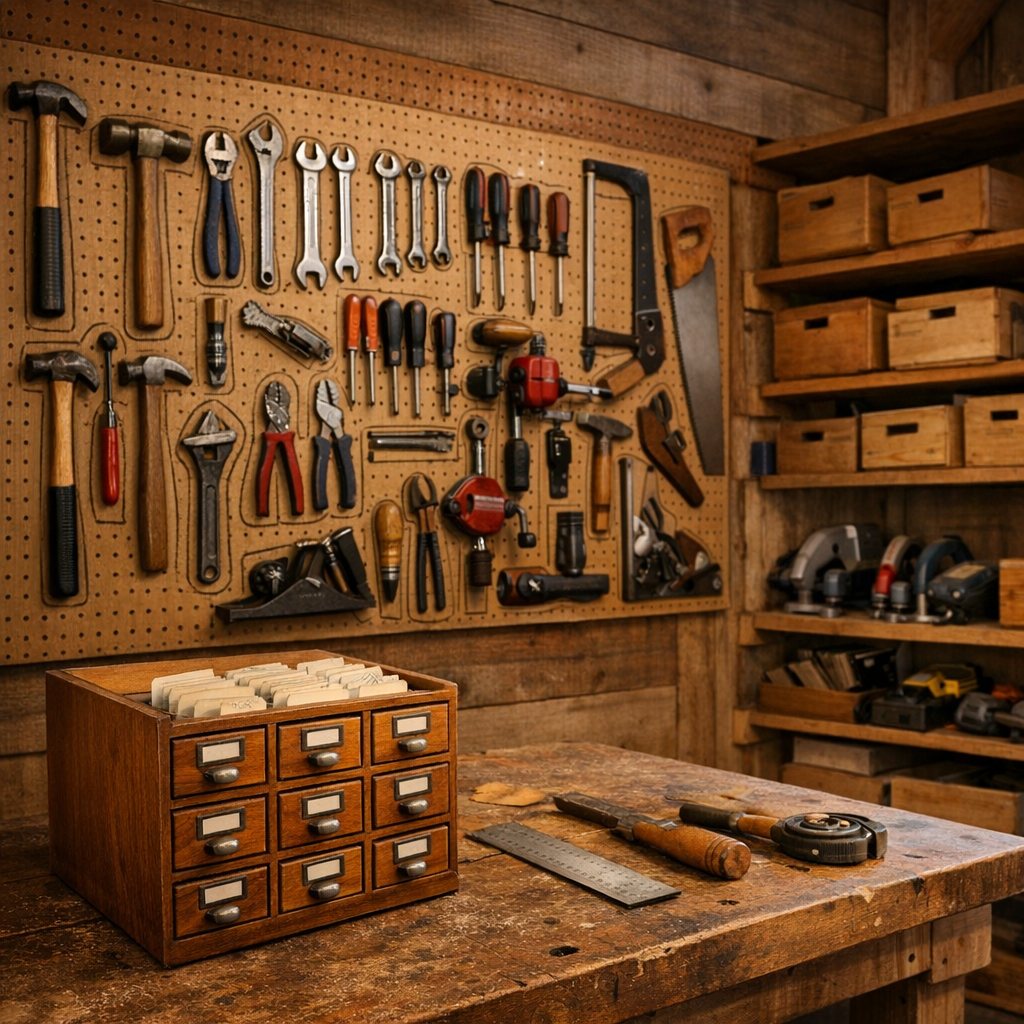
Eine Bohrmaschine wird im Schnitt zwölf Minuten in ihrem Leben benutzt. Zwanzig Haushalte brauchen keine zwanzig Bohrmaschinen, sie brauchen zwei gute und eine Liste.A drill is used for twelve minutes on average in its whole life. Twenty households do not need twenty drills, they need two good ones and a list.

So wird gebautHow it is built
Regal mit Schattenrissen, Ausleihbuch oder eine einfache Tabelle, feste Rückgabezeit, ein Mensch mit Zuständigkeit für Wartung.A shelf unit with painted outlines, a lending book or a simple table, a fixed return date, one person responsible for maintenance.
KostenCost
unter 300 Euro Organisationunder 300 euros for the organising
Erster SchrittFirst step
Mit dem beginnen, was schon da ist. Erst inventarisieren, dann ergänzen.Start with what is already there. Take stock first, then fill the gaps.
Schritt für SchrittStep by step
Werkzeugbibliothek, Schnitt 200 cm 80 cm 120 cm 60 cm 15 cm 1 2 3 4 5 6 7 8 9 1 Lochwand Sperrholz 12 mm 2 Schattenriss schwarz gemalt 3 Regalboden 18 mm, 80 x 40 cm 4 Regalwange 18 mm, 200 x 40 cm 5 Kantholz auf 90 und 190 cm 6 Unterstes Fach 15 cm hoch 7 Karteikasten mit Register 8 Hakenleiste mit Holzmarken 9 Feuerlöscher und Verbandkasten Nicht maßstäblich, Maße in cm
Bauskizze Werkzeugbibliothek, am Handy seitlich wischenMeasured sketch of Tool library, swipe sideways on a phone

Bevor du anfängst

Verleih unter Nachbarn ohne Gewinnabsicht ist kein Gewerbe. Sobald ihr Gebühren nehmt, führt der Weg zum Gewerbeamt eurer Gemeinde. Fragt dort, ob eure Form der Kostenumlage anmeldepflichtig ist und ob die Kleinunternehmerregelung nach Paragraf 19 Umsatzsteuergesetz für euch passt. Klärt im selben Zug mit eurer Vereinshaftpflicht schriftlich, ob Schäden durch ausgeliehene Maschinen gedeckt sind. Die reale Gefahr steckt in den Geräten. Prüft ortsveränderliche Elektrowerkzeuge regelmäßig und haltet das schriftlich fest, im Verein mit Beschäftigten ist die Prüfung nach DGUV Vorschrift 3 durch eine Elektrofachkraft Pflicht. Motorsägen gehen nur an Menschen mit Kurs. Namen im Ausleihbuch werden nach der Rückgabe vernichtet.

Das brauchst du

  • 6 Regalböden Leimholz Fichte 18 mm, 80 x 40 cm, breiter biegt sich das Brett unter Werkzeuglast durch
  • 4 Regalwangen Leimholz 18 mm, 200 x 40 cm als Seiten und Mittelstege
  • 3 Lochplatten Sperrholz 12 mm, 120 x 60 cm als Werkzeugwand
  • 2 Kanthölzer 6 x 8 cm, 250 cm mit 20 Dübeln 8 mm als Unterkonstruktion
  • 60 Spanplattenschrauben 4 x 50 mm für den Regalbau
  • 1 Dose Acryllack schwarz, 750 ml für die Schattenrisse
  • 150 wetterfeste Etiketten 5 x 2 cm für die Inventarnummern
  • 1 Karteikasten A6 mit 12 Monatsregistern und 200 Karten trägt die Ausleihe
  • 60 Holzmarken 6 cm mit Namen, je Person drei Stück
  • 1 Feuerlöscher 6 kg ABC-Pulver und 1 Verbandkasten DIN 13157

Werkzeug

Akkuschrauber, Bohrhammer, Handkreissäge, Wasserwaage 120 cm, Zollstock, Bleistift, Pinsel

Schritt für Schritt

  1. Inventur an einem Nachmittag. Alle legen ihr Werkzeug auf einen Tisch. Bei 20 Haushalten kommen 9 Bohrmaschinen zusammen und keine einzige Kappsäge.
  2. Aussortieren. Je Sorte bleiben zwei gute Geräte, der Rest geht zurück. Defektes sofort entsorgen, es wird sonst nie repariert.
  3. Raum festlegen. 8 bis 12 m2, trocken, frostfrei, abschließbar, mit Steckdose. Ein Seecontainer taugt nur mit Lüftungsgittern.
  4. Unterkonstruktion und Regal. Kanthölzer waagerecht auf 90 cm und 190 cm dübeln, Wangen alle 80 cm stellen, Böden aufschrauben, unterstes Fach 15 cm über dem Boden.
  5. Lochwand einrichten. Handwerkzeug auflegen, mit Bleistift umfahren, Fläche schwarz ausmalen. Am schwarzen Umriss siehst du, was fehlt.
  6. Nummerieren. Jedes Gerät bekommt eine Nummer, dieselbe steht auf einer Karteikarte mit Kaufdatum und Zubehör.
  7. Ausleihe ohne Software. Wer etwas mitnimmt, hängt eine seiner drei Holzmarken an den freien Haken und steckt die Karteikarte mit Datum in das Register des Rückgabemonats. Drei Marken heißen höchstens drei Geräte, die Frist beträgt 7 Tage.
  8. Wartungspaten benennen. Eine Person je zehn Geräte, Namen an die Wand. Sägeblätter schärfen, Akkus laden, Kabel prüfen, einmal im Quartal. In den Karteikasten schaut jemand jeden Sonntag.

Zeit und Kosten

Zwei bis drei Personen, ein Wochenende, rund 16 Arbeitsstunden. Material 180 bis 300 Euro. Wer Fehlendes zukauft, rechnet 400 bis 900 Euro für Kappsäge, Bohrhammer und zwei Akkusysteme.

Die drei häufigsten Fehler

  • Zu breite Fächer. 18 mm Leimholz sackt über 100 cm Spannweite unter einer Kiste Bohrhämmer durch. Höchstens 80 cm, sonst 27 mm Material.
  • Niemand ist zuständig. Ohne Wartungspaten sind nach zwölf Monaten die Akkus tot und die Sägeblätter stumpf. Dann holt jeder wieder sein eigenes Gerät.
  • Ausleihe auf Zuruf. Ohne Marke und Datum verschwinden im ersten Jahr 20 Prozent der Kleinteile.

Before you start

Lending between neighbours without an aim of profit is not a business. As soon as you charge fees, the way leads to the Gewerbeamt (the trade office of your parish). Ask there whether your way of sharing costs has to be registered, and whether the Kleinunternehmerregelung, the small business rule under Section 19 of the Umsatzsteuergesetz (the German VAT act), fits you. In the same call, settle in writing with your Vereinshaftpflicht (the liability insurance of your association) whether damage caused by borrowed machines is covered. The real danger sits in the machines. Test portable electric tools regularly and record it in writing, and in an association with employees the test by a qualified electrician under DGUV Vorschrift 3 (the accident prevention rules for electrical equipment) is compulsory. Chainsaws only go to people who have done a course. Names in the lending book are destroyed after the return.

What you need

  • 6 shelf boards of Leimholz spruce 18 mm, 80 x 40 cm, any wider and the board sags under a load of tools
  • 4 shelf uprights of Leimholz 18 mm, 200 x 40 cm as sides and middle dividers
  • 3 pegboards of 12 mm plywood, 120 x 60 cm as the tool wall
  • 2 timber battens 6 x 8 cm, 250 cm with 20 dowels 8 mm as the sub frame
  • 60 chipboard screws 4 x 50 mm for building the shelves
  • 1 tin of black acrylic paint, 750 ml for the outlines
  • 150 weatherproof labels 5 x 2 cm for the inventory numbers
  • 1 A6 card index box with 12 monthly dividers and 200 cards carries the lending
  • 60 wooden tags 6 cm with names on them, three per person
  • 1 fire extinguisher 6 kg ABC powder and 1 first aid kit to DIN 13157

Tools

Cordless screwdriver, hammer drill, hand held circular saw, spirit level 120 cm, folding rule, pencil, brush

Step by step

  1. Take stock in one afternoon. Everybody puts their tools on one table. With 20 households you get 9 drills and not a single mitre saw.
  2. Sort out. Two good machines of each kind stay, the rest goes back. Throw broken things away at once, otherwise they never get mended.
  3. Settle on a room. 8 to 12 m2, dry, frost free, lockable, with a socket. A shipping container only works with ventilation grilles.
  4. Sub frame and shelves. Dowel the battens level at 90 cm and 190 cm, set the uprights every 80 cm, screw the boards on, lowest shelf 15 cm above the floor.
  5. Set up the pegboard. Lay the hand tools on it, draw round them in pencil, fill the shape in black. The black outline shows you what is missing.
  6. Number everything. Every machine gets a number, and the same number goes on an index card with the purchase date and the accessories.
  7. Lending without software. Whoever takes something hangs one of their three wooden tags on the empty hook and puts the index card, dated, into the divider for the month it is due back. Three tags means three machines at most, and the loan runs for 7 days.
  8. Name the maintenance keepers. One person per ten machines, names on the wall. Sharpen saw blades, charge batteries, check cables, once a quarter. Somebody looks into the card box every Sunday.

Time and cost

Two to three people, one weekend, around 16 working hours. Materials 180 to 300 euros. If you buy what is missing, reckon on 400 to 900 euros for a mitre saw, a hammer drill and two battery systems.

The three most common mistakes

  • Shelves too wide. 18 mm Leimholz sags over a span of 100 cm under a crate of hammer drills. 80 cm at most, otherwise 27 mm material.
  • Nobody is responsible. Without maintenance keepers the batteries are dead and the saw blades blunt after twelve months. Then everybody fetches their own machine again.
  • Lending by shouting across the yard. Without a tag and a date, 20 per cent of the small parts vanish in the first year.

Worauf es ankommtWhat matters hereOhne klare Zuständigkeit für Wartung und Rückgabe verwahrlost jede Werkzeugbibliothek innerhalb eines Jahres.Without a clear responsibility for maintenance and returns, every tool library falls apart within a year.

Barfußpfad, Barefoot path
Ein WochenendeOne weekendEtwas ÜbungSome practice helps

BarfußpfadBarefoot path

4 Personen, schweres Heben4 people, heavy lifting

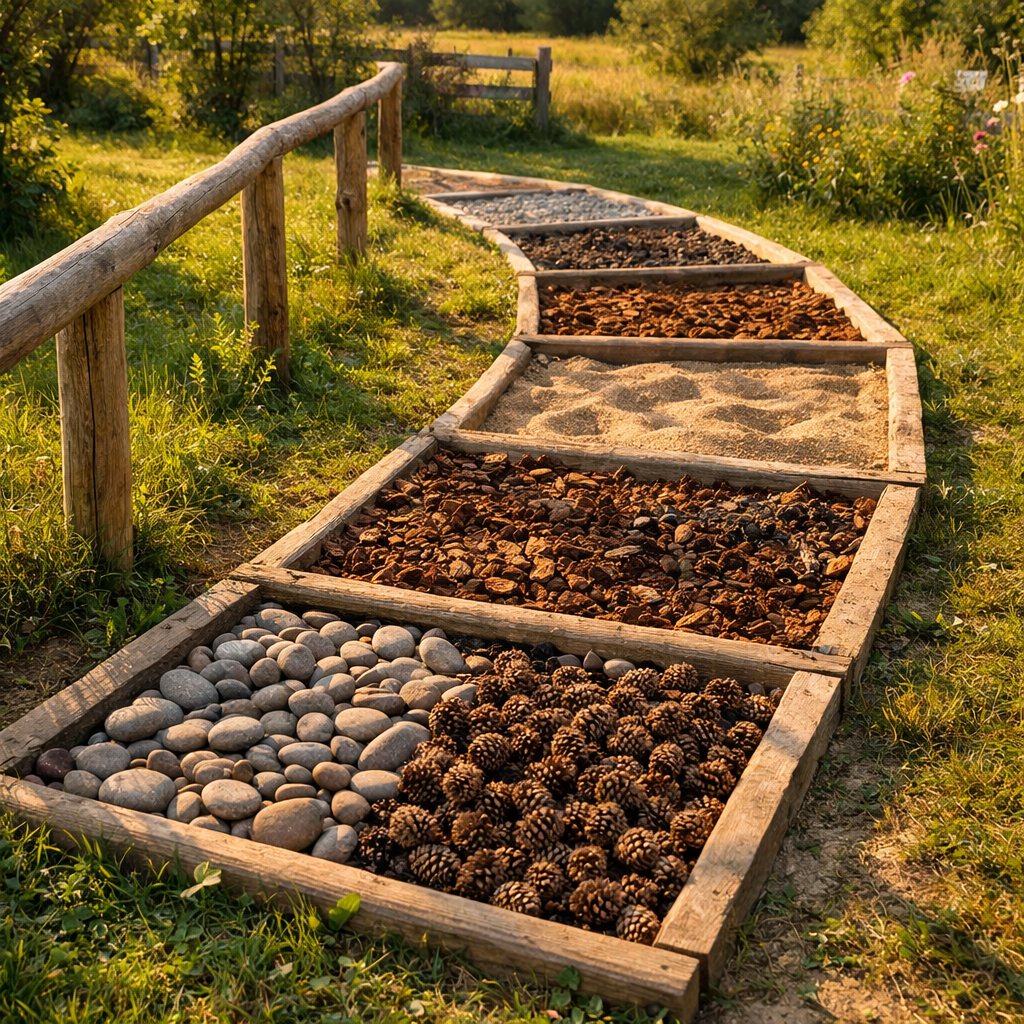
Kies, Rindenmulch, Sand, Lehm, Baumscheiben, Wasser. Ein Rundweg aus wechselnden Untergründen, barfuss zu gehen. Kinder lieben ihn. Besucher erinnern sich Jahre später daran, und gekostet hat er fast nichts.Gravel, bark mulch, sand, clay, log slices, water. A circular path of changing surfaces, to walk barefoot. Children love it. Visitors still remember it years later, and it cost almost nothing.

So wird gebautHow it is built
Weg abstecken, Randbegrenzung aus Holz oder Stein, Felder von je zwei bis drei Metern mit unterschiedlichem Material füllen. Am Ende ein Wasserbecken zum Abspülen.Peg the path out, edge it with timber or stone, fill fields of two to three metres each with different material. A water basin at the end for rinsing your feet.
KostenCost
300 bis 1.500 Euro300 to 1,500 euros
Erster SchrittFirst step
Materialien sammeln, bevor ihr grabt. Das meiste fällt bei anderen Arbeiten auf dem Gelände ohnehin an.Collect the materials before you dig. Most of it comes up during other work on the site anyway.
Schritt für SchrittStep by step
Barfußpfad, Schnitt Draufsicht 1 2 3 4 5 6 7 8 9 10 11 12 Bank Schuhregal Fußbecken Querschnitt Feld 80 cm 250 cm 20 cm 15 cm 1 2 3 4 5 6 7 8 9 1 Rundkurs 25 bis 40 m, 12 Felder 2 Hartes Feld aus Kies 16/32 3 Weiches Feld, Mulch 10/40 4 Sandfeld und Lehmfeld 5 Baumscheiben im Sandbett 6 Rand aus Robinienstämmen 7 Erdnagel 8 mm, alle 80 cm 8 Unkrautvlies als Trennlage 9 Handlauf 90 cm hoch am Feld Nicht maßstäblich, Maße in cm
Bauskizze Barfußpfad, am Handy seitlich wischenMeasured sketch of Barefoot path, swipe sideways on a phone

Bevor du anfängst

Ein Barfußpfad braucht keine Genehmigung. Die Stelle, mit der ihr redet, ist eure Haftpflichtversicherung, und die Frage lautet, ob Besucher auf eurem Grundstück mitversichert sind und was bei angekündigten Veranstaltungen gilt. Lasst euch die Antwort schriftlich geben. Sobald jemand außerhalb der Familie darauf geht, trifft euch die Verkehrssicherungspflicht nach Paragraf 823 Bürgerliches Gesetzbuch. Praktisch heißt das: einmal im Monat ablaufen, Datum und Kürzel in eine Kladde, Auffälligkeiten sofort beheben. Ein Schild mit dem Hinweis auf eigene Gefahr entlastet nicht vollständig. Die häufigste Verletzung ist der Schnitt in die Fußsohle durch Glas oder einen Nagel, deshalb wird jeder Abschnitt vor der Saison abgeharkt.

Das brauchst du

  • 30 lfm Robinien-Halbstämme, 8 bis 10 cm dick als Randbegrenzung
  • 60 Erdnägel 8 mm, 40 cm lang zum Fixieren der Ränder
  • 50 m2 Unkrautvlies 100 g/m2 als Trennlage unter jedem Feld
  • 0,6 m3 Rundkies 16/32 und 0,4 m3 Grobkies 32/63 für drei harte Felder
  • 0,6 m3 Spielsand 0/2 nach DIN EN 1177 für Sandfeld und Bettung
  • 1,5 m3 Rindenmulch 10/40 für zwei weiche Felder
  • 20 Baumscheiben Robinie, 25 bis 35 cm breit, 12 cm dick als Trittsteine
  • 0,3 m3 ungebrannter Lehm für das Matschfeld
  • 12 lfm Robinienstangen 8 cm und 6 Pfosten 10 x 10 cm als Handlauf
  • 1 Zinkwanne 90 Liter, 1 Bank, 1 Schuhregal für Anfang und Ende

Werkzeug

Spaten, Schaufel, Schubkarre, Rechen, Wurfsieb 10 mm, Vorschlaghammer, Wasserwaage, Schnur, Pflöcke, Handsäge

Schritt für Schritt

  1. Material zuerst sammeln. Kies, Sand, Mulch, Baumscheiben und Zapfen fallen bei anderen Arbeiten ohnehin an. Erst wenn acht Sorten beisammen sind, wird gegraben.
  2. Weg abstecken. Rundkurs 25 bis 40 m, Breite 80 cm, mit Schnur und Pflöcken markieren. Kurvenradius mindestens 2 m.
  3. Felder einteilen. Je Feld 2 bis 3 m, also 10 bis 14 Felder. Hart und weich abwechseln, das spürt jeder Fuß.
  4. Alles durchsieben. Jede Fuhre über ein Wurfsieb mit 10 mm Maschenweite geben. Scherben, Nägel und Draht sind das Risiko.
  5. Ausheben und Vlies legen. 20 cm tief über die ganze Länge, Bahnen 10 cm überlappen. Ohne Trennlage wandert Kies in den Sand, und der Pfad ist nach zwei Jahren ein einziges Grau.
  6. Ränder setzen. Halbstämme flach auf den Vliesrand legen, alle 80 cm einen Erdnagel durchschlagen.
  7. Felder füllen. Kies 12 cm, Sand 15 cm, Rindenmulch 15 cm (sackt im ersten Jahr um ein Drittel), Baumscheiben in ein 5 cm Sandbett bündig einschlagen.
  8. Handlauf montieren. Pfosten 60 cm tief, Stange auf 90 cm Höhe, an Grobkies, Lehm und Baumscheiben. Ohne Handlauf gehen ältere Menschen außen herum.
  9. Fußbecken einbauen. Wanne am Ende ebenerdig eingraben, Überlauf ins Beet, Bank und Schuhregal an den Anfang.

Zeit und Kosten

Vier Personen, zwei Tage, rund 60 Arbeitsstunden. Material 350 bis 1.400 Euro, je nachdem wie viel vom Gelände kommt. Ein Kubikmeter Kies kostet 45 bis 70 Euro, Rindenmulch 40 bis 60 Euro.

Die drei häufigsten Fehler

  • Ungesiebtes Material. Eine Scherbe im Mulchfeld beendet den Sommer für alle. Jede Fuhre sieben, auch die vom netten Nachbarn.
  • Kein Vlies unter den Feldern. Nach zwei Regenwintern liegt der Kies im Lehm und der Sand im Kies. Nachsieben dauert länger als der Einbau.
  • Felder zu kurz. Unter 2 m spürt der Fuß den Wechsel kaum. Lieber acht lange Felder als sechzehn kurze.

Before you start

A barefoot path needs no permit. The people to talk to are your Haftpflichtversicherung (your liability insurer), and the question is whether visitors on your land are covered and what applies at advertised events. Have the answer in writing. As soon as anybody outside the family walks on it, the Verkehrssicherungspflicht (the duty to keep your premises safe) under Section 823 of the Bürgerliches Gesetzbuch, the German civil code, applies to you. In practice that means: walk the path once a month, date and initials in a notebook, anything odd put right at once. A sign saying that people walk at their own risk does not free you completely. The commonest injury is a cut in the sole of the foot from glass or a nail, which is why every section is raked through before the season.

What you need

  • 30 linear metres of robinia half round posts, 8 to 10 cm thick as the edging
  • 60 ground pegs 8 mm, 40 cm long to hold the edging
  • 50 m2 weed control fabric 100 g/m2 as a separating layer under every field
  • 0.6 m3 rounded gravel 16/32 and 0.4 m3 coarse gravel 32/63 for three hard fields
  • 0.6 m3 play sand 0/2 to DIN EN 1177 for the sand field and the bedding
  • 1.5 m3 bark mulch 10/40 for two soft fields
  • 20 log slices of robinia, 25 to 35 cm wide, 12 cm thick as stepping stones
  • 0.3 m3 unfired clay for the mud field
  • 12 linear metres of robinia poles 8 cm and 6 posts 10 x 10 cm as a handrail
  • 1 zinc tub 90 litres, 1 bench, 1 shoe rack for the start and the end

Tools

Spade, shovel, wheelbarrow, rake, riddle with 10 mm mesh, sledgehammer, spirit level, string, pegs, hand saw

Step by step

  1. Collect the material first. Gravel, sand, mulch, log slices and cones come up during other work anyway. Only once eight kinds are together do you start digging.
  2. Peg the path out. A circuit of 25 to 40 m, 80 cm wide, marked with string and pegs. Curve radius at least 2 m.
  3. Divide it into fields. 2 to 3 m per field, so 10 to 14 fields. Alternate hard and soft, every foot feels that.
  4. Sieve everything. Put every load over a riddle with 10 mm mesh. Broken glass, nails and wire are the risk.
  5. Dig out and lay the fabric. 20 cm deep over the whole length, with the strips overlapping by 10 cm. Without a separating layer the gravel wanders into the sand, and after two years the path is one single grey.
  6. Set the edging. Lay the half round posts flat on the edge of the fabric and drive a ground peg through every 80 cm.
  7. Fill the fields. Gravel 12 cm, sand 15 cm, bark mulch 15 cm (it settles by a third in the first year), log slices bedded flush in 5 cm of sand.
  8. Fit the handrail. Posts 60 cm deep, rail at a height of 90 cm, along the coarse gravel, the clay and the log slices. Without a handrail older people walk round the outside.
  9. Build the foot basin in. Sink the tub at the end flush with the ground, overflow into the bed, bench and shoe rack at the start.

Time and cost

Four people, two days, around 60 working hours. Materials 350 to 1,400 euros, depending on how much comes off the site. A cubic metre of gravel costs 45 to 70 euros, bark mulch 40 to 60 euros.

The three most common mistakes

  • Unsieved material. One piece of glass in the mulch field ends the summer for everybody. Sieve every load, including the one from the friendly neighbour.
  • No fabric under the fields. After two wet winters the gravel lies in the clay and the sand in the gravel. Sieving it out again takes longer than laying it did.
  • Fields too short. Under 2 m the foot barely feels the change. Better eight long fields than sixteen short ones.

Worauf es ankommtWhat matters hereScherben und Metall im gesammelten Material sind das einzige echte Risiko. Alles vor dem Einbau durchsieben.Broken glass and metal in the collected material are the only real risk. Sieve everything before it goes in.

Naturspielplatz, Natural playground
Wochen bis MonateWeeks to monthsMit erfahrener HandNeeds an experienced hand

NaturspielplatzNatural playground

5 Personen, Robinienstämme über 100 kg, schweres Heben5 people, robinia trunks over 100 kg, heavy lifting

Weidentunnel, Kletterbaum, Matschküche, Hangrutsche, Baumhaus. Kinder brauchen keine genormten Geräte, sie brauchen Material, Höhe und die Erlaubnis, es selbst zu bauen.A willow tunnel, a climbing tree, a mud kitchen, a slide down the slope, a tree house. Children do not need standardised equipment, they need material, height and permission to build it themselves.

So wird gebautHow it is built
Weidenruten im Frühjahr stecken, sie wurzeln von selbst. Kletterstämme aus Robinie, Fallschutz aus Rindenmulch, Wasser und Sand nebeneinander.Push willow rods in during spring, they root by themselves. Climbing trunks of robinia, fall protection of bark mulch, water and sand next to each other.
KostenCost
300 bis 3.000 Euro300 to 3,000 euros
Erster SchrittFirst step
Kinder mitplanen lassen. Sie bauen anders, als Erwachsene denken, und benutzen es dann auch wirklich.Let the children plan with you. They build differently from how adults imagine, and then they really use it.
Schritt für SchrittStep by step
Naturspielplatz, Schnitt 150 cm 30 cm 80 cm 20 cm 60 cm 1 2 3 4 5 6 7 8 9 1 Robinienstamm 20 bis 25 cm 2 Querholz, Schraube 10 x 200 mm 3 Fallhöhe bis zum Standpunkt 4 Rindenmulch 20/80, 30 cm hoch 5 Unkrautvlies 150 g/m2 darunter 6 Stammfuß 80 cm tief im Schotter 7 Rutsche 300 cm, 30 bis 40 Grad 8 Weidentunnel, Ruten alle 20 cm 9 Matschküche 60 cm mit Pumpe Nicht maßstäblich, Maße in cm
Bauskizze Naturspielplatz, am Handy seitlich wischenMeasured sketch of Natural playground, swipe sideways on a phone

Bevor du anfängst

Auf eurem Grundstück und für eure Kinder gilt die DIN EN 1176 nicht verpflichtend, sie ist aber der Maßstab, an dem ein Gericht im Schadensfall misst. Sobald der Platz öffentlich zugänglich ist, also bei Seminaren oder offenem Tor, ist danach zu bauen. Holt dann eine sachkundige Person für die Abnahme und fragt sie nach dem Prüfrhythmus nach DIN EN 1176 Teil 7. Er hat drei Stufen: Sichtkontrolle täglich bis wöchentlich je nach Nutzung, operative Inspektion alle ein bis drei Monate, Hauptinspektion einmal im Jahr durch eine unabhängige Fachkraft. Baurechtlich sind die Geräte meist verfahrensfrei, was nur heißt, dass niemand vorher prüft, nicht dass jeder Standort zulässig wäre. Über 150 Zentimetern Fallhöhe rechnet ihr zwei Drittel der Fallhöhe plus 50 Zentimeter.

Das brauchst du

  • 200 Weidenruten Salix viminalis, 250 bis 300 cm für Tunnel und Iglu
  • 6 Robinienstämme, 20 bis 25 cm dick, 300 cm lang als Kletterstämme
  • 8 m3 Rindenmulch 20/80 nach DIN EN 1177 als Fallschutz
  • 60 m2 Unkrautvlies 150 g/m2 unter die Fallschutzfläche
  • 1,5 m3 Spielsand 0/2, gewaschen für Sandfläche und Matschküche
  • 1 Edelstahlrutsche 300 cm, 40 cm breit für den Hang
  • 1 Schwengelpumpe mit 3 m Saugrohr für Wasser ohne Strom
  • 20 Sechskantschrauben 10 x 200 mm mit Karosseriescheiben für die Stammverbindungen
  • 1 Arbeitsplatte Lärche 40 mm, 120 x 60 cm mit 2 Edelstahlschüsseln als Matschküche
  • 1 Kladde A5 für die dokumentierte Sichtprüfung

Werkzeug

Spaten, Erdlochbohrer 25 cm, Schubkarre, Akkuschrauber, Schlangenbohrer 10 mm, Ratsche SW 17, Wasserwaage, Handsäge, Astschere

Schritt für Schritt

  1. Kinder planen mit. Einen Nachmittag mit Stöcken im Gras auslegen, was wohin kommt. Was Kinder selbst gelegt haben, benutzen sie auch.
  2. Fallhöhen festlegen. Fallhöhe ist der höchste Punkt, den ein Kind mit den Füßen erreicht. Unter 60 cm reicht gewachsener Rasen. Ab 60 cm braucht es Fallschutz, ab 100 cm gelten strengere Anforderungen an Material und Fallraum.
  3. Fallräume abstecken. Um jedes Gerät bleiben 150 cm frei, über 150 cm Fallhöhe sind es 200 cm. Keine Kanten oder Steine darin.
  4. Weiden stecken. Februar bis März, Ruten 30 cm tief, Abstand 20 cm, oben kreuzen und binden. Sie wurzeln von selbst.
  5. Kletterstämme setzen. Löcher 80 cm tief bohren, Stamm einstellen, lagenweise mit Schotter verfüllen und stampfen. Nur Robinie, Eiche oder Lärche.
  6. Fallschutz einbauen. 30 cm ausheben, Vlies auslegen, Rindenmulch 20/80 einfüllen. 20 cm tragen bis 2 m Fallhöhe, 30 cm bis 3 m, dazu 10 cm Zuschlag für Verlagerung.
  7. Rutsche und Matschküche. Rutsche in den Hang mit 30 bis 40 Grad, Auslauf höchstens 20 cm über dem Boden, 200 cm freie Auslaufzone. Arbeitsplatte auf 60 cm, Pumpe daneben.
  8. Prüfen und aufschreiben. Öffnungen zwischen 89 und 230 mm sind Kopffangstellen, sie müssen kleiner oder größer sein. Sichtprüfung monatlich mit Datum und Kürzel, jährlich jeden Stamm am Boden anstechen.

Zeit und Kosten

Fünf Personen, 6 bis 10 Wochenenden, rund 200 Arbeitsstunden. 400 bis 3.000 Euro. Größter Posten ist der Fallschutz: 8 m3 Rindenmulch kosten 350 bis 500 Euro und müssen alle zwei Jahre nachgefüllt werden.

Die drei häufigsten Fehler

  • Fallschutz zu dünn. 10 cm Mulch bremsen nichts. Unter 20 cm ist die Fläche im Schadensfall nicht zu verteidigen.
  • Falsches Holz im Boden. Fichte und Kiefer sind nach fünf Jahren im Erdkontakt weich, oben sieht man nichts davon. Robinie hält 25 Jahre.
  • Prüfung nicht aufgeschrieben. Vor Gericht zählt nur die schriftliche Prüfung. Eine Kladde mit Datum genügt.

Before you start

On your own land and for your own children DIN EN 1176 is not binding, but it is the yardstick a court measures by if something happens. As soon as the place is open to the public, at seminars or with the gate open, build to it. Then bring in a sachkundige Person (a competent inspector) for the handover and ask about the inspection rhythm under DIN EN 1176 part 7. It has three levels: a visual check daily to weekly depending on use, an operational inspection every one to three months, and a main inspection once a year by an independent specialist. In building law the equipment is usually verfahrensfrei, which only means that nobody checks beforehand, not that every location would be allowed. Above 150 centimetres of fall height you reckon two thirds of the fall height plus 50 centimetres.

What you need

  • 200 willow rods, Salix viminalis, 250 to 300 cm for the tunnel and the igloo
  • 6 robinia trunks, 20 to 25 cm thick, 300 cm long as climbing trunks
  • 8 m3 bark mulch 20/80 to DIN EN 1177 as fall protection
  • 60 m2 weed control fabric 150 g/m2 under the fall protection area
  • 1.5 m3 washed play sand 0/2 for the sand area and the mud kitchen
  • 1 stainless steel slide 300 cm, 40 cm wide for the slope
  • 1 hand pump with a 3 m suction pipe for water without electricity
  • 20 hex bolts 10 x 200 mm with penny washers for the trunk joints
  • 1 larch worktop 40 mm, 120 x 60 cm with 2 stainless steel bowls as the mud kitchen
  • 1 A5 notebook for the recorded visual checks

Tools

Spade, post hole auger 25 cm, wheelbarrow, cordless screwdriver, auger bit 10 mm, ratchet spanner 17 mm, spirit level, hand saw, loppers

Step by step

  1. The children plan with you. One afternoon laying out with sticks in the grass what goes where. What children have laid out themselves, they also use.
  2. Settle the fall heights. The fall height is the highest point a child can reach with its feet. Under 60 cm ordinary grass is enough. From 60 cm you need fall protection, and from 100 cm stricter requirements apply to the material and the fall space.
  3. Peg the fall spaces out. 150 cm stays clear around every piece of equipment, and 200 cm above a fall height of 150 cm. No edges or stones in it.
  4. Push the willows in. February to March, rods 30 cm deep, 20 cm apart, crossed and tied at the top. They root by themselves.
  5. Set the climbing trunks. Bore the holes 80 cm deep, stand the trunk in, fill with crushed stone in layers and tamp it. Only robinia, oak or larch.
  6. Lay the fall protection. Dig out 30 cm, lay the fabric, fill in bark mulch 20/80. 20 cm carries up to a fall height of 2 m, 30 cm up to 3 m, plus 10 cm on top because the mulch shifts.
  7. Slide and mud kitchen. Slide into the slope at 30 to 40 degrees, the run out no more than 20 cm above the ground, with 200 cm of clear space beyond it. Worktop at 60 cm, pump beside it.
  8. Check and write it down. Openings between 89 and 230 mm are head traps, they have to be smaller or bigger. Visual check monthly with the date and initials, and once a year probe every trunk at ground level.

Time and cost

Five people, 6 to 10 weekends, around 200 working hours. 400 to 3,000 euros. The biggest item is the fall protection: 8 m3 of bark mulch cost 350 to 500 euros and have to be topped up every two years.

The three most common mistakes

  • Fall protection too thin. 10 cm of mulch slows nothing down. Under 20 cm the area cannot be defended if something happens.
  • The wrong wood in the ground. Spruce and pine are soft after five years in contact with soil, and from above you see nothing of it. Robinia lasts 25 years.
  • The check not written down. In court only the written check counts. A notebook with dates is enough.

Worauf es ankommtWhat matters hereSobald der Platz öffentlich zugänglich ist, gilt die Verkehrssicherungspflicht. Regelmäßige Sichtprüfung dokumentieren.As soon as the place is open to the public, the Verkehrssicherungspflicht (the duty to keep your premises safe) applies. Record the regular visual checks.

Versammlungsplatz, Gathering place
Ein WochenendeOne weekendEtwas ÜbungSome practice helps

VersammlungsplatzGathering place

4 Personen, Sitzblöcke etwa 45 kg, schweres Heben4 people, seat blocks around 45 kg, heavy lifting

Wenn Entscheidungen im Kreis fallen, fallen sie anders. Ein fester Ort für die Runde, drinnen wie draußen, macht aus Beisammensein eine Struktur, auf die man sich verlassen kann.When decisions are made in a circle, they come out differently. A fixed place for the round, indoors as well as outside, turns sitting together into a structure you can rely on.

So wird gebautHow it is built
Kreis aus Bänken oder Holzscheiben, Mitte frei lassen, Baum oder Feuer als Zentrum, Wetterschutz für den Winter in Reichweite.A circle of benches or log discs, the middle left clear, a tree or a fire as the centre, shelter from the weather within reach for the winter.
KostenCost
0 bis 800 Euro0 to 800 euros
Erster SchrittFirst step
Den Kreis wirklich rund bauen. Sobald eine Seite länger ist, entsteht ein Vorne, und damit ein Gefälle.Build the circle genuinely round. As soon as one side is longer, a front appears, and with it a slope.
Schritt für SchrittStep by step
Versammlungsplatz, Schnitt Draufsicht 420 cm 250 cm 100 cm 35 cm 20 cm 1 2 3 4 5 6 7 8 9 1 Sitzblock 45 hoch, 35 dick 2 Innendurchmesser 420 cm 3 Feuerstelle 100 cm, Steinring 4 250 cm vom Feuer bis zum Sitz 5 20 cm Luft zwischen Blöcken 6 Schotter und Brechsand 7 Palisadenrand, 60 cm Umlauf 8 Sonnensegel 5 x 5 m auf 250 cm 9 Eimer, Feuerpatsche, Redestab Nicht maßstäblich, Maße in cm
Bauskizze Versammlungsplatz, am Handy seitlich wischenMeasured sketch of Gathering place, swipe sideways on a phone

Bevor du anfängst

Für das Lagerfeuer ist das Ordnungsamt eurer Gemeinde zuständig. Ruft dort an und fragt, ob ein Feuer aus naturbelassenem Holz auf eigenem Grund erlaubt ist und ob es angezeigt werden muss, denn eine bundesweite Größengrenze gibt es nicht. Fragt gleich nach dem Abstand zum Wald, den regeln die Landeswaldgesetze unterschiedlich. Ein befestigter Platz ohne Dach ist baurechtlich meist frei, ein fester Unterstand nicht, und dass niemand vorher prüft, macht ihn noch nicht zulässig. Die größte Gefahr sitzt über euren Köpfen. Lasst Bäume über Sitzplätzen jährlich auf Totholz kontrollieren, bei Astbruch haftet der Eigentümer. Lose Sitzblöcke und Stolperkanten prüft ihr im selben Gang.

Das brauchst du

  • 16 Sitzblöcke Robinie oder Eiche, 45 cm hoch, 35 cm dick für den Kreis
  • 4 m3 Schotter 0/32 als Tragschicht
  • 1,5 m3 Brechsand 0/5 für die wassergebundene Decke
  • 60 m2 Unkrautvlies 150 g/m2 zwischen Boden und Schotter
  • 25 lfm Robinienpalisaden 8 cm als Randeinfassung
  • 1 Feuerschale Stahl 80 cm, 4 mm Wandstärke oder 30 Feldsteine für eine Grube
  • 1 Sonnensegel 5 x 5 m, 280 g/m2 mit 4 Pfosten Lärche 12 x 12 cm als Wetterschutz
  • 8 Sack Trockenbeton 25 kg für die Pfostenfüße
  • 1 Redestab aus Haselholz und 1 Sanduhr für 3 Minuten für die Gesprächsform
  • 1 Eimer 10 Liter, 1 Feuerlöscher 6 kg, 1 Feuerpatsche ans Feuer

Werkzeug

Spaten, Schaufel, Schubkarre, Rüttelplatte aus dem Verleih, Wasserwaage 200 cm, Rechen, Handsäge, Akkuschrauber

Schritt für Schritt

  1. Ort wählen. Windgeschützt, halbschattig, mindestens 20 m Abstand zu Gebäuden. Soll ein Feuer brennen, haltet 100 m Abstand zum Wald.
  2. Durchmesser rechnen. Je Person 65 cm Sitzbreite. 20 Personen ergeben 13 m Umfang und damit 4,20 m Innendurchmesser. Über 8 m versteht man einander nur mit erhobener Stimme.
  3. Kreis anreißen. Erdnagel in die Mitte, 6 m Schnur auf den halben Durchmesser knoten, mit Sand den Kreis streuen. An vier Stellen nachmessen, jede längere Seite erzeugt ein Vorne.
  4. Ausheben. 25 cm tief über die Kreisfläche, dazu 60 cm Umlauf hinter den Sitzen.
  5. Tragschicht aufbauen. Vlies, 15 cm Schotter, rütteln, 5 cm Brechsand, rütteln. Zwei Prozent Gefälle nach außen, sonst steht nach jedem Gewitter eine Pfütze im Kreis.
  6. Sitze stellen. Palisaden als Rand bündig einschlagen. Sitzoberkante überall 45 cm, jeden Block mit der Wasserwaage prüfen, 20 cm Luft dazwischen, kein erhöhter Platz.
  7. Feuerstelle bauen. In der Mitte 100 cm Durchmesser, 20 cm ausheben, mit Schotter füllen, Feldsteine als Ring. Vom Feuerrand bis zum ersten Sitz 250 cm.
  8. Wetterschutz spannen. Vier Pfosten außerhalb der Runde einbetonieren, Segel auf 250 cm, eine Ecke 40 cm tiefer für den Wasserablauf.
  9. Gesprächsform vereinbaren. Redestab oder Runde reihum, 3 Minuten je Beitrag mit Sanduhr, wechselnde Moderation. Das klärt ihr vor der ersten Sitzung.

Zeit und Kosten

Vier Personen, zwei Tage, rund 50 Arbeitsstunden. Mit Stammabschnitten und Schotter vom eigenen Gelände bleibt ihr bei 0 bis 150 Euro. Mit gekaufter Decke und Sonnensegel liegt ihr bei 600 bis 900 Euro.

Die drei häufigsten Fehler

  • Der Kreis ist keiner. Ein Oval erzeugt eine Stirnseite, und damit sitzt jemand vorne. Mit dem Schnurzirkel arbeiten, nie nach Augenmaß.
  • Kein Gefälle. Ein waagerechter Platz sammelt Wasser genau dort, wo das Feuer steht. Zwei Prozent nach außen genügen und fallen niemandem auf.
  • Feuer zu nah. Funkenflug erwischt Kleidung und Segel. 250 cm bis zum ersten Sitz, unter dem Segel kein offenes Feuer, Löschwasser in Reichweite.

Before you start

For a camp fire the Ordnungsamt (the public order office of your parish) is responsible. Ring them and ask whether a fire of untreated wood on your own land is allowed and whether it has to be notified, because there is no size limit that holds across the whole country. Ask in the same call about the distance to the forest, which the Landeswaldgesetze (the forest laws of the federal states) set differently. A surfaced place without a roof is usually free in building law, a fixed shelter is not, and the fact that nobody checks beforehand does not yet make it allowed. The greatest danger sits above your heads. Have trees over seating checked yearly for dead wood, because the owner is liable when a branch comes down. Loose seat blocks and trip edges you check on the same walk round.

What you need

  • 16 seat blocks of robinia or oak, 45 cm high, 35 cm thick for the circle
  • 4 m3 crushed stone 0/32 as the load bearing layer
  • 1.5 m3 crushed sand 0/5 for the water bound surface
  • 60 m2 weed control fabric 150 g/m2 between the ground and the crushed stone
  • 25 linear metres of robinia palisade edging 8 cm as the border
  • 1 steel fire bowl 80 cm, 4 mm wall thickness or 30 field stones for a pit
  • 1 shade sail 5 x 5 m, 280 g/m2 with 4 larch posts 12 x 12 cm as shelter from the weather
  • 8 bags of dry ready mixed concrete 25 kg for the post footings
  • 1 talking stick of hazel and 1 three minute egg timer for the way you talk
  • 1 bucket 10 litres, 1 fire extinguisher 6 kg, 1 fire beater by the fire

Tools

Spade, shovel, wheelbarrow, hired plate compactor, spirit level 200 cm, rake, hand saw, cordless screwdriver

Step by step

  1. Choose the place. Sheltered from the wind, half shaded, at least 20 m from buildings. If a fire is to burn, keep 100 m from the forest.
  2. Work the diameter out. 65 cm of seat width per person. 20 people give 13 m of circumference and so an inner diameter of 4.20 m. Above 8 m you only understand each other with a raised voice.
  3. Mark the circle. A ground peg in the middle, a 6 m string knotted at half the diameter, and the circle scattered in sand. Measure again in four places, every longer side creates a front.
  4. Dig out. 25 cm deep over the circle, plus 60 cm of walkway behind the seats.
  5. Build the load bearing layer. Fabric, 15 cm of crushed stone, compact it, 5 cm of crushed sand, compact it. Two per cent fall to the outside, otherwise a puddle stands in the circle after every thunderstorm.
  6. Set the seats. Drive the palisade edging in flush as the border. Top of the seat at 45 cm everywhere, check every block with the spirit level, 20 cm of air between them, no raised seat.
  7. Build the fire place. In the middle, 100 cm across, dug out 20 cm, filled with crushed stone, field stones as a ring. From the edge of the fire to the first seat, 250 cm.
  8. Rig the shelter. Concrete four posts in outside the seating circle, sail at 250 cm, one corner 40 cm lower so the water runs off.
  9. Agree how you talk. Talking stick or a round in turn, 3 minutes per contribution with the egg timer, rotating facilitation. You settle that before the first meeting.

Time and cost

Four people, two days, around 50 working hours. With trunk sections and crushed stone from your own site you stay at 0 to 150 euros. With a bought surface and a shade sail you land at 600 to 900 euros.

The three most common mistakes

  • The circle is not one. An oval creates a head end, and then somebody sits at the front. Work with the string compass, never by eye.
  • No fall. A level place collects the water exactly where the fire stands. Two per cent to the outside is enough and nobody notices it.
  • Fire too close. Flying sparks catch clothes and the sail. 250 cm to the first seat, no open fire under the sail, water for putting it out within reach.

Worauf es ankommtWhat matters hereOhne vereinbarte Gesprächsform wird auch der schönste Kreis von den lautesten Stimmen gefüllt. Redestab, Runde reihum oder Moderation vorher klären.Without an agreed way of talking, even the finest circle gets filled by the loudest voices. Settle the talking stick, the round in turn or the facilitation beforehand.

Gemeinschaftsbibliothek, Shared library
Ein WochenendeOne weekendEtwas ÜbungSome practice helps

GemeinschaftsbibliothekShared library

3 Personen3 people

Bücher, Handbücher, Baubeschreibungen, Saatgutkataloge. Und ein Sessel. Der einzige Raum auf dem Gelände, in dem man allein sein darf, ohne sich zurückzuziehen.Books, manuals, building descriptions, seed catalogues. And an armchair. The only room on the site where you may be alone without withdrawing.

So wird gebautHow it is built
Regale bis unter die Decke, ein guter Sessel, eine Leselampe, ein Buch für die Ausleihe. Trocken und nicht zu warm.Shelves up to the ceiling, one good armchair, a reading lamp, a book for the lending. Dry and not too warm.
KostenCost
unter 500 Eurounder 500 euros
Erster SchrittFirst step
Alle bringen mit, was sie doppelt haben. Der Grundstock steht nach einem Nachmittag.Everybody brings what they have twice over. The basic stock stands after one afternoon.
Schritt für SchrittStep by step
Gemeinschaftsbibliothek, Schnitt Aufriss Regalwand 220 cm 200 cm 70 cm 18 mm 1 2 3 4 5 6 7 8 9 1 Regalboden 18 mm, 70 x 25 cm 2 Regalseite 18 mm, 220 x 25 cm 3 Bodenträger 5 mm verstellbar 4 Kippsicherung mit Winkel 5 Oberstes Fach höchstens 200 cm 6 Pappschild je Sachgruppe 7 Karteikasten mit Buchtaschen 8 Sessel, Hocker, Leseleuchte 9 Hygrometer, 45 bis 55 Prozent Nicht maßstäblich, Maße in cm
Bauskizze Gemeinschaftsbibliothek, am Handy seitlich wischenMeasured sketch of Shared library, swipe sideways on a phone

Bevor du anfängst

Unentgeltlicher Verleih untereinander ist urheberrechtlich unproblematisch. Nehmt ihr Geld, kommt es darauf an, ob damit ein Erwerbszweck verbunden ist. Eine reine Kostenumlage im nicht gewerblichen Verein bleibt Verleihen, und dann fragt ihr bei der VG Wort nach, wie die Vergütung abgewickelt wird. Erst eine auf Gewinn gerichtete Überlassung braucht die Zustimmung der Rechteinhaber. Ist der Raum für Besucher offen, gilt die Verkehrssicherungspflicht: Regale werden an der Wand verschraubt, der Fluchtweg bleibt 90 Zentimeter breit und frei. Bücher sind eine erhebliche Brandlast, deshalb gehören ein Rauchwarnmelder und ein Feuerlöscher in den Raum. Kerzen bleiben draußen. Namen auf Karteikarten vernichtet ihr nach der Rückgabe.

Das brauchst du

  • 12 Regalböden Leimholz Fichte 18 mm, 70 x 25 cm, denn Bücher wiegen 30 kg je Meter
  • 6 Regalseiten Leimholz 18 mm, 220 x 25 cm als stehende Wangen
  • 80 Regalbodenträger 5 mm für verstellbare Fächer
  • 6 Kippsicherungen aus Winkel und Dübel 8 mm, jedes Regal an die Wand
  • 1 Sessel mit hoher Lehne und 1 Fußhocker für die Leseecke
  • 1 Stehleuchte 800 Lumen und 1 Leseleuchte 400 Lumen, 2700 Kelvin
  • 1 Thermo-Hygrometer zur Dauerkontrolle
  • 1 Luftentfeuchter für 10 Liter am Tag, nur im Keller nötig
  • 1 Karteikasten A6 mit 12 Monatsregistern und 500 Karteikarten als Ausleihsystem
  • 300 Buchtaschen zum Einkleben und 1 Stempel mit dem Namen der Gemeinschaft

Werkzeug

Akkuschrauber, Bohrhammer, Wasserwaage 120 cm, Stichsäge, Zollstock, Bleistift, Klebestift

Schritt für Schritt

  1. Raum prüfen. 16 bis 18 Grad, Luftfeuchte 45 bis 55 Prozent, kein direktes Sonnenlicht. Hygrometer zwei Wochen hinstellen.
  2. Feuchte ernst nehmen. Über 60 Prozent Luftfeuchte an mehreren Tagen: anderer Raum oder Entfeuchter mit Dauerablauf. Schimmel auf Buchrücken ist nicht mehr zu retten.
  3. Regale aufstellen. Tiefe 25 cm reicht für 95 Prozent aller Bücher, oberstes Fach höchstens 200 cm, 5 cm Abstand zur Außenwand.
  4. Kippsichern. Jedes Regal mit zwei Winkeln in die Wand dübeln. Ein volles Bücherregal wiegt 200 kg.
  5. Sammeltag ansetzen. Alle bringen, was sie doppelt haben. 20 Haushalte tragen an einem Nachmittag 600 bis 900 Bücher zusammen.
  6. Aussortieren und ordnen. Nur behalten, was jemand lesen wird. Dann acht bis zwölf Sachgruppen bilden: Garten, Bauen, Handwerk, Kochen, Kinder, Gesundheit, Romane. Pappschilder an die Fachkante.
  7. Katalogisieren. Jedes Buch bekommt Stempel, laufende Nummer und eine Karteikarte mit Nummer, Autor und Titel. Die Karte steckt in einer Tasche hinten im Deckel.
  8. Ausleihen ohne Software. Wer ein Buch mitnimmt, zieht die Karte, schreibt Vornamen und Datum darauf und steckt sie in das Register des Rückgabemonats. Rückgabe heißt: Karte zurück in die Tasche. Im Kasten siehst du, wer überzogen hat.
  9. Leseecke einrichten. Sessel in eine Ecke mit Blick zur Tür, Leuchte hinter die linke Schulter. Regeln an die Wand: 4 Wochen Frist, höchstens 5 Bücher.

Zeit und Kosten

Drei Personen, ein Wochenende für Regale und Sortierung, zwei Abende für den Katalog, rund 40 Arbeitsstunden. Material 250 bis 500 Euro, wenn Sessel und Regale teilweise gebraucht kommen. Ein Luftentfeuchter kostet 150 bis 250 Euro extra.

Die drei häufigsten Fehler

  • Feuchter Raum. Über 65 Prozent Luftfeuchte wachsen Schimmelpilze auf Leim und Papier, sichtbar nach einer Saison. Erst das Hygrometer, dann das erste Regal.
  • Zu breite Fächer. 18 mm Leimholz hängt über 90 cm schon unter Taschenbüchern nach einem Jahr durch. 70 cm Fachbreite oder 27 mm Material.
  • Keine Frist, kein Zuständiger. Ohne Rückgabedatum und ohne eine zuständige Person fehlt nach zwei Jahren ein Drittel.

Before you start

Lending among yourselves free of charge raises no copyright difficulties. If you take money, it depends on whether that is tied to a commercial purpose. A pure sharing of costs in a non commercial Verein (a registered association) is still lending, and then you ask the VG Wort (the German collecting society for written works) how the fee is settled. Only a handing over aimed at profit needs the agreement of the rights holders. If the room is open to visitors, the Verkehrssicherungspflicht (the duty to keep your premises safe) applies: the shelving gets screwed to the wall, and the escape route stays 90 centimetres wide and clear. Books are a considerable fire load, so a smoke alarm and a fire extinguisher belong in the room. Candles stay outside. Names on index cards you destroy after the return.

What you need

  • 12 shelf boards of Leimholz spruce 18 mm, 70 x 25 cm, because books weigh 30 kg per metre
  • 6 shelf uprights of Leimholz 18 mm, 220 x 25 cm as the standing sides
  • 80 shelf supports 5 mm for adjustable shelves
  • 6 anti tip fixings of angle brackets and 8 mm plugs, every unit to the wall
  • 1 armchair with a high back and 1 footstool for the reading corner
  • 1 floor lamp 800 lumen and 1 reading lamp 400 lumen, 2700 kelvin
  • 1 thermo hygrometer for constant monitoring
  • 1 dehumidifier for 10 litres a day, only needed in a cellar
  • 1 A6 card index box with 12 monthly dividers and 500 index cards as the lending system
  • 300 book pockets to glue in and 1 stamp with the name of the community

Tools

Cordless screwdriver, hammer drill, spirit level 120 cm, jigsaw, folding rule, pencil, glue stick

Step by step

  1. Check the room. 16 to 18 degrees, humidity 45 to 55 per cent, no direct sunlight. Put the hygrometer there for two weeks.
  2. Take damp seriously. Above 60 per cent humidity on several days: another room, or a dehumidifier with a permanent drain. Mould on a book spine cannot be saved.
  3. Put the shelves up. A depth of 25 cm is enough for 95 per cent of all books, the top shelf at most 200 cm, 5 cm clear of the outside wall.
  4. Secure against tipping. Plug every unit to the wall with two angle brackets. A full bookcase weighs 200 kg.
  5. Set a collecting day. Everybody brings what they have twice over. 20 households carry 600 to 900 books together in one afternoon.
  6. Sort out and order. Keep only what somebody will read. Then make eight to twelve subject groups: garden, building, crafts, cooking, children, health, novels. Card labels on the shelf edge.
  7. Catalogue. Every book gets the stamp, a running number and an index card with the number, the author and the title. The card sits in a pocket at the back of the cover.
  8. Lending without software. Whoever takes a book pulls the card, writes their first name and the date on it and puts it in the divider for the month it is due back. Returning means: card back in the pocket. In the box you can see who is overdue.
  9. Set up the reading corner. Armchair in a corner with a view of the door, lamp behind your left shoulder. Rules on the wall: 4 weeks, 5 books at most.

Time and cost

Three people, one weekend for the shelves and the sorting, two evenings for the catalogue, around 40 working hours. Materials 250 to 500 euros if the armchair and some of the shelving come used. A dehumidifier costs 150 to 250 euros on top.

The three most common mistakes

  • A damp room. Above 65 per cent humidity mould grows on glue and paper, visible after one season. The hygrometer first, then the first shelf.
  • Shelves too wide. 18 mm Leimholz sags over 90 cm under paperbacks alone within a year. 70 cm of shelf width, or 27 mm material.
  • No deadline, nobody responsible. Without a return date and without one person in charge, a third of it is missing after two years.

Worauf es ankommtWhat matters hereFeuchte Räume ruinieren Bücher innerhalb einer Saison. Keller nur mit Luftentfeuchter.Damp rooms ruin books within one season. A cellar only with a dehumidifier.

Pool aus Paletten und Plane, A pool from pallets and a liner
Ein WochenendeOne weekendEtwas ÜbungSome practice helps

Pool aus Paletten und PlaneA pool from pallets and a liner

4 Personen, Paletten je 25 kg, schweres Heben4 people, pallets at 25 kg each, heavy lifting

Im Juli entscheidet Wasser darüber, ob Menschen bleiben oder wegfahren. Ein Ring aus Paletten, innen eine Plane, fertig ist ein Becken für zehn Leute. In zwei Stunden aufgebaut, im Herbst wieder verschwunden.In July, water decides whether people stay or drive away. A ring of pallets, a liner inside, and there is a pool for ten people. Put up in two hours, gone again in the autumn.

So wird gebautHow it is built
Paletten hochkant im Kreis oder Achteck, außen mit Spanngurten gefasst, innen ein glatter Aufbau aus Karton oder Vlies, damit die Plane nicht an den Kanten scheuert. Boden vorher wirklich eben abziehen.Pallets on edge in a circle or an octagon, held by ratchet straps on the outside, a smooth layer of card or fabric inside so the liner does not chafe on the edges. Level the ground properly first.
KostenCost
150 bis 500 Euro, vor allem für die Plane150 to 500 euros, mostly for the liner
Erster SchrittFirst step
Auf den Untergrund achten. Zehn Kubikmeter Wasser wiegen zehn Tonnen, und die suchen sich jede Neigung.Watch the ground. Ten cubic metres of water weigh ten tonnes, and they find every slope.
Schritt für SchrittStep by step
Pool aus Paletten und Plane, Schnitt 290 cm 80 cm 60 cm 110 cm 15 cm 1 2 3 4 5 6 7 8 9 1 Europalette hochkant, 80 cm 2 Spanngurt auf 15 und 60 cm 3 Geotextil 300 g/m2 als Schutz 4 Teichfolie 0,5 mm innen 5 Wasserstand 60 cm, 4,2 m3 6 Sandbett 5 cm, eben abgezogen 7 Dachlatte klemmt die Folie 8 Zaun 110 cm mit Tor 9 Filterpumpe, Ansaug unten Nicht maßstäblich, Maße in cm
Bauskizze Pool aus Paletten und Plane, am Handy seitlich wischenMeasured sketch of A pool from pallets and a liner, swipe sideways on a phone

Bevor du anfängst

Fragt beim Bauamt nach, bis zu welchem Beckeninhalt ein Aufstellbecken bei euch ohne Antrag zulässig ist. In den meisten Ländern liegt die Grenze hoch, im Außenbereich gilt sie aber nicht. Verfahrensfrei heißt ohnehin nur, dass niemand vorher prüft, Bebauungsplan und Abstandsflächen gelten weiter. Die eigentliche Gefahr ist das Wasser. Ein Pool ist eine besondere Gefahrenquelle, fremde Kinder dürfen nicht unbeaufsichtigt herankommen: ein nicht überkletterbarer Zaun ab 110 Zentimetern mit selbstschließendem Tor, und die Leiter wird nach dem Baden abgenommen. Kleinkinder ertrinken lautlos und in 20 Zentimetern Wasser, Aufsicht heißt hier Griffweite. Gechlortes Wasser lasst ihr zwei Tage stehen, bevor es versickert. Und halte den Unterschied auseinander: verfahrensfrei heißt nur, dass du keinen Antrag stellst. Zulässig ist das Vorhaben damit noch nicht, im Außenbereich liegt genau da die eigentliche Hürde.

Das brauchst du

  • 8 Europaletten EPAL 120 x 80 cm, Stempel HT für das Achteck mit 2,90 m Innenmaß
  • 4 Ratschenspanngurte 10 m, 2.000 daN als Ringanker außen
  • 1 Teichfolie PVC 6 x 6 m, 0,5 mm als Innenhaut
  • 30 m2 Geotextil 300 g/m2 und 12 m Rohrisolierung 28 mm gegen Scheuern
  • 1,5 m3 Sand 0/2 für ein 5 cm Bett
  • 1 Kartuschenfilterpumpe 2.000 bis 3.800 Liter je Stunde mit 8 Ersatzkartuschen
  • 1 Dose Teststreifen für pH und Chlor, 1 Thermometer, 1 Kescher
  • 14 lfm Zaun 110 cm hoch mit selbstschließendem Tor gegen hineinfallende Kinder
  • 1 Poolleiter mit abnehmbarer Außenstufe, 1 Rettungsstange, 1 Abdeckplane
  • 8 Dachlatten 24 x 48 mm, 120 cm als Klemmleisten

Werkzeug

Schaufel, Rechen, Abziehlatte 250 cm, Wasserwaage 200 cm, Handstampfer, Ratsche, Cuttermesser

Schritt für Schritt

  1. Gewicht rechnen. Ein Achteck mit 2,90 m Innenmaß und 60 cm Wasserstand fasst 4,2 m3, also 4,2 Tonnen auf 7 m2. Nicht auf Terrasse oder Hang.
  2. Untergrund herrichten. Grasnarbe abschälen, 5 cm Sand aufziehen, mit der Abziehlatte glätten, stampfen. Über 3 m höchstens 1 cm Abweichung.
  3. Paletten stellen. Acht Paletten hochkant im Achteck, lange Kante unten, Höhe 80 cm. An jeder Ecke innen eine Dachlatte aufschrauben.
  4. Ringanker legen. Zwei Spanngurte umlaufend auf 15 cm und 60 cm Höhe anziehen. Die Gurte tragen den Wasserdruck.
  5. Innen auskleiden. Geotextil an Wand und Boden, Rohrisolierung auf alle oberen Kanten. Ohne Vlies scheuert die Plane in drei Wochen durch.
  6. Plane einlegen und füllen. Rand über die Oberkante schlagen und mit Dachlatten klemmen. Erst 10 cm Wasser, Falten glattziehen, dann weiter. Die Füllung kostet 12 bis 20 Euro.
  7. Umwälzung anschließen. Ansaug unten, Rücklauf oben auf der Gegenseite. Pumpe 6 bis 8 Stunden täglich laufen lassen, das sind drei komplette Umwälzungen. Kartusche wöchentlich wechseln.
  8. Absichern. Zaun 110 cm rundum, Tor selbstschließend mit Verschluss auf 1,50 m Höhe, Leiter nach dem Baden abnehmen, Abdeckplane auflegen.
  9. Wasser kontrollieren. Teststreifen alle zwei Tage: pH 7,0 bis 7,4, freies Chlor 0,3 bis 0,6 mg je Liter. Ohne Desinfektion alle drei Tage tauschen.

Zeit und Kosten

Vier Personen, ein Tag insgesamt, rund 25 Arbeitsstunden. Material 250 bis 600 Euro, größter Posten ist die Plane. Dazu 15 Euro Wasser je Füllung und 40 bis 70 Euro Strom je Saison.

Die drei häufigsten Fehler

  • Untergrund nicht eben. 3 cm Neigung bedeuten an der tiefen Seite mehrere hundert Kilo Zusatzdruck. Der Ring bricht seitlich aus.
  • Plane ohne Vlies. Palettenklötze und Nagelköpfe scheuern Löcher, die ihr erst am fallenden Wasserstand bemerkt.
  • Wasser sich selbst überlassen. Ohne Umwälzung und Filter kippt ein Becken bei 26 Grad in zwei bis drei Tagen.

Before you start

Ask the Bauamt (the local building authority) up to what volume a pool standing on the ground is allowed where you are without an application. In most federal states the limit is high, but it does not hold in the Außenbereich (the land outside the built up area). Verfahrensfrei means only that nobody checks beforehand, and the Bebauungsplan (the local development plan) and the Abstandsflächen (the minimum distances to the boundary) still apply. The real danger is the water. A pool is a particular source of danger, and other people's children must not be able to reach it unsupervised: a fence from 110 centimetres that cannot be climbed, with a self closing gate, and the ladder is taken away after swimming. Small children drown silently and in 20 centimetres of water, so supervision here means within arm's reach. Chlorinated water you let stand for two days before it soaks away. And keep the difference clear: verfahrensfrei only means that you file no application. That does not yet make the project allowed, and in the Außenbereich that is exactly where the real hurdle lies.

What you need

  • 8 EPAL Euro pallets 120 x 80 cm, stamped HT for the octagon with 2.90 m inside
  • 4 ratchet straps 10 m, 2,000 daN as a ring anchor on the outside
  • 1 PVC pond liner 6 x 6 m, 0.5 mm as the inner skin
  • 30 m2 geotextile 300 g/m2 and 12 m pipe insulation 28 mm against chafing
  • 1.5 m3 sand 0/2 for a 5 cm bed
  • 1 cartridge filter pump, 2,000 to 3,800 litres an hour, with 8 spare cartridges
  • 1 tub of test strips for pH and chlorine, 1 thermometer, 1 net
  • 14 linear metres of fence 110 cm high with a self closing gate against children falling in
  • 1 pool ladder with a removable outer step, 1 rescue pole, 1 cover sheet
  • 8 roofing battens 24 x 48 mm, 120 cm as clamping strips

Tools

Shovel, rake, screed board 250 cm, spirit level 200 cm, hand tamper, ratchet, utility knife

Step by step

  1. Work the weight out. An octagon 2.90 m across inside with a water level of 60 cm holds 4.2 m3, so 4.2 tonnes on 7 m2. Not on a terrace and not on a slope.
  2. Prepare the ground. Skim the turf off, spread 5 cm of sand, smooth it with the screed board, tamp it. Over 3 m, 1 cm of deviation at most.
  3. Stand the pallets up. Eight pallets on edge in an octagon, long edge down, height 80 cm. Screw a roofing batten on inside at every corner.
  4. Lay the ring anchor. Tighten two straps right round at a height of 15 cm and 60 cm. The straps carry the water pressure.
  5. Line the inside. Geotextile on the wall and the floor, pipe insulation on all the top edges. Without the fabric the liner chafes through in three weeks.
  6. Lay the liner in and fill. Fold the edge over the top and clamp it with the battens. First 10 cm of water, pull the creases smooth, then carry on. The filling costs 12 to 20 euros.
  7. Connect the circulation. Intake at the bottom, return at the top on the opposite side. Run the pump 6 to 8 hours a day, which is three complete turnovers. Change the cartridge weekly.
  8. Make it safe. Fence 110 cm all round, self closing gate with the catch at 1.50 m, ladder taken away after swimming, cover sheet on.
  9. Check the water. Test strips every two days: pH 7.0 to 7.4, free chlorine 0.3 to 0.6 mg per litre. Without disinfection, change the water every three days.

Time and cost

Four people, one day altogether, around 25 working hours. Materials 250 to 600 euros, and the biggest item is the liner. Plus 15 euros of water per filling and 40 to 70 euros of electricity a season.

The three most common mistakes

  • Ground not level. 3 cm of slope means several hundred kilos of extra pressure on the deep side. The ring breaks out sideways.
  • A liner without fabric. Pallet blocks and nail heads chafe holes that you only notice from the falling water level.
  • Leaving the water to itself. Without circulation and a filter a pool turns at 26 degrees in two to three days.

Worauf es ankommtWhat matters hereKinder nie unbeaufsichtigt lassen, das gilt schon ab knietiefem Wasser. Ohne Filter oder häufigen Wasserwechsel kippt das Becken bei Hitze innerhalb weniger Tage.Never leave children unsupervised, and that starts at knee deep water. Without a filter or frequent changes of water, the pool turns within a few days in hot weather.

Ankommensraum für Gäste, A room where guests can arrive
Wochen bis MonateWeeks to monthsMit erfahrener HandNeeds an experienced hand

Ankommensraum für GästeA room where guests can arrive

2 bis 4 Personen plus Elektriker und Installateur, schweres Heben2 to 4 people plus an electrician and a plumber, heavy lifting

Jede Gemeinschaft, die wächst, wächst über Besucher. Ein Zimmer, in dem Interessierte eine Woche mitleben können, ist die wichtigste Investition in eure Zukunft.Every community that grows, grows through visitors. A room in which people who are interested can live with you for a week is the most important investment in your future.

So wird gebautHow it is built
Eigener Zugang, eigenes Bad wenn möglich, Schreibtisch, echte Ruhe. Und eine Mappe mit allem, was man wissen muss, ohne zu fragen.Its own entrance, its own bathroom if possible, a desk, real quiet. And a folder with everything a guest needs to know without asking.
KostenCost
1.000 bis 8.000 Euro1,000 to 8,000 euros
Erster SchrittFirst step
Vorher festlegen, wie Probewohnen abläuft: Dauer, Mitarbeit, Kosten, wer begleitet. Ohne Rahmen zehrt Besuch an der Gruppe.Settle beforehand how a trial stay works: how long, how much work, what it costs, who accompanies. Without a frame, visitors wear the group down.
Schritt für SchrittStep by step
Ankommensraum für Gäste, Schnitt Grundriss 420 cm 340 cm 140 cm 80 cm 90 cm 1 2 3 4 5 6 7 8 9 1 Raum ab 14 m2, eigener Zugang 2 Bett 140 x 200, Kopf zur Wand 3 Schreibtisch 120 x 70 4 Kleiderstange 100 cm 5 Holzfaser und Lehmplatte 6 Bad mit Dusche 90 x 90 und WC 7 Fenster 90 x 120, Rettungsweg 8 Rauchwarnmelder und Heizung 9 Weg vom Eingang ohne Umweg Nicht maßstäblich, Maße in cm
Bauskizze Ankommensraum für Gäste, am Handy seitlich wischenMeasured sketch of A room where guests can arrive, swipe sideways on a phone

Bevor du anfängst

Sobald ihr regelmäßig gegen Entgelt beherbergt, ist das Bauamt zuständig, denn aus einem Zimmer wird dann eine andere Nutzung, und die muss beantragt werden. Fragt dort nach der Nutzungsänderung und danach, ob in eurer Stadt ein Zweckentfremdungsverbot gilt. Dazu kommen die Gewerbeanmeldung, je nach Gemeinde die Kurtaxe und sieben Prozent Umsatzsteuer. Meldescheine braucht ihr seit Januar 2025 nur noch von ausländischen Gästen, aufzubewahren zwölf Monate. Im Schlafraum sind Rauchwarnmelder überall Pflicht, und der zweite Rettungsweg braucht ein Fenster von mindestens 90 mal 120 Zentimetern mit Brüstung unter 120 Zentimetern. Am häufigsten übersehen: aus geduldetem Wohnen wird nach Monaten ein Mietverhältnis. Schließt eine schriftliche Gästevereinbarung mit festem Enddatum. Und halte den Unterschied auseinander: verfahrensfrei heißt nur, dass du keinen Antrag stellst. Zulässig ist das Vorhaben damit noch nicht, im Außenbereich liegt genau da die eigentliche Hürde.

Das brauchst du

  • 1 Raum ab 14 m2 mit Fenster und eigenem Zugang, nicht neben der Küche
  • 1 Bett 140 x 200 cm mit Lattenrost und Matratze H3
  • 1 Schreibtisch 120 x 70 cm mit Stuhl zum Arbeiten
  • 1 Kleiderstange 100 cm, 8 Bügel, 6 Wandhaken statt eines Schranks
  • 20 m2 Holzfaserdämmung 60 mm und Lehmbauplatten 25 mm für den Schallschutz
  • 1 Zimmertür mit Schloss und 1 Rauchwarnmelder nach DIN EN 14604
  • 4 Steckdosen, 1 Deckenauslass, 1 Wechselschalter als Unterputzsatz
  • 1 Duschkabine 90 x 90 cm, 1 WC, 1 Waschtisch 60 cm mit Abdichtung nach DIN 18534
  • 1 Heizung 800 bis 1.200 W mit eigenem Thermostat zum Selbstregeln
  • 1 Verdunkelungsrollo, 1 Leseleuchte 400 Lumen, 1 Ordner A4 für Schlaf und Hausmappe

Werkzeug

Akkuschrauber, Bohrhammer, Stichsäge, Wasserwaage 200 cm, Kartuschenpresse, Zollstock, Malerwerkzeug

Schritt für Schritt

  1. Rahmen zuerst festlegen. Bevor eine Schraube gedreht wird, schreibt ihr auf: Dauer 7 bis 14 Tage, Mitarbeit 4 Stunden am Tag, Beitrag 20 bis 30 Euro täglich, eine feste Begleitperson.
  2. Raum aussuchen. Eigener Zugang von außen, Fenster nach Osten oder Süden, kein Durchgangszimmer. Wer nachts durch die Gemeinschaftsküche muss, kommt nie an.
  3. Bestand prüfen. Feuchte an der Außenwand messen, Elektrik ansehen, Fenster prüfen. Alte Leitungen mit Stoffummantelung gehören raus.
  4. Wände dämmen. Holzfaser zwischen die Lattung, Lehmbauplatten davor, verputzen. Das dämpft Geräusche und puffert Feuchte.
  5. Elektrik legen. Steckdose am Bett, am Schreibtisch und zweifach an der Wand. Endabnahme durch eine Elektrofachkraft nach VDE 0100 mit FI-Schutzschalter 30 mA.
  6. Bad bauen. Bodenablauf mit 2 Prozent Gefälle, Abdichtung nach DIN 18534 unter den Fliesen, Lüfter mit Nachlauf. Am besten vom Fachbetrieb.
  7. Möblieren. Bett nicht mit dem Kopf zur Tür, Schreibtisch ans Fenster, eine Ablage für den offenen Koffer, ein leeres Regalfach. Der Gast braucht freien Platz.
  8. Hausmappe schreiben. 12 Seiten reichen: WLAN, Essenszeiten, wer wohnt hier mit Foto, Müll, Wasser, Werkzeug, wo darf ich mich bedienen, wo bin ich allein.
  9. Zweitnutzung mitdenken. Wer später vermieten oder Seminare geben will, legt jetzt Leitungen, Türbreiten ab 80 cm und den Teeküchenanschluss.

Zeit und Kosten

Zwei bis vier Personen, 4 bis 10 Wochenenden, 150 bis 300 Arbeitsstunden. Insgesamt 1.200 bis 8.000 Euro. Ein Zimmer im Bestand mit vorhandenem Bad bleibt unter 2.000 Euro, ein neues Bad kostet 2.500 bis 5.000 Euro.

Die drei häufigsten Fehler

  • Kein Rahmen fürs Probewohnen. Ohne Dauer, Mitarbeit und Begleitung wird aus einem Besucher in drei Wochen ein Bewohner, über den niemand entschieden hat.
  • Durchgangszimmer. Ein Gast, der jede Bewegung im Haus mithört, bildet sich kein eigenes Urteil. Türdichtung und eigener Eingang zählen mehr als Möbel.
  • Zu wenig Licht und Ablage. Eine Deckenlampe, kein Tisch, kein Haken. Rechnet mit 400 Lumen am Bett und 800 am Tisch.

Before you start

As soon as you regularly take guests in for payment, the Bauamt (the local building authority) is responsible, because a room then becomes a different use, and that has to be applied for. Ask there about the Nutzungsänderung (the change of use) and whether your town has a Zweckentfremdungsverbot (a ban on using homes for anything other than living). On top of that come registering a business, in some parishes the Kurtaxe (the local visitor levy) and seven per cent VAT. Since January 2025 you only need Meldescheine (guest registration forms) from foreign guests, kept for twelve months. In a bedroom smoke alarms are compulsory everywhere, and the second escape route needs a window of at least 90 by 120 centimetres with the sill under 120 centimetres. The thing most often overlooked: tolerated living becomes a tenancy after a few months. Sign a written guest agreement with a fixed end date. And keep the difference clear: verfahrensfrei only means that you file no application. That does not yet make the project allowed, and in the Außenbereich (the land outside the built up area) that is exactly where the real hurdle lies.

What you need

  • 1 room from 14 m2 with a window and its own entrance, not next to the kitchen
  • 1 bed 140 x 200 cm with a slatted base and an H3 mattress
  • 1 desk 120 x 70 cm with a chair for working
  • 1 clothes rail 100 cm, 8 hangers, 6 wall hooks instead of a wardrobe
  • 20 m2 wood fibre insulation 60 mm and clay building boards 25 mm for the sound insulation
  • 1 room door with a lock and 1 smoke alarm to DIN EN 14604
  • 4 sockets, 1 ceiling outlet, 1 two way switch as a flush mounted set
  • 1 shower cubicle 90 x 90 cm, 1 WC, 1 washbasin 60 cm with sealing to DIN 18534
  • 1 heater 800 to 1,200 W with its own thermostat so a guest can set it
  • 1 blackout blind, 1 reading lamp 400 lumen, 1 A4 folder for sleep and the house folder

Tools

Cordless screwdriver, hammer drill, jigsaw, spirit level 200 cm, sealant gun, folding rule, painting kit

Step by step

  1. Settle the frame first. Before a single screw is turned, you write down: 7 to 14 days, 4 hours of work a day, a contribution of 20 to 30 euros a day, one fixed companion.
  2. Choose the room. Its own entrance from outside, window facing east or south, not a room people walk through. Anyone who has to cross the shared kitchen at night never really arrives.
  3. Check what is there. Measure the damp in the outside wall, look at the wiring, check the window. Old cables with fabric sheathing have to go.
  4. Insulate the walls. Wood fibre between the battens, clay boards in front, then plaster. That damps the noise and buffers the moisture.
  5. Run the wiring. A socket by the bed, one at the desk and a double one on the wall. Final inspection by a qualified electrician to VDE 0100 with a 30 mA residual current device.
  6. Build the bathroom. Floor drain with 2 per cent fall, sealing to DIN 18534 under the tiles, extractor with a run on timer. Best done by a trade firm.
  7. Furnish it. Bed not with the head towards the door, desk at the window, a surface for an open suitcase, one empty shelf. The guest needs free space.
  8. Write the house folder. 12 pages are enough: wifi, meal times, who lives here with a photo, bins, water, tools, what may I help myself to, where am I alone.
  9. Think of the second use. Anyone who later wants to let the room or run seminars lays the pipes now, keeps the doors from 80 cm wide and puts in the connection for a tea kitchen.

Time and cost

Two to four people, 4 to 10 weekends, 150 to 300 working hours. In total 1,200 to 8,000 euros. A room in an existing building with a bathroom already there stays under 2,000 euros, a new bathroom costs 2,500 to 5,000 euros.

The three most common mistakes

  • No frame for the trial stay. Without a length, agreed work and a companion, a visitor becomes a resident in three weeks, and nobody decided that.
  • A room people walk through. A guest who hears every movement in the house forms no view of their own. A door seal and a separate entrance count for more than furniture.
  • Too little light and nowhere to put things. One ceiling lamp, no table, no hook. Reckon on 400 lumen by the bed and 800 at the table.

Worauf es ankommtWhat matters hereDer Raum trägt sich später selbst mit, wenn er auch als Ferienwohnung oder Seminarzimmer nutzbar ist. Das gleich mitdenken.The room later pays part of its way if it can also be used as a holiday flat or a seminar room. Think of that from the start.

Wörterbuch, 99 Begriffe vom Bau erklärtDictionary, 99 building terms explainedDictionary, 99 building terms explained
SiebdruckplatteWasserfest verleimtes Sperrholz mit einer rauen, dunkelbraunen Oberfläche, das jahrelang draußen aushält. Aus einer 18 Millimeter dicken Platte baust du zum Beispiel den Kasten einer Trockentoilette.Im Baumarkt: Siebdruckplatte 18 mm im Holzhandel, dort schneiden sie dir die Platte auf dein Maß, meist für ein bis zwei Euro je Schnitt.
Siebdruckplatte (birch plywood with a resin coated surface)Plywood glued with waterproof adhesive, with a rough dark brown surface that lasts for years outdoors. From an 18 millimetre sheet you build the box of a dry toilet, for example.At the hardware store: Siebdruckplatte 18 mm at a timber merchant, where they cut the sheet to your measurements, usually for one to two euros per cut.
SpaxDer bekannteste Markenname für Holzschrauben, deshalb sagen im Laden alle Spax, egal welche Marke in der Kiste liegt. Im Kopf sitzt eine sternförmige Vertiefung, und die Schraube zieht sich ohne Vorbohren ins Holz.Im Baumarkt: Holzschrauben mit Sternkopf in der Größe aus der Liste, also zum Beispiel 4 x 45 mm, der passende Aufsatz für den Akkuschrauber liegt oft bei.
Spax (the best known brand of wood screw, used as a generic name)The best known brand name for wood screws, which is why everyone in the shop says Spax, whatever make is actually in the box. The head has a star shaped recess, and the screw pulls itself into the wood without a pilot hole.At the hardware store: wood screws with a star head in the size from the list, so 4 x 45 mm for example. The matching bit for the cordless driver often comes with them.
KantholzEin gerade gesägter Balken mit rechteckiger Form. Die Angabe 8 x 8 cm heißt acht Zentimeter breit und acht Zentimeter hoch, die Länge sagst du extra dazu.Im Baumarkt: Kantholz 8 x 8 cm in der gewünschten Länge, Fichte ist billig, Lärche und Douglasie halten draußen viel länger.
Kantholz (squared timber, sawn straight on all four sides)A straight sawn beam with a rectangular shape. The figure 8 x 8 cm means eight centimetres wide and eight centimetres high, and you state the length separately.At the hardware store: Kantholz 8 x 8 cm in the length you want. Spruce is cheap, while larch and Douglas fir last far longer outdoors.
KVH oder KonstruktionsvollholzBauholz, das getrocknet und gehobelt wurde und bei dem große Äste ausgeschnitten sind. Es kostet mehr als einfaches Bauholz und bleibt dafür gerade, statt sich beim Trocknen zu verdrehen.Im Baumarkt: KVH in der Größe aus der Liste, im Holzhandel oder Baustoffhandel, im Baumarkt gibt es meist nur wenige Maße.
KVH oder Konstruktionsvollholz (kiln dried and planed structural timber)Structural timber that has been dried and planed, with the larger knots cut out. It costs more than plain structural timber and stays straight instead of twisting as it dries.At the hardware store: KVH in the size from the list, at a timber or builders merchant. A DIY store usually keeps only a few sizes.
RauspundDicke Bretter für Böden und Dächer, die an den Längskanten ineinandergreifen. Eine Seite ist glatt gehobelt, die andere bleibt rau, daher der Name.Im Baumarkt: Rauspund 28 mm, wird nach Quadratmeter verkauft.
Rauspund (thick tongue and groove boarding, planed on one face)Thick boards for floors and roofs that interlock along their long edges. One face is planed smooth, the other stays rough, and that is where the name comes from.At the hardware store: Rauspund 28 mm, sold by the square metre.
Nut und FederAn der einen Längskante eines Bretts ist eine Rille eingefräst, an der anderen eine passende Leiste. Steckst du die Bretter zusammen, entsteht eine geschlossene Fläche ohne Ritzen.Im Baumarkt: Profilbretter mit Nut und Feder, sag dazu, ob sie nach innen oder nach außen kommen.
Nut und Feder (tongue and groove)One long edge of a board has a groove milled into it, the other a matching tongue. Push the boards together and you get a closed surface with no gaps.At the hardware store: profiled boards with tongue and groove. Say whether they are going inside or outside.
BohleEin besonders dickes Brett ab etwa drei Zentimetern. Für ein Hochbeet nimmt man Bohlen, weil dünne Bretter sich unter dem Druck der feuchten Erde nach außen wölben.Im Baumarkt: Bohle 20 x 4 cm aus Lärche oder Douglasie.
Bohle (a plank, from about three centimetres thick)A particularly thick board, from around three centimetres up. For a raised bed you take planks, because thin boards bow outwards under the pressure of the damp soil.At the hardware store: Bohle 20 x 4 cm in larch or Douglas fir.
Sperrholz und MultiplexDünne Holzlagen, die kreuzweise übereinander verleimt sind. Dadurch ist die Platte in beide Richtungen fest, Multiplex ist die dickere Ausführung mit besonders vielen Lagen.Im Baumarkt: Sperrholz 12 mm oder Multiplex 18 mm, für draußen ausdrücklich nach wasserfester Verleimung fragen.
Sperrholz und Multiplex (plywood and thick multi layer plywood)Thin layers of wood glued crosswise on top of each other. That makes the sheet firm in both directions, and Multiplex is the thicker version with a great many layers.At the hardware store: Sperrholz 12 mm or Multiplex 18 mm. For anything outdoors, ask explicitly for waterproof glue.
OSB-PlatteEine Platte aus großen, flach gepressten Holzspänen, gut erkennbar an der grob gemusterten Oberfläche. Sie ist billig und wird als Beplankung von Wänden und Böden genutzt.Im Baumarkt: OSB 15 mm oder 25 mm, für Böden die Variante mit Nut und Feder.
OSB-Platte (oriented strand board)A board of large wood chips pressed flat, easy to recognise by the coarsely patterned surface. It is cheap and gets used to sheathe walls and floors.At the hardware store: OSB 15 mm or 25 mm, and for floors the version with tongue and groove.
KonterlattungEine zweite Lage Latten, quer über die erste geschraubt. Dadurch bleibt hinter der Holzverkleidung ein Luftspalt, in dem Feuchtigkeit abtrocknen kann, statt die Wand zu durchnässen.Im Baumarkt: Latte 30 x 50 mm.
Konterlattung (counter battens)A second layer of battens screwed across the first. That leaves an air gap behind the timber cladding where damp can dry out, instead of soaking the wall.At the hardware store: batten 30 x 50 mm.
HirnholzDie Schnittfläche am Ende eines Balkens, dort wo man die Jahresringe sieht. Sie saugt Wasser wie ein Strohhalm, deshalb darf sie nie nach oben zeigen und nie auf nassem Boden stehen.
Hirnholz (end grain)The cut face at the end of a beam, where you can see the annual rings. It draws water like a straw, so it must never point upwards and never stand on wet ground.
FuchsschwanzEine ganz gewöhnliche Handsäge mit breitem Blatt und einem Griff, benannt nach der Form des Blattes. Damit sägst du Bretter und Latten ohne Strom, es dauert nur länger als mit der Maschine.Im Baumarkt: Handsäge oder Fuchsschwanz, etwa 15 Euro, für Bauholz eine mit groben Zähnen nehmen.
Fuchsschwanz (a plain hand saw, literally fox tail)An ordinary hand saw with a wide blade and one handle, named after the shape of the blade. You cut boards and battens with it without electricity, it only takes longer than with a machine.At the hardware store: hand saw or Fuchsschwanz, about 15 euros. For structural timber take one with coarse teeth.
HandkreissägeEine Maschine mit rundem Sägeblatt, die du über das Brett schiebst. Legst du eine Führungsschiene auf, werden die Schnitte gerade, freihändig laufen sie schnell schief.Im Baumarkt: Handkreissäge mit Führungsschiene, ohne Schiene lohnt sie kaum.
Handkreissäge (circular saw)A machine with a round blade that you push along the board. Lay a guide rail on top and the cuts come out straight. Freehand they run off line quickly.At the hardware store: circular saw with a guide rail. Without the rail it is hardly worth having.
LochsägeEin runder Sägekranz, den du in die Bohrmaschine spannst. Damit schneidest du saubere runde Löcher, etwa 80 Millimeter für ein Lüftungsrohr.Im Baumarkt: Lochsäge 80 mm mit Aufnahme und Zentrierbohrer.
Lochsäge (hole saw)A round ring of saw teeth that you clamp into the drill. With it you cut clean round holes, say 80 millimetres for a ventilation pipe.At the hardware store: hole saw 80 mm with an arbor and a centring bit.
SchlangenbohrerEin langer Bohrer mit grober Spirale für dicke Balken. Er zieht sich selbst ins Holz und schafft auch zwanzig Zentimeter tiefe Löcher.Im Baumarkt: Schlangenbohrer in der Stärke der Schraube, meist 10 oder 12 mm.
Schlangenbohrer (auger bit)A long bit with a coarse spiral for thick beams. It pulls itself into the wood and manages holes twenty centimetres deep.At the hardware store: auger bit in the thickness of the screw, usually 10 or 12 mm.
Ratsche und SW 17Eine Ratsche ist ein Schraubenschlüssel mit Sperrklinke, der beim Zurückschwenken leer mitläuft. SW 17 heißt Schlüsselweite 17 Millimeter, also der Abstand zwischen zwei gegenüberliegenden Flächen der Mutter, und genau diese Zahl muss auf dem Aufsatz stehen.Im Baumarkt: Ratschenkasten mit Nüssen von 8 bis 22 mm, damit deckst du fast alles ab.
Ratsche und SW 17 (a ratchet, and Schlüsselweite 17, meaning a spanner size of 17 millimetres)A ratchet is a spanner with a pawl that runs free on the back swing. SW 17 means a spanner size of 17 millimetres, so the distance between two opposite faces of the nut, and exactly that number has to be on the socket.At the hardware store: a ratchet set with sockets from 8 to 22 mm, which covers almost everything.
Bohrhammer und SchlagbohrmaschineBeide bohren in Stein, der Bohrhammer klopft dabei viel kräftiger und geht auch durch Beton. Für ein paar Löcher in Ziegel reicht die Schlagbohrmaschine.Im Baumarkt: Bohrhammer mit SDS-Aufnahme, dazu Steinbohrer 8 und 10 mm.
Bohrhammer und Schlagbohrmaschine (rotary hammer and impact drill)Both drill into stone. The rotary hammer strikes far harder and goes through concrete as well. For a few holes in brick the impact drill is enough.At the hardware store: rotary hammer with an SDS chuck, plus masonry bits of 8 and 10 mm.
WinkelschleiferEine Maschine mit schnell drehender Scheibe, im Laden oft Flex genannt, zum Trennen von Stein und Metall. Sie ist das gefährlichste Gerät in dieser Sammlung und will Schutzbrille und beide Hände.Im Baumarkt: Winkelschleifer 125 mm, dazu je eine Trennscheibe für Stein und für Metall.
Winkelschleifer (angle grinder)A machine with a fast spinning disc, often called a Flex in the shop, for cutting stone and metal. It is the most dangerous tool in this collection and wants safety glasses and both hands on it.At the hardware store: angle grinder 125 mm, plus one cutting disc for stone and one for metal.
Multitool mit BimetallblattEine kleine Maschine, deren Sägeblatt schnell hin und her schwingt. Damit sägst du die Nägel in einer Palette durch, ohne das Holz kaputt zu reißen.Im Baumarkt: Multifunktionswerkzeug mit Sägeblättern für Holz mit Nägeln.
Multitool mit Bimetallblatt (oscillating multi tool with a bi metal blade)A small machine whose blade swings quickly back and forth. With it you cut through the nails in a pallet without tearing the wood apart.At the hardware store: oscillating multi tool with blades for wood that has nails in it.
RüttelplatteEine schwere Maschine mit vibrierender Bodenplatte, die Schotter und Sand so festklopft, dass später nichts nachsackt. Sie wiegt 60 bis 100 Kilo und geht nur zu zweit ins Auto.Im Baumarkt: Rüttelplatte im Baumaschinenverleih, etwa 45 Euro am Tag.
Rüttelplatte (plate compactor)A heavy machine with a vibrating base plate that packs gravel and sand down so firmly that nothing settles later. It weighs 60 to 100 kilos and takes two people to get into a car.At the hardware store: plate compactor from a plant hire yard, about 45 euros a day.
HandstampferEine schwere Metallplatte an einem Stiel, mit der du kleine Flächen von Hand festklopfst. Für ein paar Quadratmeter reicht das, darüber leihst du besser die Maschine.
Handstampfer (hand tamper)A heavy metal plate on a handle that you pack small areas down with by hand. For a few square metres that will do, above that you are better off hiring the machine.
RotationslaserEin Gerät auf einem Stativ, das einen Lichtstrahl im Kreis herumdreht. Damit findest du auf einer großen Fläche überall genau dieselbe Höhe, wofür die Wasserwaage viel zu kurz ist.Im Baumarkt: Rotationslaser mit Empfänger und Messlatte, im Verleih 25 bis 40 Euro am Tag.
Rotationslaser (rotating laser level)A device on a tripod that turns a beam of light in a circle. With it you find exactly the same height anywhere on a large area, which a spirit level is far too short for.At the hardware store: rotating laser with a receiver and a levelling staff, 25 to 40 euros a day from a hire shop.
MaurerschnurEine dünne reißfeste Schnur, die zwischen zwei Pflöcken straff gespannt wird. Sie zeigt dir die gerade Linie und die richtige Höhe, an der entlang du baust.Im Baumarkt: Maurerschnur 50 m und ein paar Holzpflöcke, zusammen unter zehn Euro.
Maurerschnur (builders line)A thin line that will not tear, pulled tight between two pegs. It shows you the straight line and the right height to build along.At the hardware store: builders line 50 m and a few wooden pegs, under ten euros together.
SchnurgerüstEin Rahmen aus Pfosten und Brettern rund um die Baustelle, an dem die Schnüre festgemacht werden. So bleiben deine Maße erhalten, auch wenn du mittendrin die Erde ausgräbst.
Schnurgerüst (profile boards set up around the site to carry the string lines)A frame of posts and boards around the site that the lines are tied to. That way your measurements survive even when you dig the soil out in the middle.
RichtlatteEine sehr gerade Latte, meist zwei Meter lang. Damit prüfst du, ob eine Fläche eben ist, und ziehst frischen Beton glatt.Im Baumarkt: Richtlatte oder Abziehlatte aus Aluminium, 200 cm, Holz verzieht sich.
Richtlatte (a straight edge, also used as a screed board)A very straight batten, usually two metres long. With it you check whether a surface is level, and you pull fresh concrete smooth.At the hardware store: straight edge or screed board in aluminium, 200 cm. Wood warps.
im Lot und auswaagenIm Lot heißt genau senkrecht, auswaagen heißt genau waagerecht ausrichten. Beides prüfst du mit der Wasserwaage, wenn die Luftblase zwischen den beiden Strichen steht, passt es.
im Lot und auswaagen (plumb, and setting something level)Plumb means exactly vertical, and auswaagen means setting something exactly horizontal. You check both with the spirit level, and when the bubble sits between the two lines it is right.
SilikonpistoleEin Handgerät, in das die Kartusche mit Dichtmasse eingespannt wird. Der Hebel schiebt die Masse gleichmäßig heraus, von Hand geht das nicht.Im Baumarkt: Kartuschenpresse für Standardkartuschen, etwa zehn Euro.
Silikonpistole (sealant gun)A hand tool that the cartridge of sealant is clamped into. The lever pushes the mass out evenly, which you cannot manage by hand.At the hardware store: cartridge gun for standard cartridges, about ten euros.
Körnung wie 0/32Die beiden Zahlen sind die Korngrößen in Millimetern. 0/32 heißt, es ist alles von Staub bis 32 Millimeter enthalten, und gerade der feine Staub sorgt dafür, dass sich das Material festklopfen lässt und später nichts nachsackt.Im Baumarkt: Schotter 0/32 im Baustoffhandel, Verkauf nach Tonne. Eine Tonne passt nicht ins Auto, frag gleich nach Lieferung oder nach einem Anhänger.
Körnung wie 0/32 (a grading such as 0/32, meaning the range of particle sizes)The two numbers are the grain sizes in millimetres. 0/32 means everything from dust up to 32 millimetres is in there, and it is the fine dust that lets the material be packed down so that nothing settles later.At the hardware store: crushed stone 0/32 at a builders merchant, sold by the tonne. A tonne will not go in a car, so ask about delivery or a trailer straight away.
Kies und Splitt mit zwei ähnlichen ZahlenBei 8/16 oder 16/32 fehlen die feinen Anteile, alle Steinchen sind ungefähr gleich groß. Solches Material bleibt locker und lässt Wasser durch, deshalb nimmt man es überall dort, wo etwas versickern soll.Im Baumarkt: Kies 16/32 oder Splitt 8/16, im Sack oder lose.
Kies und Splitt mit zwei ähnlichen Zahlen (gravel and chippings with two similar numbers)With 8/16 or 16/32 the fine material is missing, so all the stones are roughly the same size. Material like that stays loose and lets water through, which is why it goes wherever something has to soak away.At the hardware store: gravel 16/32 or chippings 8/16, in bags or loose.
Beton C25/30Die Zahlen sagen, wie viel Druck der ausgehärtete Beton aushält, C25/30 ist der übliche Beton für Fundamente. Kleine Mengen mischst du aus dem Sack, ab etwa einem Kubikmeter lohnt der Fahrmischer.Im Baumarkt: Sackbeton 25 kg für wenige Löcher, sonst Transportbeton C25/30 bestellen und dabei sagen, wie weit der Wagen fahren kann.
Beton C25/30 (concrete of strength class C25/30)The numbers say how much pressure the hardened concrete takes, and C25/30 is the usual concrete for foundations. Small amounts you mix from the bag, and from about a cubic metre a ready mix lorry is worth it.At the hardware store: bagged concrete 25 kg for a few holes, otherwise order ready mixed C25/30 and say how close the lorry can get.
Füllbeton C20/25Ein etwas schwächerer und dünnflüssiger Beton, mit dem hohle Steine ausgegossen werden. Er muss fließen können, damit keine Luftlöcher in der Wand bleiben.
Füllbeton C20/25 (a wetter infill concrete of class C20/25 for filling hollow blocks)A slightly weaker and more fluid concrete that hollow blocks are filled with. It has to be able to flow, so that no air pockets are left in the wall.
abbindenBeton trocknet nicht, er bindet ab, das heißt er verbindet sich chemisch mit dem Wasser und wird dabei hart. Deshalb muss er feucht gehalten werden und braucht mehrere Tage Ruhe, bevor Last darauf darf.
abbinden (to cure, said of concrete)Concrete does not dry, it cures, which means it combines chemically with the water and goes hard in the process. That is why it has to be kept damp and needs several days of rest before any load goes on it.
Baustahlmatte Q188Ein Gitter aus Stahlstäben, das in den Beton eingelegt wird, damit er nicht reißt. Q188 ist die übliche Größe für Bodenplatten.Im Baumarkt: Baustahlmatte Q188, die Standardmatte misst 5 x 2,15 m und passt nur auf einen Anhänger.
Baustahlmatte Q188 (Q188 steel reinforcing mesh)A grid of steel bars laid into the concrete so that it does not crack. Q188 is the usual size for floor slabs.At the hardware store: Baustahlmatte Q188. The standard sheet measures 5 x 2.15 m and will only go on a trailer.
SchalungssteinEin hohler Betonstein, der ohne Mörtel aufeinandergesetzt und danach mit flüssigem Beton gefüllt wird. So entsteht eine tragende Wand, ohne dass jemand mauern können muss.Im Baumarkt: Schalungsstein 25 x 25 x 50 cm, einer wiegt etwa 20 Kilo.
Schalungsstein (a hollow concrete block, laid dry and then filled with concrete)A hollow concrete block that is stacked without mortar and then filled with liquid concrete. That gives you a load-bearing wall without anyone needing to know how to lay bricks.At the hardware store: Schalungsstein 25 x 25 x 50 cm. One block weighs about 20 kilos.
SchamotteEin hitzefester Stein aus gebranntem Ton, der die Flamme direkt aushält, ohne zu zerspringen. Er sitzt in Backöfen und Kaminen überall dort, wo das Feuer hinkommt.Im Baumarkt: Schamottstein und dazu passender Schamottmörtel, im Kaminfachhandel oder beim Ofenbauer.
Schamotte (fire clay, as in firebrick)A heat-resistant brick of fired clay that takes the flame directly without cracking apart. It sits in bread ovens and fireplaces wherever the fire reaches.At the hardware store: firebrick and the fire clay mortar that goes with it, at a stove supplier or at a stove builder.
BlähtonKleine leichte Tonkugeln, die bei großer Hitze aufgepoppt sind wie Popcorn. Sie sind innen voller Luft und dämmen deshalb gut, Wasser läuft ohne Weiteres hindurch.Im Baumarkt: Blähton 8/16 im Sack, im Gartenmarkt oder im Baustoffhandel.
Blähton (expanded clay pebbles)Small light clay balls that have popped open under great heat, the way popcorn does. They are full of air inside and insulate well, and water runs straight through them.At the hardware store: Blähton 8/16 in bags, at a garden centre or a builders merchant.
Perlit und VermiculitAufgeblähtes Vulkangestein in weißen oder goldenen Krümeln. Es ist federleicht und brennt nicht, deshalb schüttet man es als Dämmung in den Zwischenraum von Öfen.Im Baumarkt: Perlit oder Vermiculit im Ofenbedarf, im Gartenhandel heißt es oft Pflanzperlit.
Perlit und Vermiculit (perlite and vermiculite)Expanded volcanic rock in white or golden crumbs. It weighs almost nothing and does not burn, so it gets poured into the cavity of a stove as insulation.At the hardware store: perlite or vermiculite at a stove supplier. In garden shops it is often sold as Pflanzperlit.
magern und abmagernFetten Lehm oder fette Erde mit Sand mischen. Reiner Lehm schrumpft beim Trocknen und reißt, mit Sand gemischt bleibt er in Form.
magern und abmagern (to lean a clay mix down by adding sand)Mixing fatty clay or fatty soil with sand. Pure clay shrinks as it dries and cracks, and mixed with sand it holds its shape.
Punktfundament und frostfrei gründenStatt einer durchgehenden Platte gießt man unter jeden Pfosten einen eigenen Betonklotz. Frostfrei heißt, dass er mindestens achtzig Zentimeter tief reicht, damit der Frost ihn im Winter nicht anhebt.
Punktfundament und frostfrei gründen (pad foundations, and founding below the frost line)Instead of one continuous slab you pour a separate block of concrete under each post. Frost free means it reaches at least eighty centimetres down, so that the frost cannot lift it in winter.
verdichtenSchotter oder Sand so lange klopfen oder rütteln, bis sich die Körner ineinanderschieben und nichts mehr nachgibt. Wer das auslässt, hat nach dem ersten Winter Mulden in der Fläche.
verdichten (to compact)Tamping or vibrating gravel or sand until the grains slide into each other and nothing gives way. Leave it out and you have hollows in the surface after the first winter.
StänderwerkDas Gerippe einer Wand aus senkrechten Hölzern in gleichmäßigem Abstand. Dazwischen kommt später die Dämmung, außen und innen werden Platten oder Bretter darauf befestigt.
Ständerwerk (stud framing)The skeleton of a wall made of vertical timbers at even spacing. The insulation goes between them, and boards or sheets are fixed on the outside and the inside.
PfetteEin waagerechter Balken, der oben auf den Pfosten liegt und die schrägen Dachbalken trägt. Bei einem Unterstand sind es meist zwei, einer vorn und einer hinten.
Pfette (purlin)A horizontal beam that lies on top of the posts and carries the sloping roof timbers. On a shelter there are usually two, one at the front and one at the back.
SparrenDie schrägen Balken, die über das Dach von oben nach unten laufen. Auf ihnen liegt die Dachhaut, also zum Beispiel Blech oder Ziegel.
Sparren (rafters)The sloping beams that run down the roof from top to bottom. The roof covering lies on them, so sheet metal or tiles for example.
FirstDie oberste waagerechte Kante eines Dachs, dort wo zwei Dachflächen zusammenstoßen. Bei einem Dach mit nur einer Fläche ist es einfach die hohe Kante.
First (the ridge of a roof)The top horizontal edge of a roof, where two roof surfaces meet. On a roof with only one surface it is simply the high edge.
TraufeDie untere Kante des Dachs, an der das Wasser abläuft und die Rinne hängt. Von First bis Traufe geht es also von ganz oben bis ganz unten.
Traufe (the eaves)The bottom edge of the roof, where the water runs off and the gutter hangs. From ridge to eaves therefore means from the very top to the very bottom.
PultdachEin Dach mit nur einer geneigten Fläche, wie ein schräg gestelltes Pult. Es ist die einfachste Dachform und braucht keinen Grat in der Mitte.
Pultdach (a mono pitch roof)A roof with only one sloping surface, like a lectern set at an angle. It is the simplest roof shape and needs no ridge in the middle.
AussteifungAllesAll, was ein Gerippe gegen Verschieben sichert, meist schräge Streben oder eine fest verschraubte Platte. Ohne sie kippt ein rechteckiger Rahmen seitlich weg.
Aussteifung (bracing)Anything that stops a frame from racking, usually diagonal struts or a firmly screwed sheet. Without it a rectangular frame folds over sideways.
RingankerEin umlaufendes Band aus Gurten, Stahl oder Beton, das die Wände rundum zusammenhält. Es fängt den Druck ab, der die Wände nach außen schieben will.
Ringanker (a ring beam, a tie running right round the building)A band of webbing straps, steel or concrete that runs right round the building and holds the walls together. It takes up the pressure that wants to push the walls outwards.
ZugbandEin Seil, Gurt oder Stab, der zwei Bauteile gegen das Auseinanderdrücken zusammenhält. Bei der Jurte hält es die Wand, die das Dach sonst nach außen schieben würde.
Zugband (a tension tie)A rope, strap or rod that holds two parts together against being pushed apart. On a yurt it holds the wall that the roof would otherwise push outwards.
BalkenschuhEin Blechteil in U-Form, in das ein Balken hineingestellt und dann festgeschraubt wird. So hängt ein Balken sicher am anderen, ohne dass jemand Zapfen schnitzen muss.Im Baumarkt: Balkenschuh mit dem Innenmaß deines Balkens, dazu die kurzen dicken Ankernägel.
Balkenschuh (joist hanger)A U-shaped steel part that a beam is set into and then screwed tight. That way one beam hangs safely from the next, without anyone having to cut a joint.At the hardware store: joist hanger to the inside dimension of your beam, plus the short thick anchor nails.
H-AnkerEin Metallteil in Form eines H, unten ein Blech zum Einbetonieren, oben eine Gabel für den Holzpfosten. Der Pfosten steht damit ein paar Zentimeter über dem Boden und fault nicht von unten weg.Im Baumarkt: H-Anker 91 mm oder 121 mm, die Zahl ist die Breite deines Pfostens.
H-Anker (an H shaped post base, set in concrete)A metal part in the shape of an H, with a plate at the bottom to set in concrete and a fork at the top for the timber post. The post then stands a few centimetres above the ground and does not rot away from below.At the hardware store: H-Anker 91 mm or 121 mm, and the number is the width of your post.
ErdankerEin Stab oder Rohr, meist sechzig Zentimeter lang, das mit dem Vorschlaghammer in den Boden getrieben wird und dort das Fundament ersetzt. Achtzehn Stück einzuschlagen dauert einen halben Tag und macht die Arme müde.Im Baumarkt: Erdanker oder Bodenhülse aus Rohr 32 mm, im Zaunbedarf oder im Gartenmarkt.
Erdanker (a ground anchor driven into the soil)A rod or tube, usually sixty centimetres long, that is driven into the ground with a sledgehammer and takes the place of a foundation. Driving eighteen of them in takes half a day and makes your arms tired.At the hardware store: ground anchor or ground socket from 32 mm tube, in the fencing section or at a garden centre.
VollgewindeschraubeEine lange Holzschraube, deren Gewinde bis unter den Kopf durchläuft. Sie zieht zwei Balken fest zusammen und ersetzt heute viele der alten Holzverbindungen.Im Baumarkt: Vollgewindeschraube 8 x 200 mm mit dem passenden Aufsatz, im Baustoffhandel billiger als im Baumarkt.
Vollgewindeschraube (a fully threaded structural timber screw)A long wood screw whose thread runs all the way up to the head. It pulls two beams tightly together and today it takes the place of many old timber joints.At the hardware store: Vollgewindeschraube 8 x 200 mm with the matching bit, cheaper at a builders merchant than at a DIY store.
KarosseriescheibeEine besonders große dünne Unterlegscheibe. Sie verteilt den Druck der Schraube auf eine breite Fläche, damit der Kopf nicht ins weiche Holz einsinkt.Im Baumarkt: Karosseriescheiben in der Größe der Schraube, also M10 für eine Schraube mit zehn Millimetern.
Karosseriescheibe (a large thin washer, a penny washer)A particularly large thin washer. It spreads the pressure of the screw over a wide area, so that the head does not sink into soft wood.At the hardware store: penny washers in the size of the screw, so M10 for a screw of ten millimetres.
Binder und BindersteineLange Steine, die quer durch die ganze Mauer reichen und beide Seiten miteinander verzahnen. Ohne sie fällt eine Trockenmauer nach ein paar Jahren in zwei Hälften auseinander.
Binder und Bindersteine (through stones that tie both faces of a wall together)Long stones that reach right through the wall and lock both faces together. Without them a dry stone wall falls apart into two halves after a few years.
AnlaufDie leichte Rückneigung einer Mauer gegen den Hang, meist zehn bis fünfzehn Prozent. Dadurch drückt der Berg die Mauer in sich hinein statt nach vorn um.
Anlauf (the batter, the backward lean of a wall)The slight backward lean of a wall into the slope, usually ten to fifteen per cent. That makes the hill press the wall into itself, rather than push it over forwards.
im VerbandSteine so setzen, dass die Fugen nicht übereinanderliegen, sondern immer versetzt sind, wie bei einer Ziegelwand. Eine durchgehende senkrechte Fuge ist die Stelle, an der die Mauer später aufreißt.
im Verband (in bond, with the joints staggered)Setting stones so that the joints do not sit above each other but are always offset, as in a brick wall. A continuous vertical joint is the place where the wall will crack open later.
Vlies und GeotextilEin Stoff aus verfilzten Fasern, der aussieht wie sehr dicker Filz. Er hält Erde zurück und lässt Wasser durch, deshalb liegt er als Trennschicht zwischen Erde und Kies.Im Baumarkt: Geotextil oder Unkrautvlies, die Angabe in Gramm je Quadratmeter ist das Gewicht, 150 g ist der übliche Wert.
Vlies und Geotextil (geotextile fleece)A fabric of matted fibres that looks like very thick felt. It holds soil back and lets water through, so it goes in as a separating layer between soil and gravel.At the hardware store: geotextile or weed fabric. The figure in grams per square metre is the weight, and 150 g is the usual value.
EPDMEine dicke schwarze Gummifolie, die in einem einzigen Stück geliefert wird und Jahrzehnte hält. Man nimmt sie für Teiche und flache Dächer, weil sie ohne Klebenähte auskommt.Im Baumarkt: EPDM-Folie 1,14 mm für Teiche oder 1,5 mm für Dächer, als Zuschnitt nach Maß bestellen.
EPDM (EPDM rubber sheeting)A thick black rubber sheet that comes in one single piece and lasts for decades. It gets used for ponds and flat roofs, because it needs no glued seams.At the hardware store: EPDM sheet 1.14 mm for ponds or 1.5 mm for roofs, ordered cut to size.
Noppenfolie und NoppenbahnEine Kunststoffbahn voller kleiner Höcker, die aussieht wie eine harte Luftpolsterfolie. Die Noppen halten Abstand zur Wand, damit Wasser dort nach unten ablaufen kann.
Noppenfolie und Noppenbahn (dimpled membrane for walls below ground)A plastic sheet covered in small bumps that looks like hard bubble wrap. The dimples keep a gap to the wall, so that water can run down there.
BitumenschweißbahnEine dicke Dachpappe, die mit einem Gasbrenner angeschmolzen und dadurch aufgeklebt wird. Sie dichtet Bauteile ab, die in der Erde liegen.
Bitumenschweißbahn (torch on bitumen membrane)A thick roofing felt that is melted with a gas torch and sticks down as it goes. It seals the parts of a building that sit in the soil.
DampfbremseEine Folie auf der warmen Innenseite einer gedämmten Wand. Sie hält die feuchte Zimmerluft davon ab, in die Dämmung zu ziehen und dort zu Wasser zu werden, und der aufgedruckte sd-Wert sagt, wie dicht sie ist, wobei die kleine Zahl nach außen und die große nach innen gehört.Im Baumarkt: Dampfbremse und das dazu passende Klebeband am besten von einer Marke kaufen, sonst hält die Verklebung nicht.
Dampfbremse (vapour control layer)A membrane on the warm inside face of an insulated wall. It keeps the damp room air from moving into the insulation and turning to water there, and the printed sd value says how tight it is, where the small number belongs on the outside and the large one on the inside.At the hardware store: vapour control layer and the tape that goes with it, best bought from one brand, because otherwise the bond does not hold.
my bei FolieDie Abkürzung für Mikrometer, also ein Tausendstel Millimeter. Eine Gewächshausfolie mit 200 my ist 0,2 Millimeter dick und damit deutlich fester als eine gewöhnliche Baufolie.Im Baumarkt: Gewächshausfolie 200 my, UV-stabil, sonst wird sie nach einem Sommer brüchig.
my bei Folie (my, meaning micron, on plastic sheeting)The abbreviation for micrometre, so a thousandth of a millimetre. A greenhouse film of 200 my is 0.2 millimetres thick and therefore much tougher than ordinary building film.At the hardware store: greenhouse film 200 my, UV stabilised, because otherwise it goes brittle after one summer.
KapillarsperreErde neben einem Teich saugt das Wasser über den Folienrand hinweg, so wie ein Zuckerwürfel den Kaffee hochzieht. Deshalb ziehst du die Folie am Ufer senkrecht hoch und legst eine Kiesrinne dahinter, damit diese Verbindung unterbrochen ist.
Kapillarsperre (capillary break)Soil next to a pond draws the water up over the edge of the liner, the way a sugar cube pulls up coffee. So you take the liner up vertically at the bank and lay a gravel channel behind it, which breaks that connection.
UferwallmatteEin rauer Stoffstreifen, den man über den senkrecht hochgezogenen Folienrand legt. Er lässt sich mit Erde füllen und bepflanzen, sodass der Rand verschwindet.
Uferwallmatte (bank matting for the edge of a pond)A rough strip of fabric laid over the vertical edge of the liner. It can be filled with soil and planted, so that the edge disappears.
QuelltonTongranulat, das mit Wasser aufquillt und dabei dicht wird. Man schüttet es rund um ein Brunnenrohr, damit oben kein Schmutzwasser nach unten sickert.Im Baumarkt: Quellton oder Bentonit, im Brunnenbedarf.
Quellton (bentonite clay granules that swell when wet)Clay granules that swell up with water and seal as they do it. You pour them around a well pipe, so that no dirty water seeps down from above.At the hardware store: Quellton or bentonite, at a well drilling supplier.
HT-RohrDas graue Abwasserrohr für innen, dünnwandig und hitzefest bis etwa neunzig Grad. Die Teile stecken mit Gummidichtungen ineinander, ohne Kleber.Im Baumarkt: HT-Rohr DN 75 und dazu Bögen mit 87 Grad, alles aus derselben Reihe.
HT-Rohr (the grey indoor waste pipe)The grey waste pipe for indoors, thin walled and heat-resistant to about ninety degrees. The parts push into each other with rubber seals, without glue.At the hardware store: HT-Rohr DN 75 and bends of 87 degrees to match, all from the same range.
KG-RohrDas orangebraune Abwasserrohr für draußen und für die Erde, viel dicker und stabiler als das graue. Es hält den Druck des Erdreichs aus.Im Baumarkt: KG-Rohr DN 100 und Bögen mit 45 Grad, dazu etwas Gleitmittel für die Dichtungen.
KG-Rohr (the orange brown underground drainage pipe)The orange brown waste pipe for outdoors and for burying, much thicker and stronger than the grey one. It takes the pressure of the soil.At the hardware store: KG-Rohr DN 100 and bends of 45 degrees, plus a little lubricant for the seals.
DNDN steht für den Nenndurchmesser in Millimetern, also die grobe Weite eines Rohrs. DN 100 heißt Rohr von rund zehn Zentimetern, und alle Teile mit derselben Zahl passen zusammen.
DN (Nenndurchmesser, the nominal diameter in millimetres)DN stands for the nominal diameter in millimetres, so the rough width of a pipe. DN 100 means a pipe of around ten centimetres, and all parts carrying the same number fit together.
Zoll bei GewindenEin altes Maß für Wasserleitungen, das nichts mit dem sichtbaren Durchmesser zu tun hat. Wichtig ist nur, dass beide Teile dieselbe Zahl tragen, also 1/2 Zoll auf 1/2 Zoll.Im Baumarkt: Sag im Laden dazu, ob du ein Innengewinde oder ein Außengewinde brauchst und was drangeschraubt wird.
Zoll bei Gewinden (inch sizes on pipe threads)An old measure for water pipes that has nothing to do with the visible diameter. All that counts is that both parts carry the same number, so 1/2 inch onto 1/2 inch.At the hardware store: say in the shop whether you need a female or a male thread and what is going to be screwed on.
KugelhahnEin Absperrhahn mit Hebel, in dem eine durchbohrte Kugel sitzt. Hebel in Rohrrichtung heißt offen, Hebel quer heißt zu, das erkennst du von weitem.
Kugelhahn (ball valve)A shut-off valve with a lever and a drilled ball inside. Lever in line with the pipe means open, lever across means shut, and you can see that from a distance.
Hanf und DichtpasteFeine Hanffasern, die man mit einer Paste um ein Rohrgewinde wickelt, bevor man es zuschraubt. Der Hanf quillt an und dichtet die Verbindung dauerhaft ab.Im Baumarkt: Dichthanf und Dichtpaste, zusammen unter zehn Euro, im Sanitärregal.
Hanf und Dichtpaste (hemp and jointing paste for pipe threads)Fine hemp fibres that you wind around a pipe thread with a paste before you screw it up. The hemp swells and seals the joint for good.At the hardware store: sealing hemp and jointing paste, under ten euros together, on the plumbing shelf.
RammfilterrohrEin Rohr mit geschlitztem Ende, das in den Boden geschlagen wird und durch die Schlitze Wasser aufnimmt. Das ist die einfachste Art, an Grundwasser zu kommen.
Rammfilterrohr (a driven well point, a slotted pipe hammered into the ground)A pipe with a slotted end that is driven into the ground and takes water in through the slots. It is the simplest way to reach groundwater.
DrainageEin gelochtes Rohr in einer Packung aus grobem Kies, das Wasser sammelt und wegleitet. Es liegt überall dort, wo Wasser sonst am Bauwerk stehen bliebe.
Drainage (a land drain)A perforated pipe in a packing of coarse gravel that collects water and leads it away. It goes wherever water would otherwise stand against the building.
SchwallbeschickerEin Behälter, der sich langsam füllt und dann auf einen Schlag leerläuft. Dadurch kommt das Abwasser stoßweise auf das Filterbeet und verteilt sich gleichmäßig, statt immer an derselben Stelle einzusickern.
Schwallbeschicker (a dosing siphon that releases waste water in surges)A vessel that fills slowly and then empties all at once. That way the waste water reaches the filter bed in surges and spreads evenly, instead of always soaking in at the same spot.
SparduschkopfEin Duschkopf, der Luft ins Wasser mischt. Es fühlt sich an wie eine normale Dusche und verbraucht ungefähr die Hälfte.
Sparduschkopf (a low flow shower head)A shower head that mixes air into the water. It feels like a normal shower and uses roughly half as much.
Gefälle in ProzentZwei Prozent Gefälle heißen zwei Zentimeter Höhenunterschied auf einen Meter Länge. Bei Abwasserrohren ist das die Regel, damit alles abläuft und nichts liegen bleibt.
Gefälle in Prozent (fall stated as a percentage)Two per cent of fall means two centimetres of height difference over one metre of length. On waste pipes that is the rule, so that everything runs away and nothing is left lying.
lichte Weite und lichter AbstandDas Maß im Inneren einer Öffnung, also von Kante zu Kante der Lücke, ohne die Bauteile selbst. Elf Zentimeter lichter Abstand am Geländer heißt elf Zentimeter Luft zwischen zwei Stäben.
lichte Weite und lichter Abstand (clear width and clear spacing)The measurement inside an opening, so from edge to edge of the gap, without the parts themselves. Eleven centimetres of clear spacing on a railing means eleven centimetres of air between two bars.
AchsmaßDer Abstand von Mitte zu Mitte, zum Beispiel von einem Wandständer zum nächsten. Gemessen wird nie die Lücke, sondern immer Mitte zu Mitte, sonst passen die Platten am Ende nicht auf.
Achsmaß (centre to centre spacing)The distance from middle to middle, for example from one wall stud to the next. You never measure the gap, always middle to middle, or the sheets will not line up at the end.
laufender Meter oder lfmDie reine Länge in Metern, ganz ohne Breite und Dicke. Zehn laufende Meter Brett sind schlicht zehn Meter Brett hintereinandergelegt.
laufender Meter oder lfm (linear metre)Plain length in metres, with no width and no thickness. Ten linear metres of board are simply ten metres of board laid end to end.
KubikmeterEin Würfel von einem Meter Kantenlänge, also tausend Liter. Eine Schubkarre fasst rund achtzig Liter, ein Kubikmeter sind also etwa zwölf volle Karren.
Kubikmeter (cubic metre)A cube one metre along each edge, so a thousand litres. A wheelbarrow holds around eighty litres, which makes a cubic metre about twelve full barrows.
daNDekanewton, eine Einheit für Kraft. Ein daN entspricht ungefähr einem Kilo Zugkraft, 2.000 daN sind also rund zwei Tonnen Haltekraft.
daN (decanewton, a unit of force)Decanewton, a unit of force. One daN is roughly one kilo of pull, so 2,000 daN is around two tonnes of holding force.
bindiger BodenErde mit viel Ton und Lehm, die klebt und sich zu einer Wurst rollen lässt. Sie hält eine Grubenwand länger als Sand, wird bei Regen aber schmierig.
bindiger Boden (cohesive soil)Soil with a lot of clay and loam in it, which sticks and can be rolled into a sausage. It holds the wall of a pit longer than sand does, but it turns greasy in rain.
BöschungEine schräg abgeflachte Grubenwand statt einer senkrechten. Die Schräge sorgt dafür, dass die Wand nicht abbricht und jemanden verschüttet.
Böschung (a battered slope on the side of a pit)A pit wall cut back at an angle instead of standing vertical. The slope keeps the wall from breaking away and burying somebody.
VerbauEine Abstützung der Grubenwand mit Platten und Spindeln, wenn du nicht schräg abgraben kannst. Ab 1,25 Meter Tiefe ist eins von beiden Pflicht.
Verbau (trench shoring)Propping the wall of a pit with panels and struts, for when you cannot dig back at an angle. From 1.25 metres of depth, one of the two is required.
AuflastklasseEine Angabe, wie viel Gewicht von oben auf ein Bauteil in der Erde drücken darf. Sie entscheidet, ob über einem Erdkeller nur Wiese liegen darf oder auch ein Auto fahren.
Auflastklasse (the load class for a buried structure)A figure for how much weight may press down from above on a part that sits in the ground. It decides whether only grass may lie over an earth cellar or a car may drive across it.
Grasnarbe und RasensodenDie oberste Schicht aus Gras samt verfilzten Wurzeln. Sticht man sie in Platten ab, heißen diese Soden, und kopfüber gelegt sind sie eine gute unterste Lage im Hochbeet.
Grasnarbe und Rasensoden (turf, and turves cut from it)The top layer of grass together with its matted roots. Cut into slabs they are called turves, and laid upside down they make a good bottom layer in a raised bed.
SohleDer Boden einer Grube, also die tiefste Fläche. Von der Sohle aus rechnet man die Höhe aller Schichten nach oben.
Sohle (the formation level, the bottom of a pit)The floor of a pit, so the lowest surface. From this level you count the height of all the layers upwards.
DGUVDie Deutsche Gesetzliche Unfallversicherung, die die Sicherheitsregeln für Arbeit aufschreibt. Ihre Regeln zu Gruben und Absturz gelten auch für Helfer auf dem eigenen Grundstück.
DGUV (Deutsche Gesetzliche Unfallversicherung, the German statutory accident insurance body)The Deutsche Gesetzliche Unfallversicherung, which writes down the safety rules for work. Its rules on pits and on falling apply to helpers on your own land as well.
DIN EN 1177Die Norm für den Boden unter Spielgeräten. Sie legt fest, wie dick Rindenmulch oder Sand sein muss, damit ein Sturz aus einer bestimmten Höhe glimpflich ausgeht.
DIN EN 1177 (the standard for impact absorbing ground under play equipment)The standard for the ground under play equipment. It lays down how thick bark mulch or sand has to be, so that a fall from a given height ends lightly.
DWA-A 262Das Regelwerk für Pflanzenkläranlagen. Danach rechnet ein Ingenieurbüro aus, wie groß euer Filterbeet sein muss.
DWA-A 262 (the German code of practice for reed bed treatment plants)The set of rules for reed bed treatment plants. An engineering office works out from it how large your filter bed has to be.
EinwohnerwertDie Rechengröße für Abwasser, ein Einwohnerwert entspricht dem Schmutz eines Menschen an einem Tag. Eine Anlage für zehn Einwohnerwerte reicht für zehn dauerhaft anwesende Personen.
Einwohnerwert (population equivalent, the design unit for waste water)The calculation unit for waste water, where one population equivalent is the dirt of one person in one day. A plant for ten population equivalents is enough for ten people living there permanently.
verfahrensfreiEin Bauvorhaben, für das du keinen Bauantrag stellen musst. Alle anderen Regeln zu Abstand, Naturschutz und Brandschutz gelten trotzdem weiter.
verfahrensfrei (exempt from a building application)A building project that you do not have to submit a building application for. All the other rules on distance to the boundary, on nature protection and on fire safety still apply.
FI-SchutzschalterEin Schalter im Sicherungskasten, der den Strom in Sekundenbruchteilen abschaltet, sobald er einen falschen Weg nimmt, zum Beispiel durch einen Menschen. In Werkstatt und Außenbereich ist er Pflicht.
FI-Schutzschalter (a residual current device, an RCD)A switch in the fuse box that cuts the power within a fraction of a second, as soon as it takes a wrong path, through a person for example. In a workshop and outdoors it is required.
EPAL und Stempel HTDer ovale Stempel seitlich auf dem Eckklotz einer Europalette. HT heißt mit Hitze behandelt und damit unbedenklich, MB stünde für eine Begasung mit Chemie und gehört nicht ins Haus.Im Baumarkt: Nach Europaletten mit HT-Stempel fragen, Getränkemärkte und Baustoffhändler geben oft welche ab.
EPAL und Stempel HT (the EPAL mark and the HT stamp on a pallet)The oval stamp on the side of the corner block of a Euro pallet. HT means heat treated and therefore harmless, while MB would stand for fumigation with chemicals and has no place indoors.At the hardware store: ask for Euro pallets with the HT stamp. Drinks shops and builders merchants often give some away.
Gärtopf und GärspundEin Gärtopf ist ein Steinzeugtopf mit einer Wasserrinne im Deckelrand, ein Gärspund ist ein kleiner Wasserverschluss zum Aufstecken auf ein Glas. Beide lassen das Gas der Gärung heraus und keine Luft herein.
Gärtopf und Gärspund (fermentation crock and airlock)A Gärtopf is a stoneware crock with a water channel in the rim of the lid, and a Gärspund is a small water trap that pushes onto the top of a jar. Both let the gas of fermentation out and no air in.
Spannschiene mit FederdrahtEine Aluminiumschiene mit einem Schlitz und dazu ein gewellter Draht. Du legst die Folie über die Schiene und drückst den Draht hinein, dann sitzt die Folie bombenfest und reißt nicht aus.Im Baumarkt: Spannschiene mit Federdraht, wird nach Metern verkauft, im Gewächshausbedarf.
Spannschiene mit Federdraht (film fixing channel with a spring wire)An aluminium channel with a slot, and a wavy wire to go with it. You lay the film over the channel and press the wire in, and then the film sits rock solid and does not tear out.At the hardware store: film fixing channel with spring wire, sold by the metre, at a greenhouse supplier.
FolienflanschEin zweiteiliger Ring, mit dem ein Rohr dicht durch eine Folie geführt wird. Die Folie wird zwischen die beiden Hälften geklemmt und mit einem Kranz Schrauben zusammengepresst.
Folienflansch (a liner flange for taking a pipe through sheeting)A ring in two halves that takes a pipe through a liner without a leak. The liner is clamped between the two halves and pressed together with a ring of screws.
SchlämmkornDie allerfeinsten Teilchen im Kies, feiner als Sand und praktisch Staub. Für ein Filterbeet wird der Kies gewaschen geliefert, weil dieser Staub sonst die Zwischenräume zusetzt und kein Wasser mehr durchläuft.Im Baumarkt: Gewaschenen Filterkies 2/8 bestellen und dabei ausdrücklich gewaschen sagen.
Schlämmkorn (the finest silt fraction in gravel)The very finest particles in gravel, finer than sand and effectively dust. For a filter bed the gravel comes washed, because otherwise this dust clogs the gaps and no more water runs through.At the hardware store: order washed filter gravel 2/8 and say the word washed out loud.
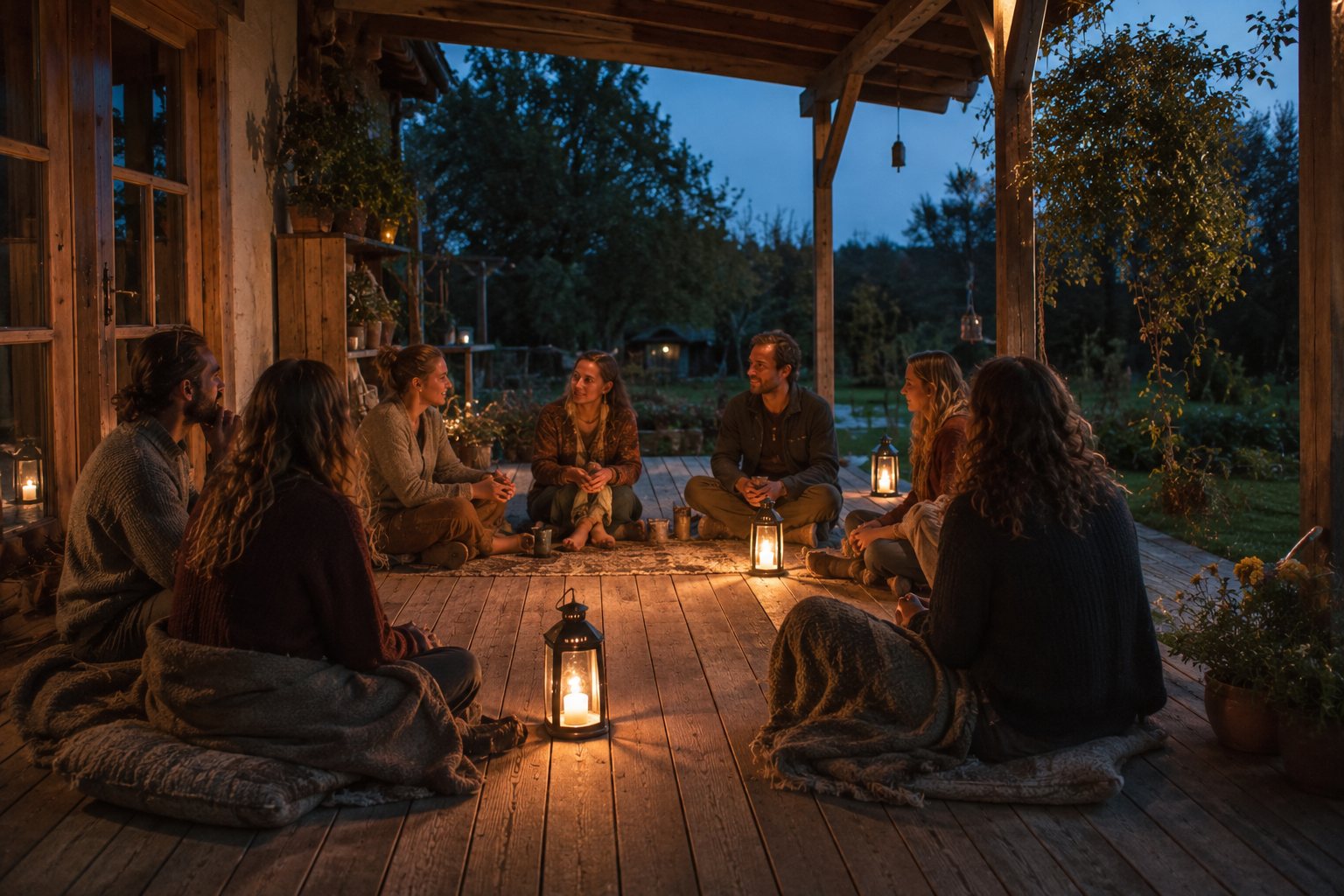
Womit ihr anfangt, die erste WerkzeugkisteWhat to start with, your first tool kitWhat to start with, your first tool kit

Werbung. Die Produktlinks in diesem Abschnitt sind Partnerlinks zu Amazon. Kaufst du darüber, bekommt diese Seite eine kleine Provision, für dich bleibt der Preis gleich. Als Amazon-Partner verdiene ich an qualifizierten Verkäufen. Verlinkt ist jeweils ein Gerät, mit dem man gut arbeiten kann, keine Kaufempfehlung im Sinne eines Tests. Die aktuellen Preise stehen bei Amazon, die Spannen hier sind eigene Schätzungen. Falls ein Modell ausläuft, führt der Zusatzlink zu vergleichbaren Geräten.

Advertising. The product links in this section are affiliate links to Amazon. If you buy through them, this site gets a small commission, and the price stays the same for you. As an Amazon Associate I earn from qualifying purchases. What is linked is a tool you can work with well, not a buying recommendation in the sense of a test. The current prices are at Amazon, and the ranges here are estimates of my own. If a model is discontinued, the extra link leads to comparable tools.

Zuerst, rund 300 EuroStart here, around 300 euros

Akkuschrauber 18 Volt mit zwei Akkus und einem Satz Bits80 bis 110 Euro, gebraucht in 28 von 61 Anleitungen
Cordless drill driver, 18 volt, with two batteries and a set of bits80 to 110 euros, used in 28 of 61 guides
Bei Amazon:At Amazon: Bosch EasyDrill 18V-40, 2 Akkus · Bosch Bit-Satz, 43 Teile · weitere Modellemore models
Wasserwaage 60 cm und 120 cm25 Euro, gebraucht in 39 von 61 Anleitungen
Spirit levels of 60 cm and 120 cm25 euros, used in 39 of 61 guides
Bei Amazon:At Amazon: Stabila 60 cm, Type 80 AS-2 · Stabila 120 cm, Type 70 · weitere Modellemore models
Spaten und Schaufel40 Euro, gebraucht in 28 von 61 Anleitungen
Spade and shovel40 euros, used in 28 of 61 guides
Bei Amazon:At Amazon: Fiskars Gartenspaten, spitz · Fiskars Schaufel, 23,5 cm · weitere Modellemore models
Schubkarre 100 Liter mit Luftrad55 Euro, gebraucht in 22 von 61 Anleitungen
Wheelbarrow, 100 litres, with a pneumatic wheel55 euros, used in 22 of 61 guides
Bei Amazon:At Amazon: Schubkarre 100 l, 250 kg · weitere Modellemore models
Zollstock und Maßband 30 m15 Euro, gebraucht in 18 von 61 Anleitungen
Folding rule and a 30 m tape measure15 euros, used in 18 of 61 guides
Bei Amazon:At Amazon: Stanley Gliedermaßstab, 2 m · Rollbandmaß 30 m, Glasfaser · weitere Modellemore models
Maurerschnur 50 m mit Holzpflöcken10 Euro, gebraucht in 15 von 61 Anleitungen
Builders line, 50 m, with wooden pegs10 euros, used in 15 of 61 guides
Bei Amazon:At Amazon: Maurerschnur 50 m · Holzpflöcke, 15 Stück, 40 cm · weitere Modellemore models
Handsäge, dazu Arbeitshandschuhe und Schutzbrille40 Euro, gebraucht in 16 von 61 Anleitungen
Hand saw, plus work gloves and safety glasses40 euros, used in 16 of 61 guides
Bei Amazon:At Amazon: Bahco Handsäge Superior · Leder-Arbeitshandschuhe, 4 Paar · Uvex Schutzbrille i-Works · weitere Modellemore models

Wenn ihr weitermacht, rund 800 EuroIf you carry on, around 800 euros

Handkreissäge mit Führungsschiene150 bis 200 Euro, gebraucht in 14 von 61 Anleitungen
Circular saw with a guide rail150 to 200 euros, used in 14 of 61 guides
Bei Amazon:At Amazon: Bosch GKS 190 · Bosch Führungsschiene FSN RA · weitere Modellemore models
Bohrhammer mit Steinbohrern von 6 bis 12 mm100 bis 110 Euro, gebraucht in 15 von 61 Anleitungen
Rotary hammer with masonry bits from 6 to 12 mm100 to 110 euros, used in 15 of 61 guides
Bei Amazon:At Amazon: Bosch GBH 2-21, SDS plus · SDS-plus Bohrer-Satz, 5 bis 12 mm · weitere Modellemore models
Stichsäge mit Blättern für Holz60 bis 70 Euro, gebraucht in 7 von 61 Anleitungen
Jigsaw with blades for wood60 to 70 euros, used in 7 of 61 guides
Bei Amazon:At Amazon: Bosch PST 650 · Stichsägeblätter für Holz, Satz · weitere Modellemore models
Vorschlaghammer 5 kg und Fäustel 1 kg40 bis 45 Euro, gebraucht in 10 von 61 Anleitungen
Sledgehammer of 5 kg and a club hammer of 1 kg40 to 45 euros, used in 10 of 61 guides
Bei Amazon:At Amazon: Vorschlaghammer, Fiberglasstiel · Fäustel 1 kg, Fiberglasstiel · weitere Modellemore models
Wasserwaage 200 cm40 bis 45 Euro, gebraucht in 10 von 61 Anleitungen
Spirit level, 200 cm40 to 45 euros, used in 10 of 61 guides
Bei Amazon:At Amazon: Wasserwaage 200 cm, Alu · weitere Modellemore models
Ratschenkasten mit Nüssen 8 bis 22 mm und zwei Rohrzangen90 bis 100 Euro, gebraucht in 12 von 61 Anleitungen
Ratchet set with sockets from 8 to 22 mm and two pipe wrenches90 to 100 euros, used in 12 of 61 guides
Bei Amazon:At Amazon: KS Tools Steckschlüsselsatz · Wasserpumpenzangen, Satz · weitere Modellemore models
Kappsäge und vier Schraubzwingen180 bis 200 Euro, gebraucht in 5 von 61 Anleitungen
Mitre saw and four clamps180 to 200 euros, used in 5 of 61 guides
Bei Amazon:At Amazon: Einhell Zug-Kapp-Gehrungssäge · Schraubzwingen, 4 Stück · weitere Modellemore models

Besser leihen als kaufenBetter hired than bought

Diese Geräte stehen bewusst ohne Kauflink. Ihr braucht sie an ein oder zwei Tagen, und Leihen kostet einen Bruchteil. Baumarkt, Maschinenring oder der Nachbar mit Hof.These machines are deliberately listed without a link to buy. You need them on one or two days, and hiring costs a fraction of the price. Ask at the DIY store, at the Maschinenring (a regional co-operative that shares farm machinery) or at the neighbour with a farmyard.

RüttelplatteKommt in sieben Anleitungen vor, kostet etwa 45 Euro am Tag, wiegt 60 bis 100 Kilo und passt in keinen Kofferraum.
Plate compactorIt turns up in seven guides, costs about 45 euros a day, weighs 60 to 100 kilos and fits in no car boot.
Minibagger 5 Tonnen mit Anhänger200 bis 350 Euro am Tag plus Transport, ihr braucht ihn an zwei Tagen im Jahr, und Abstellplatz und Wartung hat niemand.
Mini excavator of 5 tonnes with a trailer200 to 350 euros a day plus transport. You need it on two days in the year, and nobody has the space to park it or the time to service it.
Betonmischer 140 Liter40 bis 60 Euro am Tag, danach steht er zwei Jahre in der Ecke und rostet fest.
Concrete mixer, 140 litres40 to 60 euros a day, and after that it stands in the corner for two years and rusts solid.
Rotationslaser mit Empfänger25 bis 40 Euro am Tag statt ab 400 Euro Kauf, gebraucht wird er nur beim Abstecken großer Flächen.
Rotating laser with a receiver25 to 40 euros a day instead of 400 euros and up to buy, and it is only wanted when you set out a large area.
Gerüst mit AuffanggurtWird mit Aufbauplan geliefert, lagert im eigenen Bestand schlecht und ist ohne Einweisung gefährlich.
Scaffolding with a safety harnessIt comes with an assembly plan, it stores badly in your own shed, and without instruction it is dangerous.
Motorsäge mit Schnittschutzhose und HelmHolt euch lieber jemanden mit Motorsägenschein, die Schutzausrüstung allein kostet 300 Euro und die Übung fehlt trotzdem.
Chainsaw with cut-protection trousers and helmetBetter to fetch somebody who holds a Motorsägenschein (the German chainsaw certificate). The protective kit alone costs 300 euros, and the practice is still missing.
Kernbohrer 150 bis 160 mm50 bis 80 Euro am Tag, für zwei Löcher im ganzen Leben lohnt der Kauf nie.
Core drill, 150 to 160 mm50 to 80 euros a day, and for two holes in a whole lifetime buying never pays.
Anhänger 750 kg20 bis 40 Euro am Tag im Baumarkt, denn eine Tonne Schotter oder eine Baustahlmatte von 5 Metern geht in keinen Pkw.
Trailer, 750 kg20 to 40 euros a day at the DIY store, because a tonne of crushed stone or a steel reinforcing mesh of 5 metres goes in no car.

Bitte lies das einmal.Please read this once. Diese Anleitungen sind nach bestem Wissen zusammengetragen und ersetzen weder eine Planung noch eine Fachfirma. Bauordnung, Wasserrecht und Naturschutz sind in jedem Bundesland und oft in jeder Gemeinde anders geregelt, und sie ändern sich. Frag vor dem ersten Spatenstich bei deiner Bauaufsicht, deiner unteren Wasserbehörde oder deinem Bezirksschornsteinfeger nach, was bei dir gilt. AllesAll, was mit Statik, Feuer, Strom oder Trinkwasser zu tun hat, gehört in die Hände von Menschen, die dafür ausgebildet sind. Wir übernehmen keine Haftung für Schäden, die beim Nachbauen entstehen.These guides have been put together to the best of our knowledge, and they replace neither proper planning nor a specialist firm. Building law, water law and nature protection are regulated differently in every federal state and often in every municipality, and they change. Before the first spade goes into the ground, ask your Bauaufsicht (the local building control office), your untere Wasserbehörde (the lower water authority of your district) or your Bezirksschornsteinfeger (the district chimney sweep) what applies where you live. Everything to do with structure, fire, electricity or drinking water belongs in the hands of people who are trained for it. We accept no liability for damage that arises when you build these projects.

Please read this once. These guides have been put together to the best of our knowledge, and they replace neither proper planning nor a specialist firm. Building law, water law and nature protection are regulated differently in every federal state and often in every municipality, and they change. Before the first spade goes into the ground, ask your Bauaufsicht (the local building control office), your untere Wasserbehörde (the lower water authority of your district) or your Bezirksschornsteinfeger (the district chimney sweep) what applies where you live. Everything to do with structure, fire, electricity or drinking water belongs in the hands of people who are trained for it. We accept no liability for damage that arises when you build these projects.